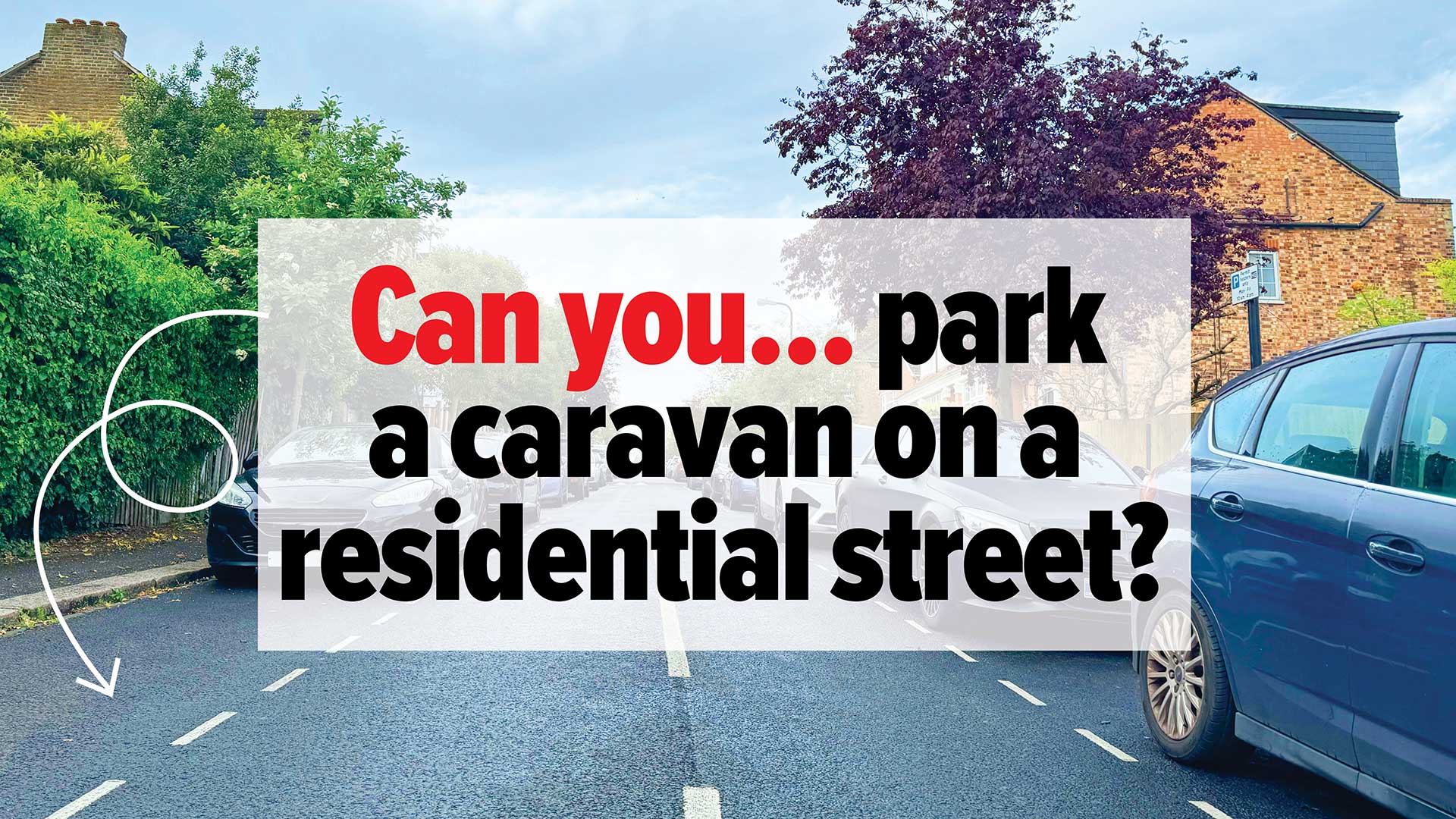

It can be a fairly common issue to find yourself confronted by. You’re looking at buying a caravan, but don’t necessarily have the drive space to store it on, so you find yourself asking, “can I park a caravan on a residential street?”.
It’s a very valid question. After all, even small caravans can take up a fair bit of space on a drive, if you have a drive at all, that is.
But is it something you can actually do? Well, theoretically, you can park your caravan on the street, but you should really check first with your local council that you are allowed to do so, as there may be a local bye-law prohibiting it.
However, even if there are no restrictions that prevent you from doing so, there are a couple of other factors you should be thinking about here, too.
For instance, the issue of caravan security will come into play. You should be aware that a caravan parked for a long time in the same place on a street is going to be a much more attractive proposition to would-be thieves than one that is locked away securely in a nearby storage depot would be.
You also want to ensure your insurance policy will not be invalidated by leaving it on the street, too.
That’s not all, as it’s much more likely to be damaged or vandalised as well. After spending so much money on your home on wheels, is that a risk you want or are willing to take?
You also need to think about your neighbours, as you might also find they are not so amenable to the idea. There have been several cases in the recent past of local councils taking action against the owners of a parked caravan that was seen as an eyesore.
My guess is that neighbours are more likely to be angered by a caravan being parked on the street than they might be by a campervan or motorhome, because a caravan is seen as potentially a much more permanent presence.
The final word on parking a caravan on the street
Fundamentally, if your local council does not prohibit you from parking your tourer on the street, there is nothing to stop you from doing so – but that doesn’t mean you necessarily should. You could very easily find your neighbours are not fans of the idea, and there are also the security and insurance factors to contemplate too.
Instead, we’d probably advise either opting for a different size or type of caravan which could fit onto your drive (assuming you have one), or, if you don’t, instead, consider alternative methods of storing your van, such as at a nearby storage facility. That would not only keep everyone happy, but give you the reassurance that it is safe and secure, too.
Image: Getty Images
Future Publishing Limited, the publisher of Practical Caravan, provides the information in this article in good faith and makes no representation as to its completeness or accuracy. Individuals carrying out the instructions do so at their own risk and must exercise their independent judgement in determining the appropriateness of the advice to their circumstances and skill level. Individuals should take appropriate safety precautions and be aware of the risk of electrocution when dealing with electrical products. To the fullest extent permitted by law, neither Future nor its employees or agents shall have any liability in connection with the use of this information. You should check that any van warranty will not be affected before proceeding with DIY projects.
If you’ve enjoyed reading this article, why not get the latest news, reviews and features delivered direct to your door or inbox every month. Take advantage of our brilliant Practical Caravan magazine SUBSCRIBERS’ OFFER and SIGN UP TO OUR NEWSLETTER for regular weekly updates on all things caravan related.