


Verdict
Comfortable and roomy, but hampered by a weak engine and poor economy.
Pros
- Stable and secure while towing
- Roomy and practical
Cons
- Poor fuel economy
- Engine has modest output
Subaru’s latest Forester went on sale in 2025. It features a more rigid chassis and upgraded driver assistance feature. As before, the car comes with mild-hybrid power and four-wheel drive on every version.
What are we looking for in the Subaru Forester Touring AWD?
Does the Subaru Forester Touring AWD have enough power and torque for towing? Is the car good value for money and should it be in the discussion for the best 4×4 for towing a caravan?
Towing ability of the Subaru Forester Touring AWD
Subaru is known for its durable cars, well suited to country living. The latest Forester stays true to that DNA, with four-wheel drive as standard.
What suits rural drivers works well for all-weather caravanners. If you tow in all conditions (see: how to tow a caravan in heavy rain) and stay on farm campsites then you will appreciate the extra traction of four-wheel drive.
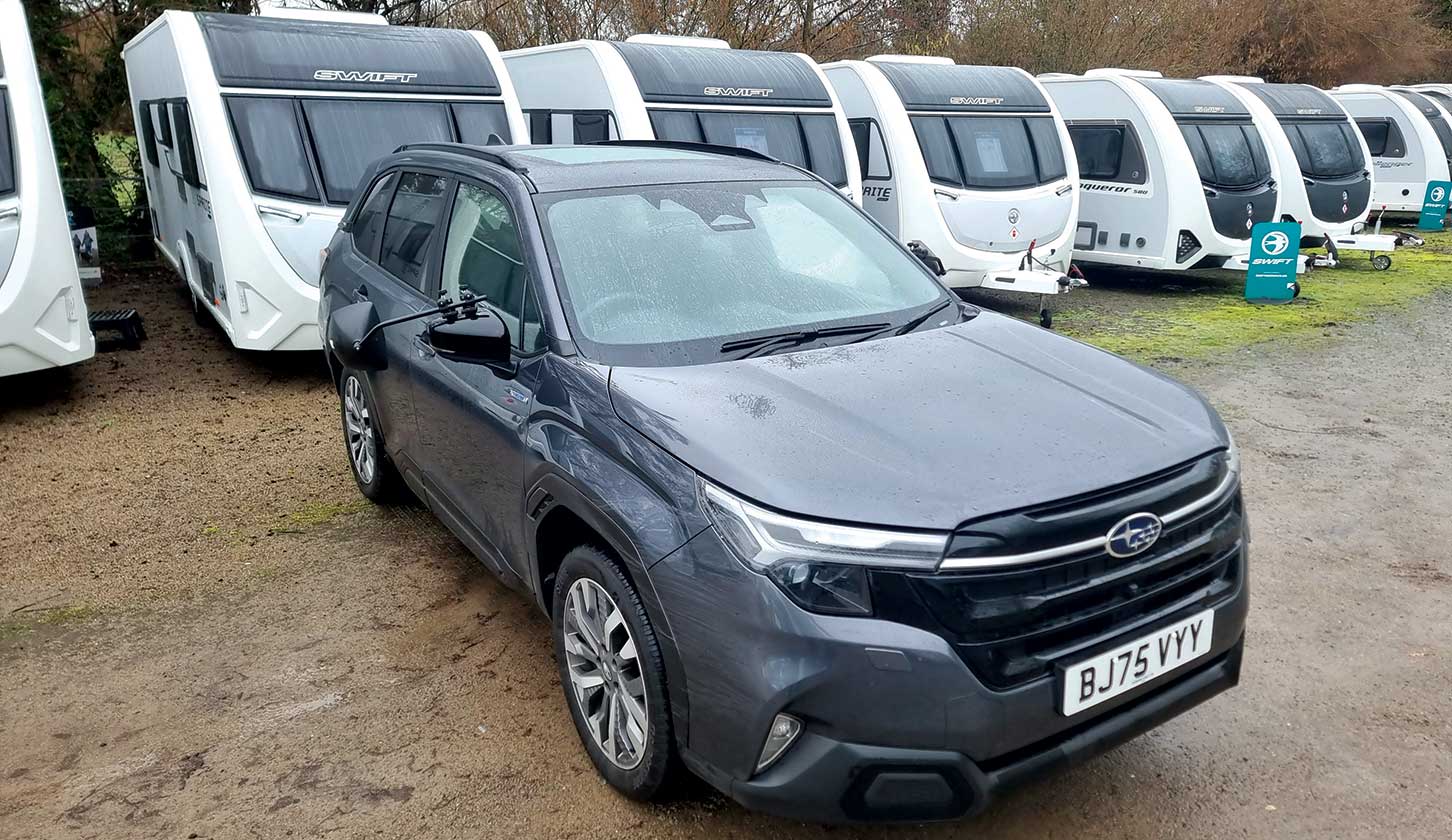
That’s the theory at least, so how would it work when matching the car to a caravan? To put the Forester to the test in practice, we borrowed a Sprite Major 4 SB with a Mass in Running Order of 1227kg from Spinney’s Warwickshire branch.
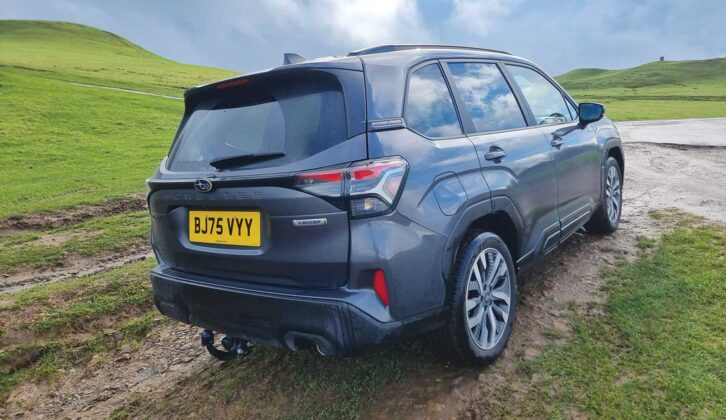
The Sprite’s weight is well within the Subaru’s 85% match figure of 1536kg. Even so, progress was steady at best.
With 136hp and 134lb ft of torque, the Forester’s 2.0-litre petrol engine has modest outputs. There’s mild-hybrid assistance from the electric motor, but not enough to make up for the rather wimpy engine. So although the Subaru will pull a sensibly matched caravan up to 60mph (the speed limit when towing a caravan on a motorway or dual carriageway), it will take a while.
There’s a lot of noise to put up with under acceleration, too. On country roads the engine has to work hard to maintain speed on hills and at times we could smell something getting hot, most likely the continuously variable transmission (CVT).
On hill starts the electronic parking brake held car and caravan still on a 1-in-10 slope and released smoothly. We found the 4×4 system put the Forester’s power to the road smoothly, but slowly.
You can forgive the Forester’s pedestrian pace for its stability and security while towing, which are always traits of the best caravan tow cars. We only had one nervous moment when caught between an HGV and a fast-moving van.
Other than this slight wobble we found the Subaru towed straight and true. That applied equally to motorway and country road driving.
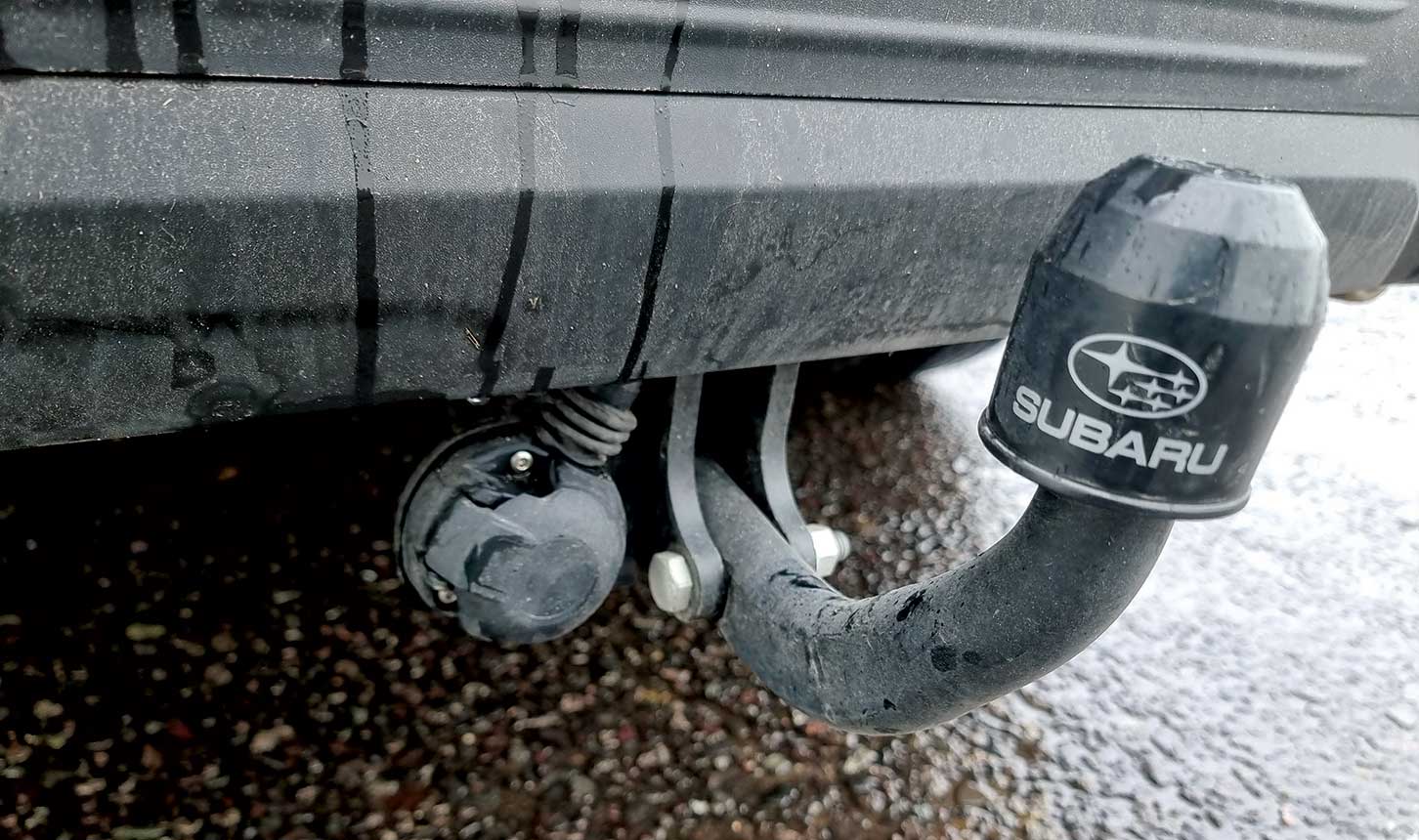
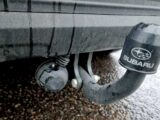
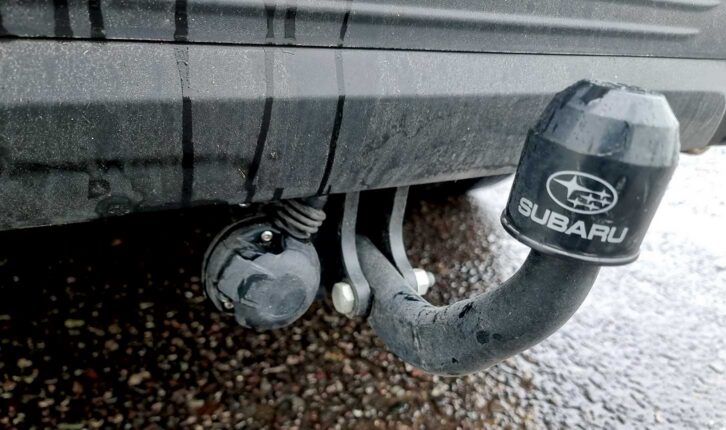
Low-speed manoeuvres were easy, helped by good all-round visibility and the excellent rear-view camera which gave a clear view of the towball.
Solo driving
Subaru says the latest Forester has been developed for improved comfort. It certainly rides well, calmly dealing with bumpy roads at low speeds.
The suspension is still well controlled when driving more quickly, so it doesn’t feel wallowy on undulating country roads. Numb steering and slow acceleration mean the Subaru is competent rather than fun.
Head onto A-roads and motorways and the engine’s modest power is less of an issue than while towing, but it’s still noticeably slower than the likes of the Kia Sportage hybrid.
It’s completely outclassed in a straight line compared with the Chery Tiggo 9, a 428hp Chinese SUV that costs less than the Forester Touring.
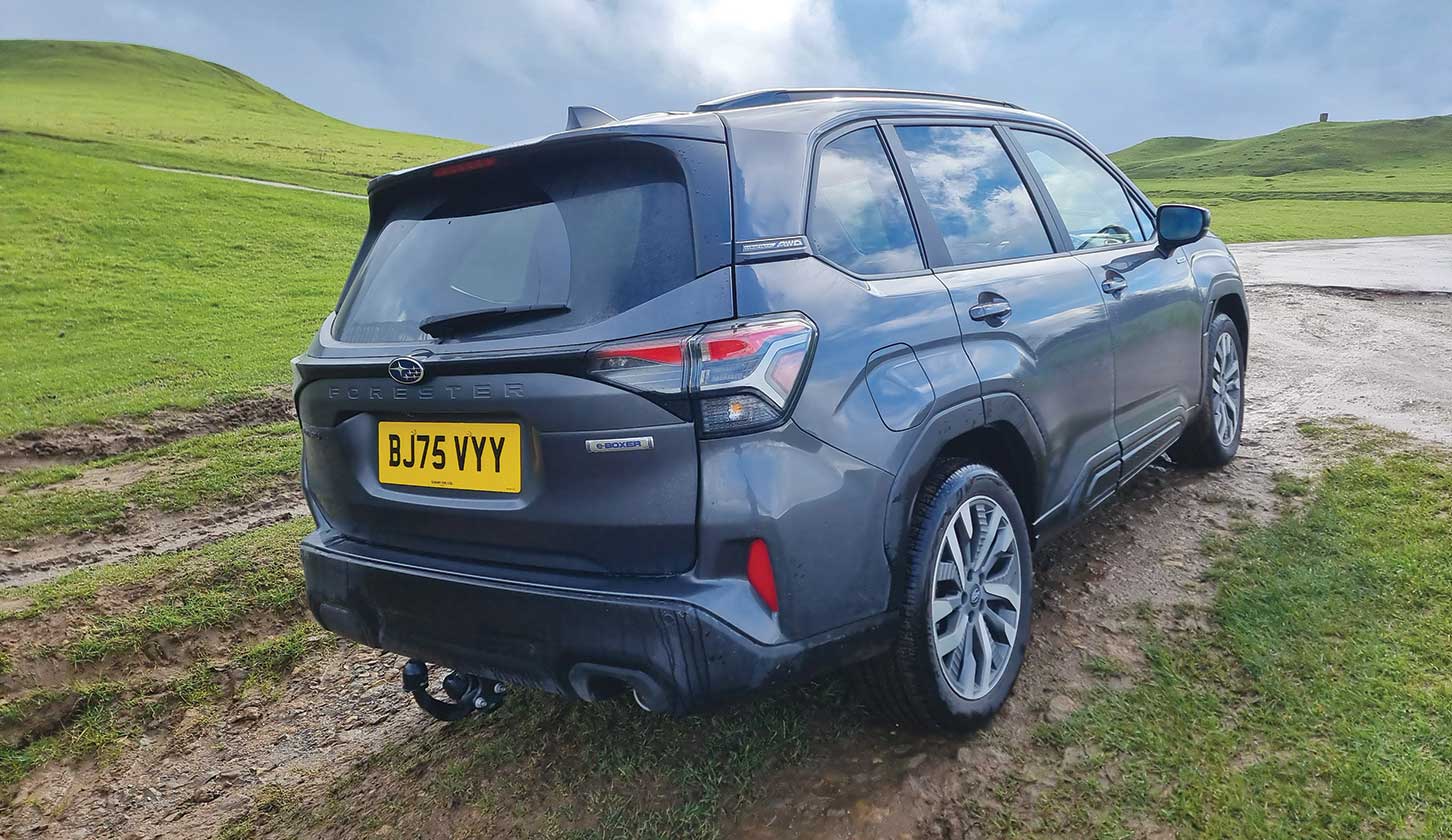
That said, the Chery won’t be as capable as the Forester off road. The car comes with a useful 220mm of ground clearance and the X-Mode terrain selection system, which adjusts the car’s systems to suit different terrain types.
It depends on your priorities. If you’re not bothered about a car’s 0-62mph time but do value the ability to cope with bad weather and light off-roading, the Forester will suit you well.
On the other hand, if you have no intention of getting the tyres dirty then the Subaru is giving away an awful lot of overtaking punch to cars which cost similar money – or less.
Space and practicality
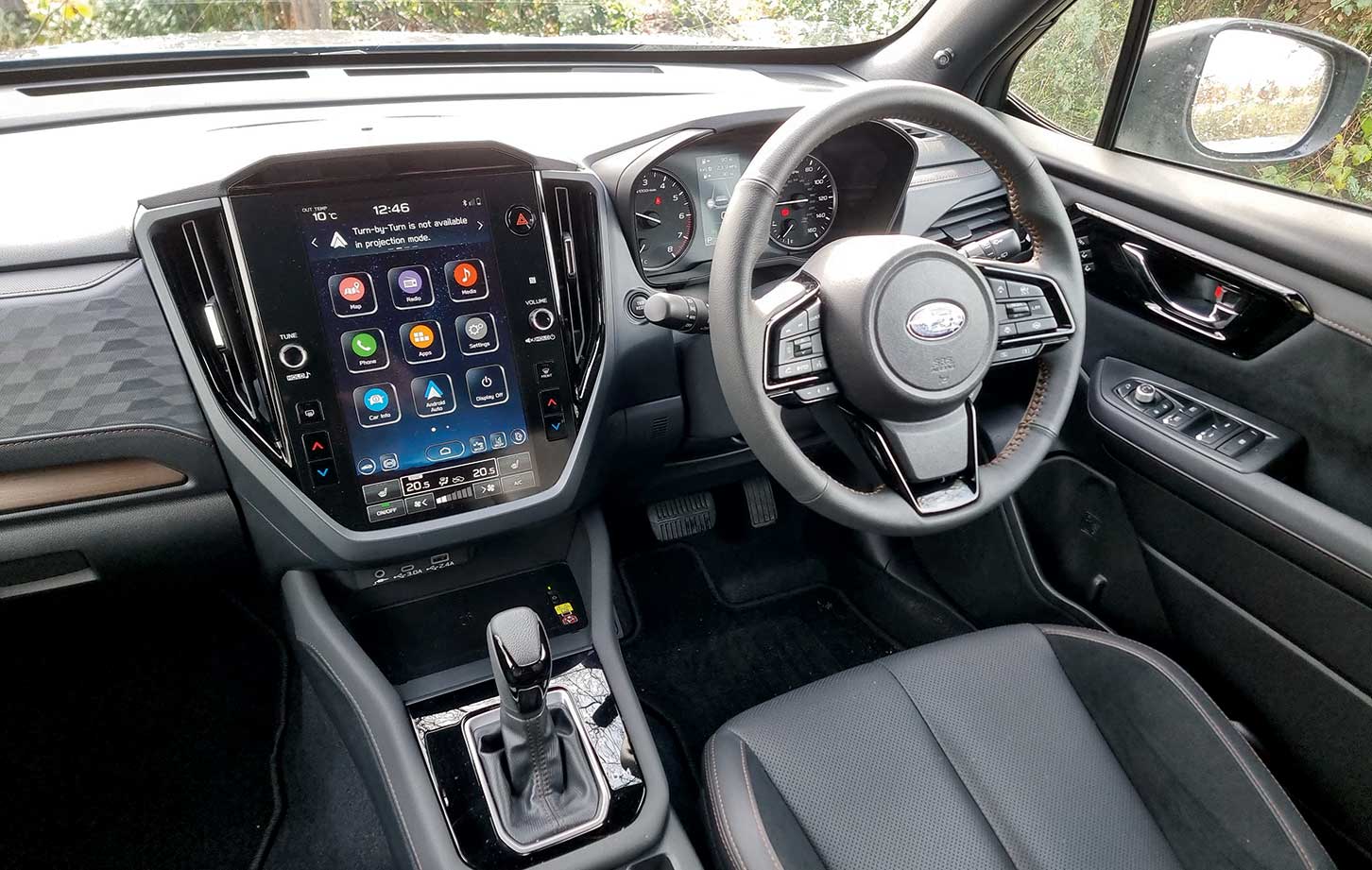
The Forester is a roomy and practical car. Both the driver and front-seat passenger have plenty of room, and there’s a good range of adjustment to the seat and steering wheel.
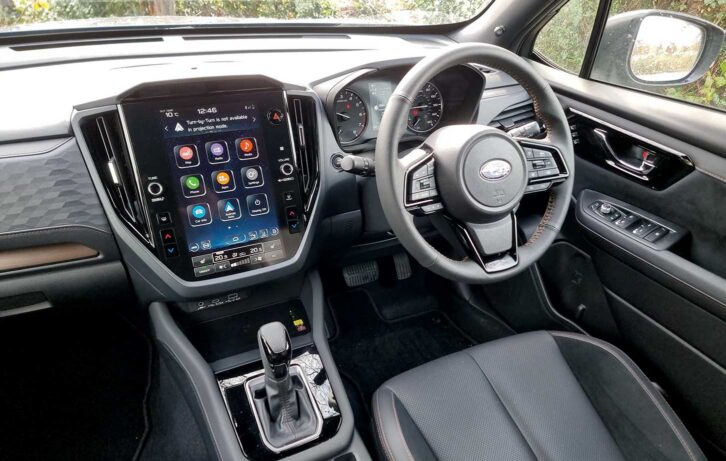
The dash is an unusual mix of high-tech and old-fashioned. The Forester has regular dials for the car’s speed and engine revs when most modern cars have a digital display. And while there’s an 11.6-inch touchscreen infotainment system, some of the graphics look very dated.
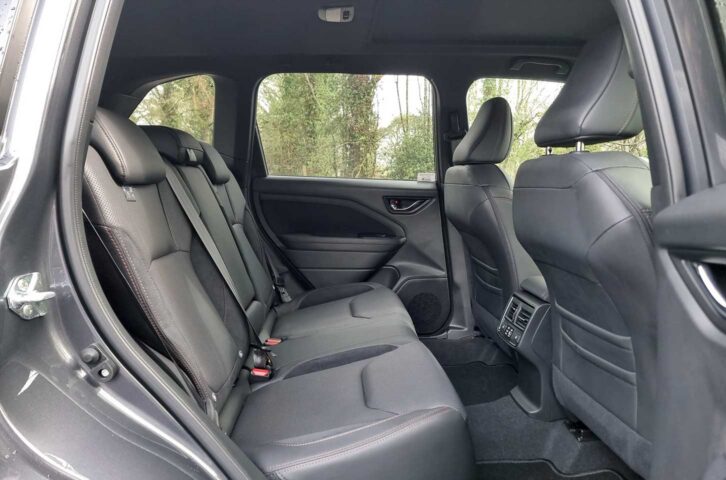
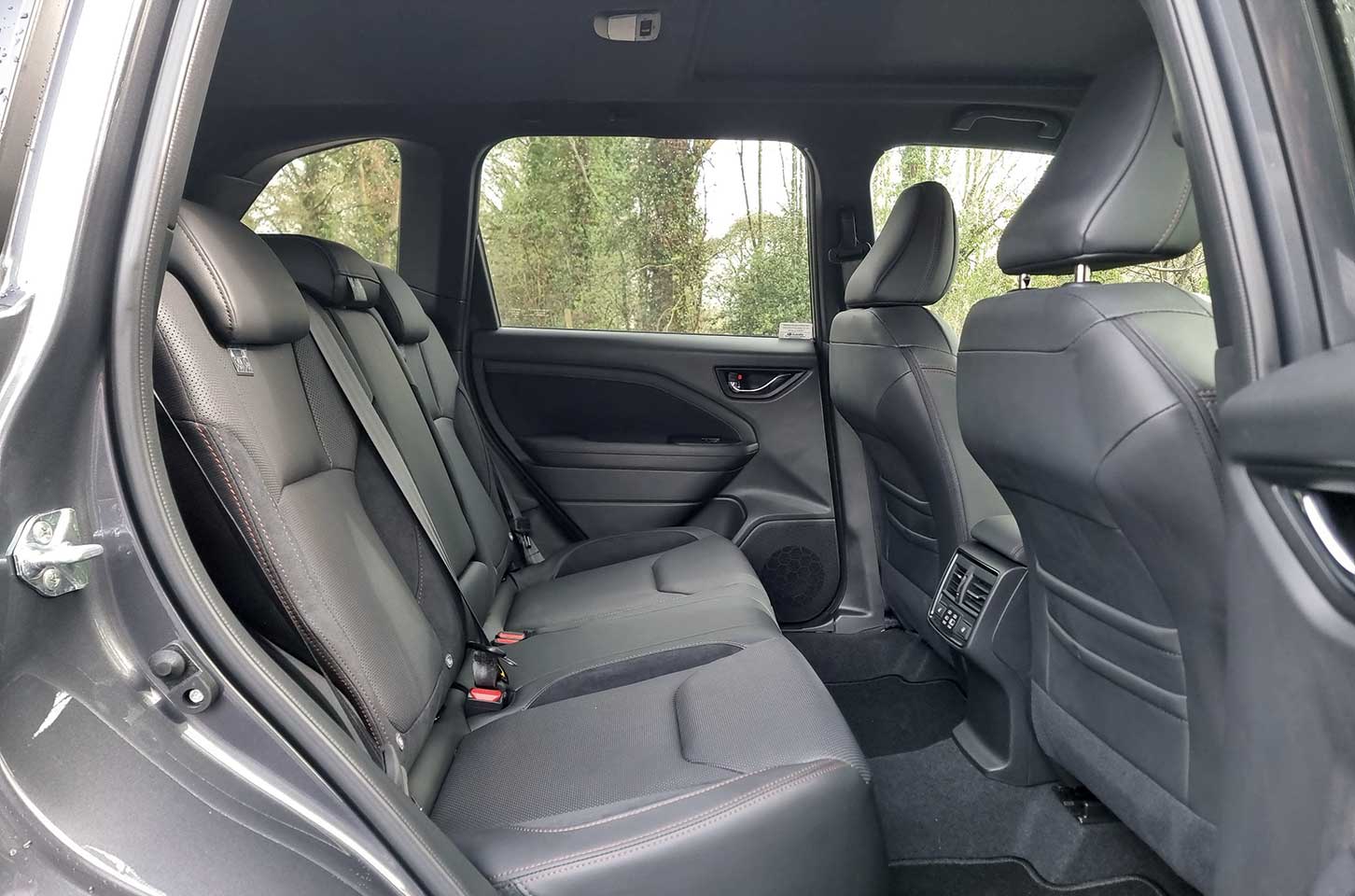
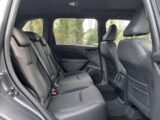
In the back, there’s very generous legroom and sufficient headroom, even with the sunroof fitted to this model. There are air vents between the front seats and USB-A and USB-C charging ports.
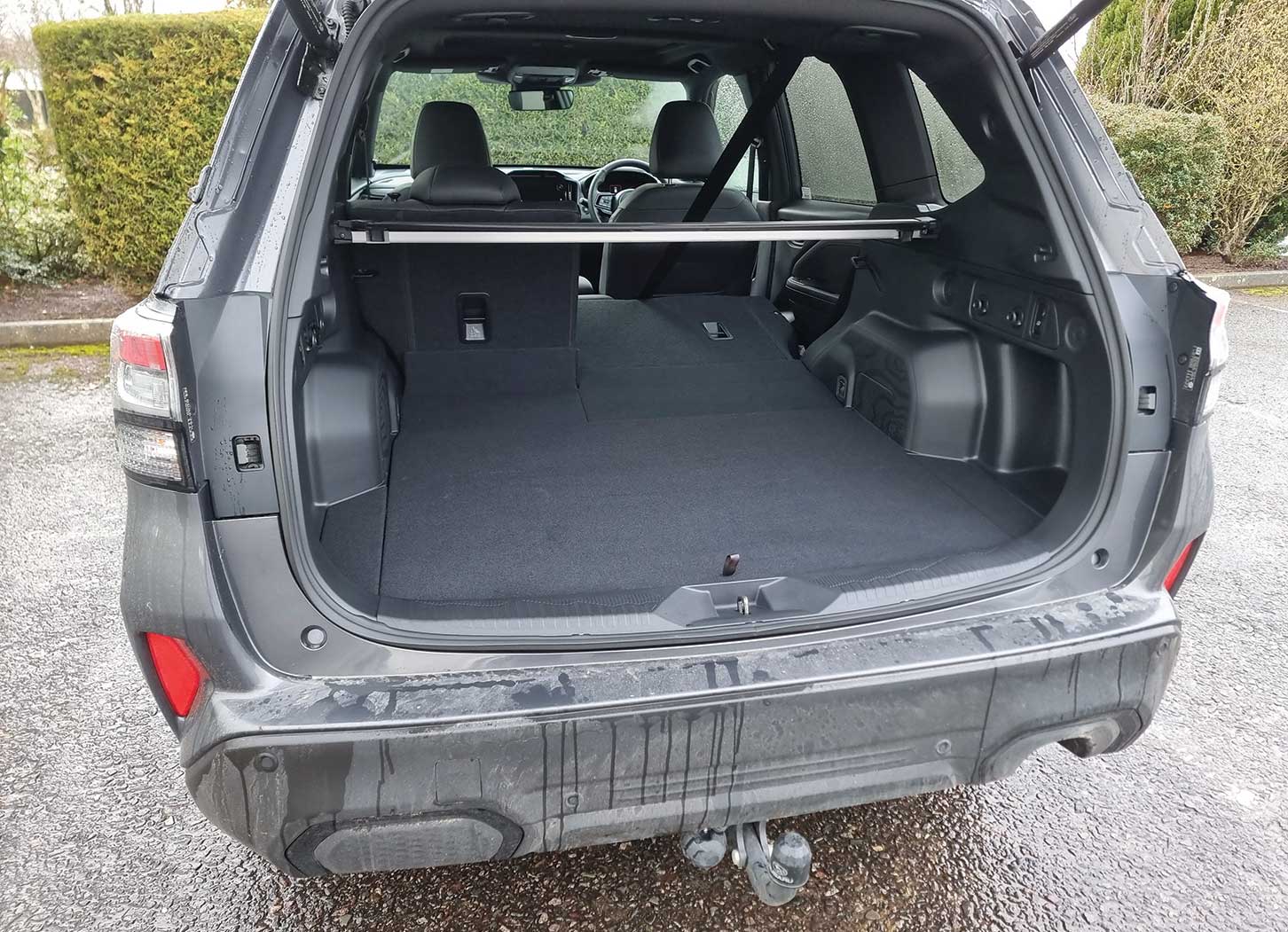
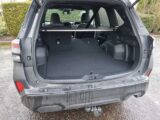
Boot space is good rather than outstanding. The floor is a little higher from the ground than in some estate tow cars, presumably to make room for the 4×4 running gear.
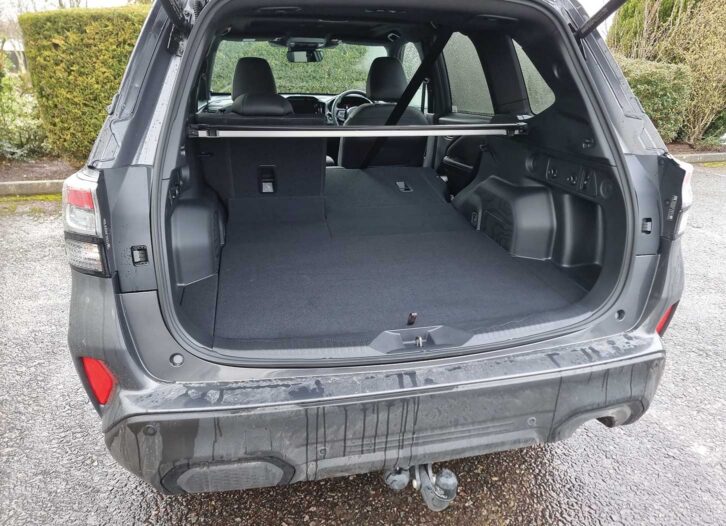
Even so, a capacity of 508 litres with the rear seats upright is respectable. With the back seats down, that increases to 1679 litres.
Buying and owning a Subaru Forester Touring AWD
The Forester is available in three specifications. The most affordable Limited model costs £39,995, while our range-topping Touring is £44,100.
That money buys a comprehensive specification, not least when it comes to safety features and driver aids. Collectively, Subaru calls these the Eyesight Driver Assist Technology, with five new and seven uprated features. While these may benefit safety overall, they can be rather intrusive – tilting your head to scratch your ear is enough to be told off for not paying attention.
Other features included in the price include dual-zone climate control, satellite navigation, wireless Apple CarPlay and Android Auto, and leather seats.
Considering that the Forester is a mild hybrid, fuel economy is poor. The official combined figure is 34.9mpg, and we saw 23.5mpg while towing the Sprite.
Alternatives to consider
You could consider the Kia Sorento 2.2 CRDi ‘3’, a tow car which we thought provided a luxury towing experience and is fuel efficient. Alternatively, you could take a look at the Volkswagen Tiguan 2.0 TSI 265PS R-Line 4Motion, a car which tows with stability and is easy to manoeuvre, but can be a bit thirsty.
See what we thought about a different car from Subaru too, the Crosstrek 2.0i Touring. It has a low towing capacity, but could be a contender for those who like towing all year.
Technical specification of the Subaru Forester Touring AWD
- Model tested: Forester Touring AWD
- Price: £44,100
- Kerbweight: 1807kg**
- 85% of kerbweight: 1536kg
- Gross vehicle weight: 2185kg
- Max towing limit: 1870kg
- Gross train weight: 4055kg
- Towball limit: 75kg
- Price of towball and electrics: £1008
- Boot size: 508-1679 litres
- Payload: 453kg
- Test conditions: Wet
- Engine capacity: 1995cc
- Power(hp)/rpm: 136/5600
- Torque (lb ft)/rpm: 134/4000
- Official fuel economy: 34.9mpg
- Towing economy: 23.5mpg
- CO2 emissions: 183g/km
- First year car tax: £2270
- Second year car tax: £640
- Insurance group: 23
- Euro NCAP rating: 5/5
**Including 75kg for the driver not included in Subaru’s published kerbweight
If you’ve enjoyed reading this article, why not get the latest news, reviews and features delivered direct to your door or inbox every month. Take advantage of our brilliant Practical Caravan magazine SUBSCRIBERS’ OFFER and SIGN UP TO OUR NEWSLETTER for regular weekly updates on all things motorhome related.
Technical Specifications
| Engine Size | 1995 cc |
| Kerbweight | 1807** kg |
| 85% KW | 1536 kg |
| Towball Limit | 75 kg |
| Maximum Towing Limit | 1870 kg |
| Power | 136 bhp |
| Torque | 134 lb ft |
| Offical MPG | 34.9 mpg |
| Towing MPG | 23.5 mpg |
| CO₂ | 183 g/km |