


Verdict
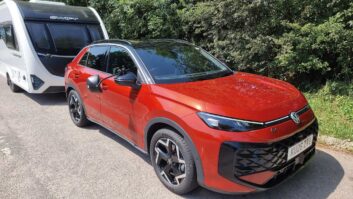
The VW Tiguan petrol 4×4 is certainly thirsty and expensive in this specification. Even so, it makes a very fine tow car.
Pros
- Tows with stability
- Easy to manoeuvre, be it at a campsite or in a multi-storey car park
- Much improved infotainment system
Cons
- Expensive
I’ve tested the Tiguan before, but the diesel version I drove, the Volkswagen Tiguan 2.0 TDI 150PS R-Line, lacked four-wheel drive. Buyers wanting a Tiguan that sends power to all four wheels need a petrol model with either 204hp or 265hp. Now I’ve had the opportunity to drive the more powerful of the two, the Volkswagen Tiguan 2.0 TSI 265PS R-Line 4Motion.
What am I looking for?
Four-wheel drive has obvious advantages when you are towing a caravan, but does it make the Tiguan too thirsty? Can the car justify its price and is it among the best cars for towing?
Towing ability of the Volkswagen Tiguan 2.0 TSI 265PS R-Line 4Motion
You can argue that Volkswagen has missed a trick by restricting four-wheel drive to the two most powerful petrol models. Surely a diesel 4×4 car for towing a caravan would make sense, especially for buyers in the towing market?
The question moves to the back of your mind once towing with the 265hp 2.0 TSI engine. It provides 295lb ft of torque, which matches the pulling power of the top-spec diesel in the Škoda Kodiaq 4×4.
That’s a very healthy figure for a petrol tow car and delivered from as little as 1650rpm. So you have diesel-rivalling low-down pull combined with the top-end punch of a petrol.
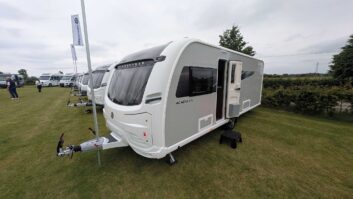
When it came to the car/caravan matching, I matched the VW Tiguan to a Bailey Phoenix+ 644 with a MiRO of 1240kg, borrowed from Raymond James Caravans. The Tiguan has a kerbweight of 1753kg, so the Bailey makes a 71% match.
The VW towed the Bailey up to speed with ease. There’s less need to rev the engine hard than is typically the case with a petrol engine, and it doesn’t take long to reach 60mph, the speed limit when towing a caravan on a motorway or dual carriageway. The 2.0 TSI only sounded strained in the upper reaches of the rev range.

Once up to speed, the Tiguan is very stable. I hardly felt any movement from the back of the car, either caught by a crosswind or overtaking an HGV.
An adaptive chassis comes as standard on R-Line spec, allowing you to tweak the suspension. I mostly towed in ‘comfort’ mode. Switching to ‘sport’ gave a firmer ride, but stability was equally reassuring in either setting.
My testing took place in dry weather, so the 4Motion four-wheel drive had an easy time of it. In wet weather or staying on a grassy pitch, 4Motion would come into its own.
In the dry, hill starts proved easy. Pulling away on a 1-in-10 slope was a doddle, while the steeper 1-in-6 hill also posed little trouble for the VW.
Once you arrive at your campsite, the Tiguan is very easy to manoeuvre. And when it’s time for you to head home, the excellent reversing camera provides a clear view of the towball to help when you’re hitching up a caravan.
Solo driving the VW Tiguan 2.0 TSI 265PS R-Line 4Motion
Whether you’re thinking of buying a used or a new car, the way it will operate as a solo drive will be an important consideration. Here, it is the quickest, sportiest version of the new Tiguan. With 265hp, the VW delivers serious pace. It’s almost a hot hatch on stilts, especially if you play around with the settings to add more weight to the steering and a tauter feel to the suspension.
Drivers don’t just have VW’s standard modes to choose from. The ‘individual’ setting allows for mixing and matching (say, sporty suspension and light steering). The driver can also
go beyond the factory settings, making the car more aggressive than ‘sport’ mode or more forgiving than ‘comfort’.
Driving gently on poorly surfaced roads, I found it useful to be able to soften the car further to smooth over potholes and other lumps and bumps in the surface. Firm things up and the Tiguan is fun to drive on a country road, certainly by SUV standards.

Around town, the vehicle’s performance can be kept in reserve – it’s just as well suited to the school run as any other Tiguan. What’s more, the relatively compact length, just over 4.5m, makes the VW easier to manage in multistorey car parks than larger SUVs.
On the motorway, the Tiguan is comfortable and quick to accelerate into any gap in traffic. However, the 20-inch alloys generate a lot of road noise.
Space and practicality in the Tiguan 2.0 TSI 265PS R-Line 4Motion
Up front, there’s plenty of room. It’s easy to find a comfortable driving position, with a wide range of movement for both seat and wheel. Most adjustments are manual, but there’s powered tweaking of the lumbar support.
VW has come in for a lot of stick for its infotainment systems, and (in my opinion) rightly so, but the latest generation is much improved. It’s easy to use and quick to respond. My car came with the optional 15-inch screen and head-up display, a pricey but tempting £1130 option. Don’t forget a pair of the best towing mirrors for when you’re hitched up, either.

There’s plenty of storage dotted around the front of the cabin, and wireless charging for compatible smartphones.
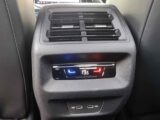
The climate control has three zones – not only do the driver and front-seat passenger have their own controls, but so do those in the back of the car.
Headroom and legroom are generous in the rear seats, so adults should be comfortable, as well as children. However, the stout transmission tunnel will be in the way if there are three in the back. ISOFIX child seat mounting points are fitted to the outer rear seats, as well as the front passenger seat.
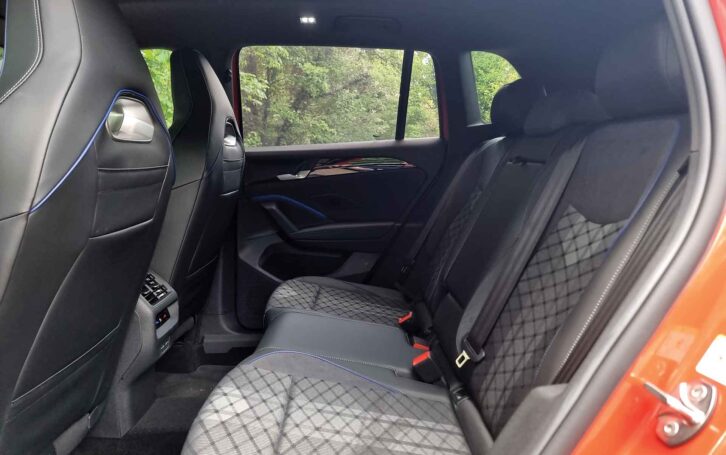
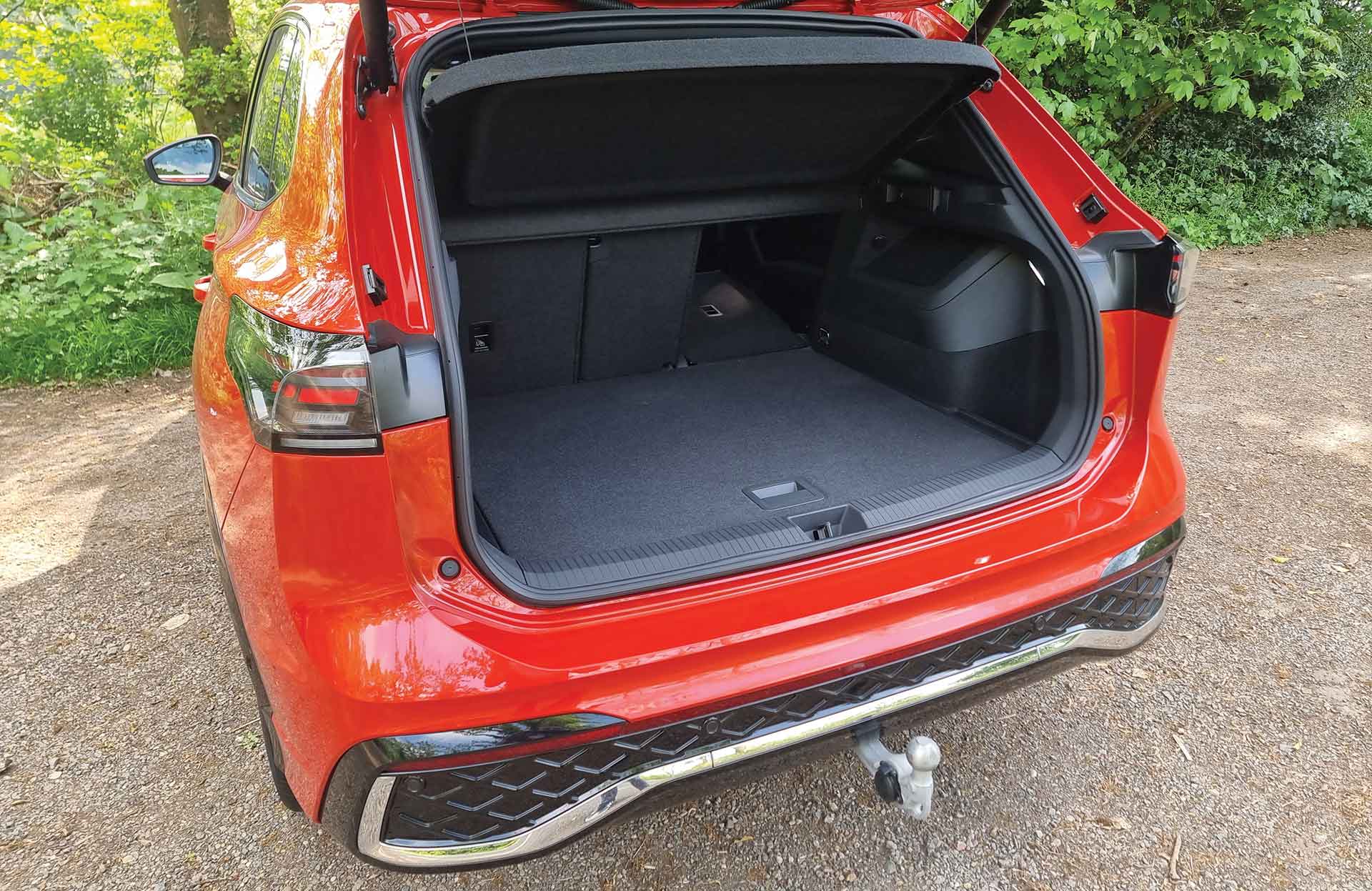
Boot space is a very useful 652 litres. If more capacity is needed, the back seats split and fold and have a through-loading hatch. They also slide to trade passenger and luggage space.
Buying and owning a VW Tiguan 2.0 TSI 265PS R-Line 4Motion
With a list price of over £50,000, this Tiguan is rubbing shoulders with upmarket SUVs sporting premium badges.
It will be relatively expensive to run, too. This is where the powerful petrol engine really gives way to a good turbodiesel, with an official combined figure of 33.2mpg. I saw 22.9mpg while towing the Bailey with my test vehicle.
The R-Line is well equipped – as it should be at the price. There’s plenty of safety kit, as well as more luxury items, contributing to the car’s five-star safety rating from Euro NCAP.
Alternatives to consider
The Kia Sorento 2.2 CRDi ‘3’ is a vehicle which provides an excellent and luxurious towing experience, yet offers this at a very competitive price. Alternatively, how about the Mazda CX-80 3.3D AWD Exclusive Line? It’s a seven-seater option which offers stable towing and has a long list of standard kit.
Or would you be interested in an electric VW? In which case, take a look at my review of the Volkswagen ID.7 Tourer Pro S Match 86kWh,
Technical specification for the Volkswagen Tiguan 2.0 TSI 265PS R-Line 4Motion
- Price: £50,220
- What Car? Target Price: £47,689
- Retained value after three years: N/A
- Kerbweight: 1753kg
- 85% of kerbweight: 1490kg
- Gross vehicle weight: 2220kg
- Max towing limit: 2200kg
- Gross train weight: 4420kg
- Towball limit: 100kg
- Price of towball: £1095
- Boot size: 652-1650 litres
- Payload: 467kg
- Test conditions: Dry
- Engine size: 1984cc
- Power (hp/rpm): 265/5250-6500
- Torque (lb ft): 295/1650-4350
- Official combined economy: 33.2mpg
- Towing economy: 22.9mpg
- CO2 emissions: 193g/km
- First year car tax: £3300
- Second year car tax: £620
- Insurance group: 32
- Euro NCAP rating: 5/5
If you’ve enjoyed reading this article, why not get the latest news, reviews and features delivered direct to your door or inbox every month. Take advantage of our brilliant Practical Motorhome magazine SUBSCRIBERS’ OFFER and SIGN UP TO OUR NEWSLETTER for regular weekly updates on all things motorhome related.
Technical Specifications
| Engine Size | 1984 cc |
| Kerbweight | 1753 kg |
| 85% KW | 1490 kg |
| Towball Limit | 100 kg |
| Maximum Towing Limit | 2200 kg |
| Power | 265 bhp |
| Torque | 295 lb ft |
| Offical MPG | 33.2 mpg |
| Towing MPG | 22.9 mpg |
| CO₂ | 193 g/km |