

Verdict
In most respects, the Ford Ranger PHEV is just as good at towing as the diesel. Either way, the big Ford is our favourite pick-up.
Pros
- Our favourite pick-up
- High-quality and well-equipped cabin
Cons
- Premium price
While there are some electric pick-ups and Toyota has a mild-hybrid Hilux, the new plug-in hybrid Ford Ranger is currently in a niche of its own.
What are we looking for?
Does the plug-in Ranger tow as well as the diesel? What is the fuel economy like? Is it one of the best pick-ups for towing a caravan?
Towing ability
Pick-up trucks are generally capable of towing heavy caravans and trailers but are often less stable at speed than a comparable SUV.
That’s true of the Ranger – it doesn’t tow as well as the very best 4x4s for towing a caravan. But it’s certainly better than most pick-ups.
The lofty kerbweight helps. Weighing 2511kg gives an 85% match figure of 2134kg, well within the 3500kg towing capacity. It’s unlikely to catch out caravanners, but the maximum towing figure drops to 3100kg when the Ranger is fully loaded.
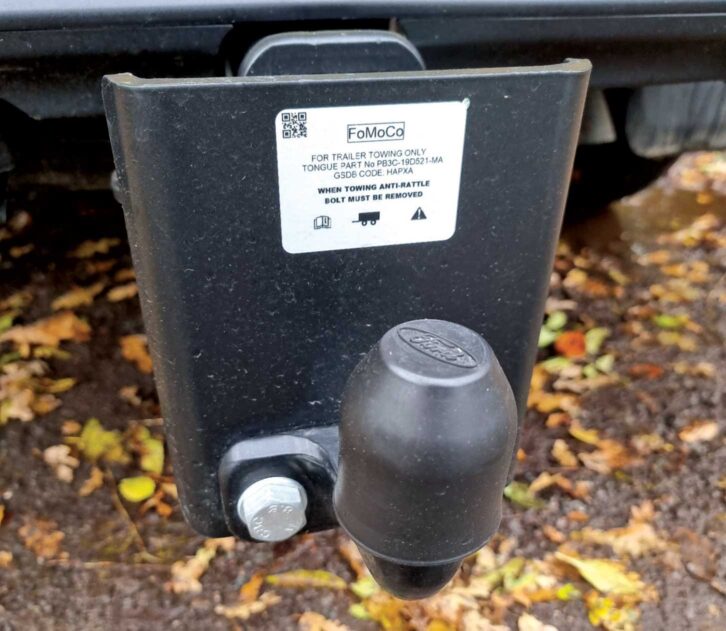
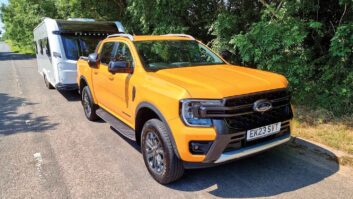
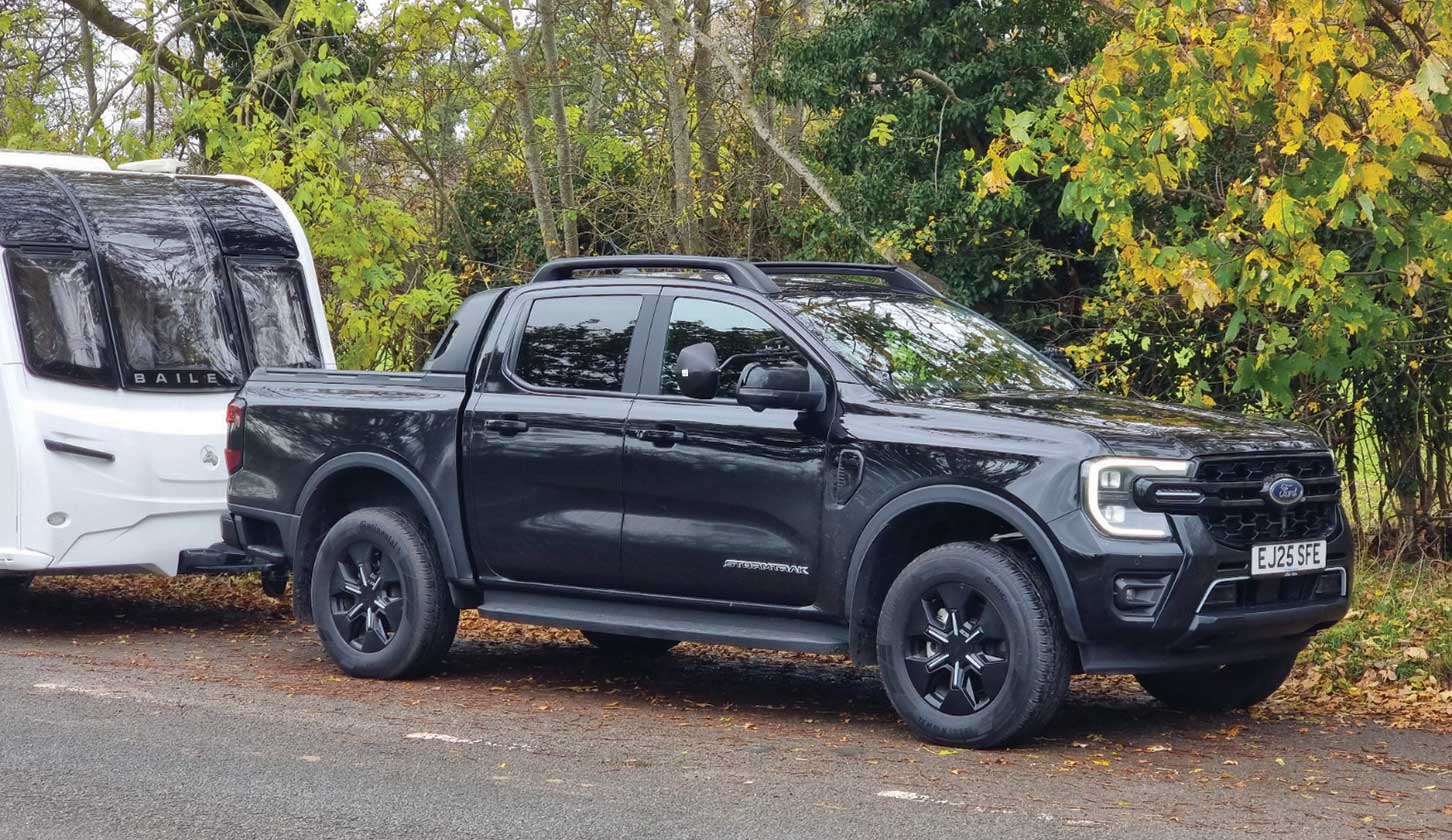
When it came to the car/caravan matching, we paired the Ford to a Bailey Unicorn Pamplona with a MiRO of 1538kg. The Ranger towed the Bailey smoothly and quietly, pulling away on electric power alone.
With the 2.3-litre engine and the 75kW electric motor working together, the big Ford proved to have plenty of punch. Peak combined power is 281bhp with 514 lb ft of torque. Those numbers made for easy towing, with the Ford and Bailey quickly reaching a 60mph cruise.
Our test started with 12 miles of electric range showing. After just under 31 miles the all-electric range had dropped to zero, with fuel economy of 34mpg. Over the rest of our day’s towing, the average dropped to 23.2mpg.
That’s not as economical as the 25mpg we achieved towing a heavier caravan with the diesel Ford Ranger 2.0 TDCi Wildtrak Double Cab Auto a couple of years ago.
While long-distance economy is not as good, stability at speed proved similar or better. At a steady 60mph there was the odd nudge from the caravan, and the back of the vehicle didn’t feel as firmly glued to the road as a Škoda Kodiaq’s, for example, a vehicle we named the best car for towing a 1500kg caravan at the Practical Caravan Awards 2026.
Of course, that’s not a like-for-like comparison, and there’s no pick-up we’ve towed with that feels more secure at speed than the Ranger.
On country roads, the Ford takes up a lot of space. In some respects, that makes towing easier, though, as there’s less difference between the width of the vehicle and the caravan. We found our usual Milenco caravan towing mirrors gave an excellent view down the sides of the tourer and were very easy to fit to the Ranger’s large door mirrors.
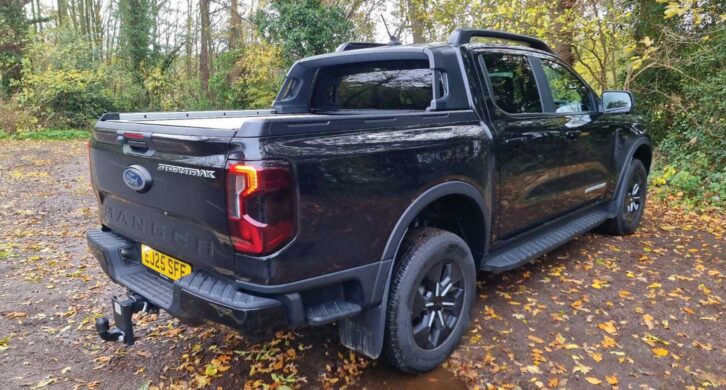
Once the Ranger had used most of the battery’s charge, acceleration was noisier with the petrol engine doing most of the work. However, there didn’t seem to be a significant drop-off in acceleration.
There are various drive modes to select, from low-ratio four-wheel drive for off-roading to two-wheel drive to prioritise fuel economy. Even in two-wheel-drive mode we had no trouble pulling away on a 1-in-10 slope in damp weather.
The length of the Ranger is noticeable when manoeuvring. However, there’s a clever reversing system called Pro Trailer Backup Assist which helps manoeuvre your caravan.
Take a look at our pick of the standout towing gadgets that can make a difference when you’re pulling a tourer, too.
Solo driving
For a dual-purpose vehicle, designed for carrying heavy loads in the week and family duties at the weekend, the Ranger drives well.
Like most pick-ups, it has leaf-spring suspension at the back, a tough but unsophisticated set-up. While able to cope with heavy loads, leaf springs usually make for a bouncy ride when lightly loaded.
Despite this, the Ford’s ride is surprisingly comfortable. Although the Ranger does fidget more than a well-sorted passenger car, the experience is certainly not rough and ready.
Without much weight to pull, the Ranger accelerates briskly and corners with more enthusiasm than you’d expect of a 2.5-tonne commercial vehicle.
There’s some wind noise at speed but otherwise the Ranger is reasonably quiet on a long motorway drive. Around town, at 5.37 metres long the Ranger takes up more road space than the biggest passenger cars.
Space and practicality
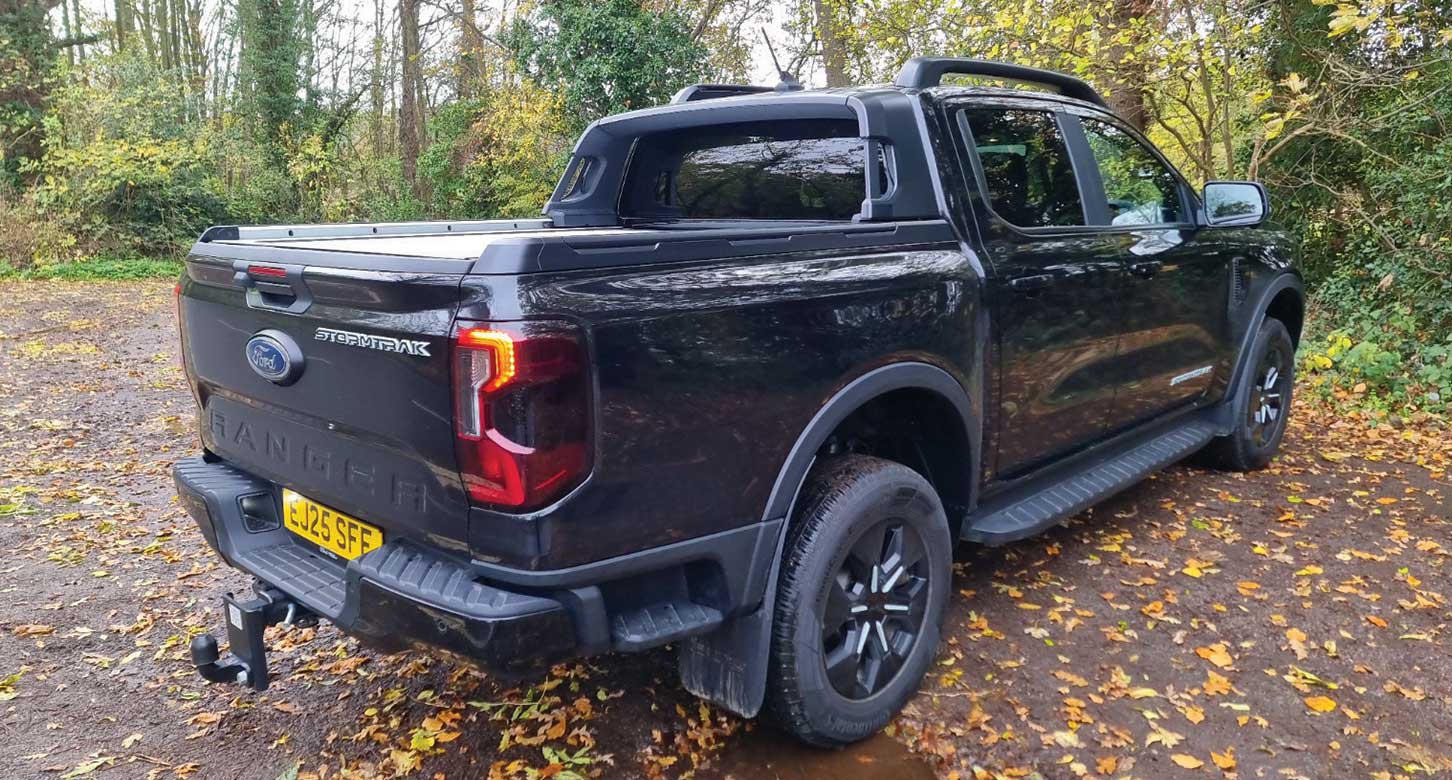
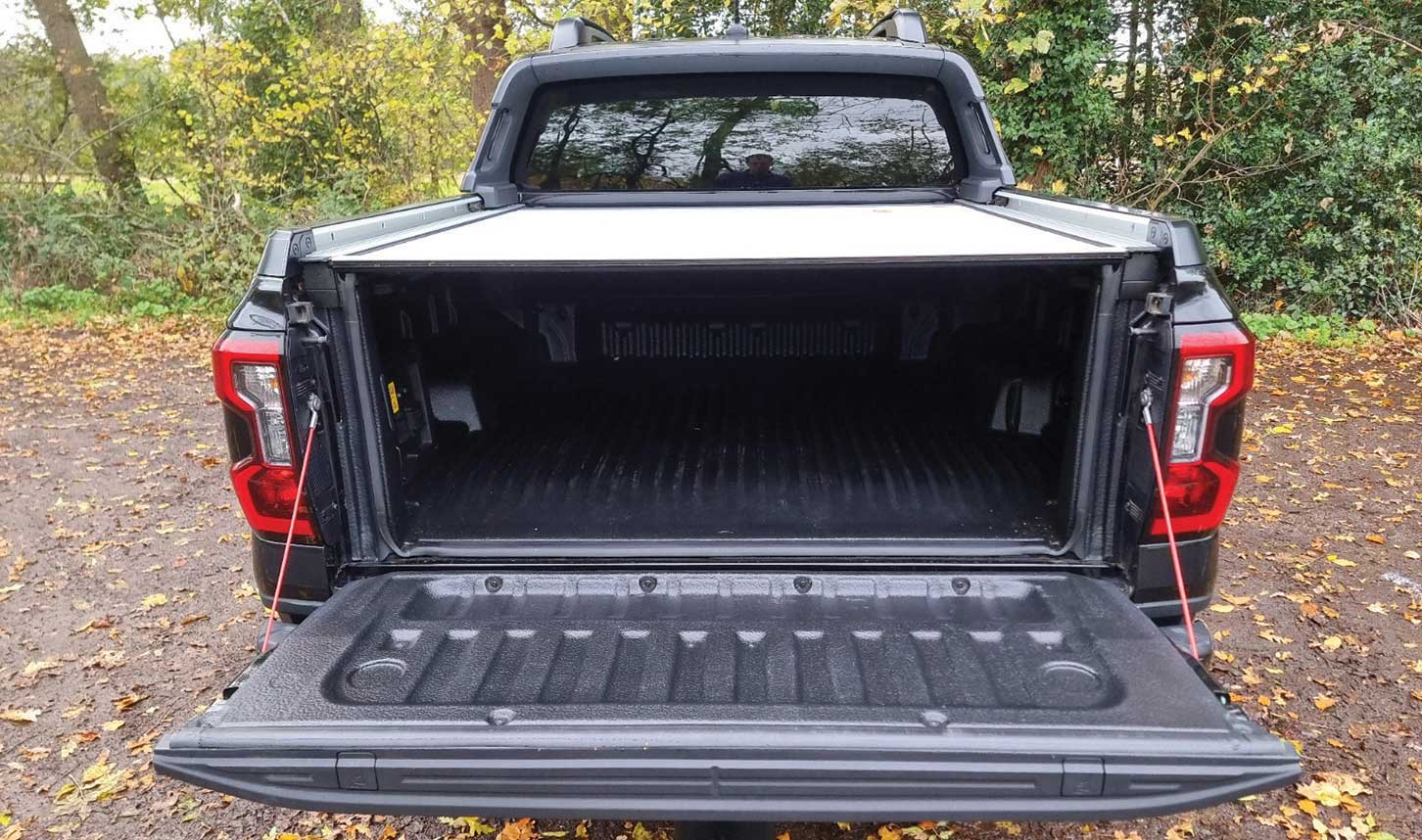
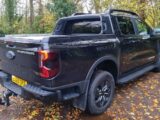
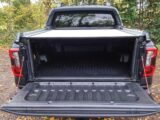
There’s little difference in the load space when comparing the diesel and hybrid models. The floor is slightly higher in the PHEV, so the load bay’s height is reduced by 31mm. The length and width are unchanged.
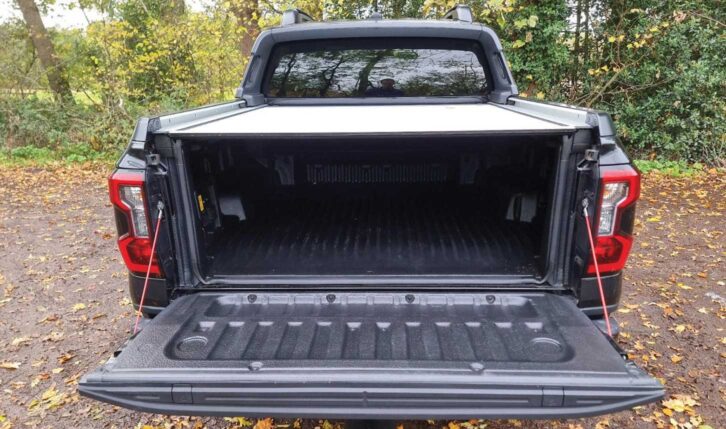
Ford quotes a healthy maximum payload of 1043kg, high enough for business users to reclaim the VAT portion of the purchase price (or leasing payments).
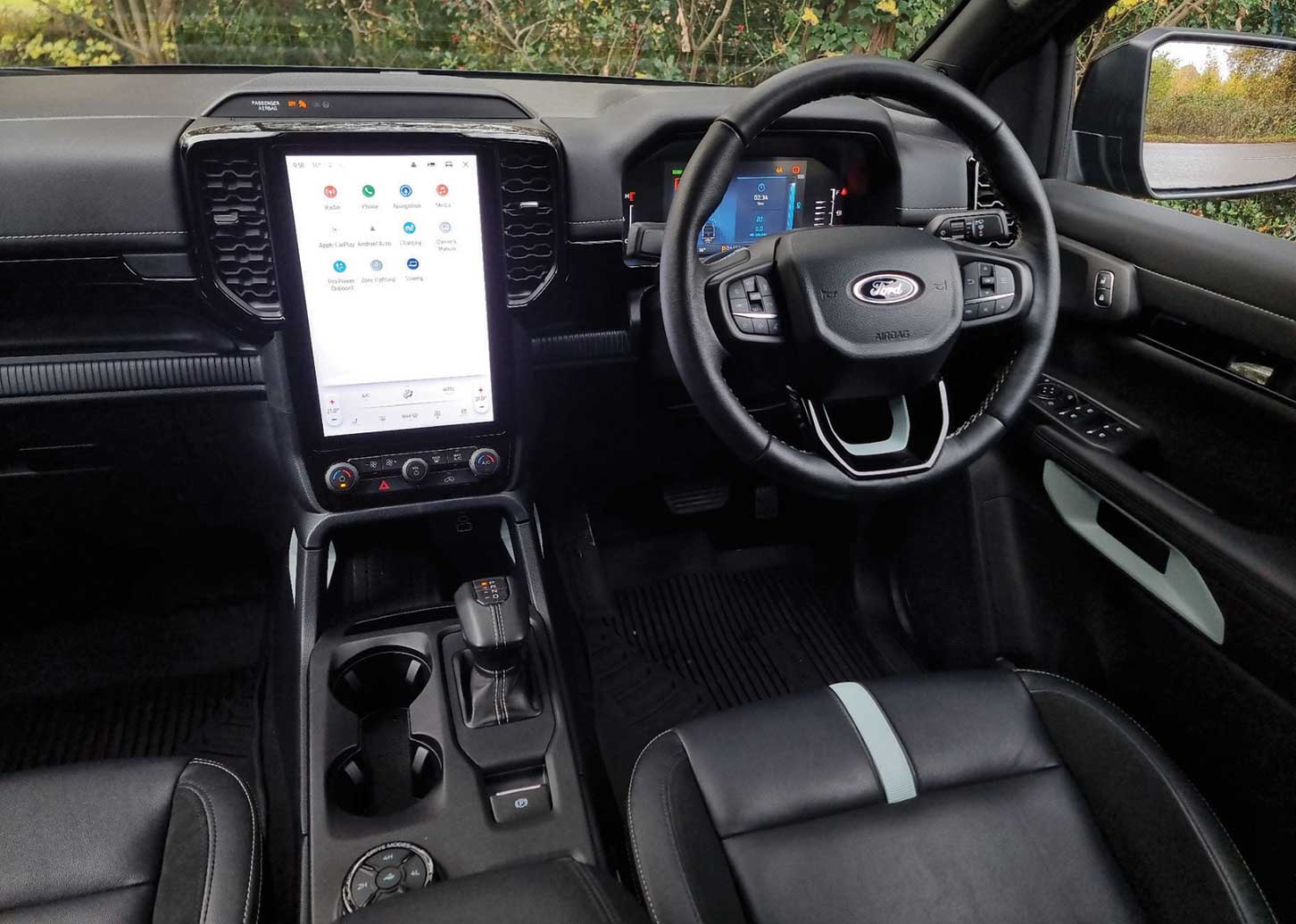
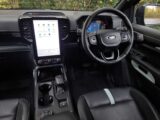
As for passengers, there’s lots of room front and rear. The cabin is solidly put together, and the portrait-shaped infotainment screen looks good and is easy to use.
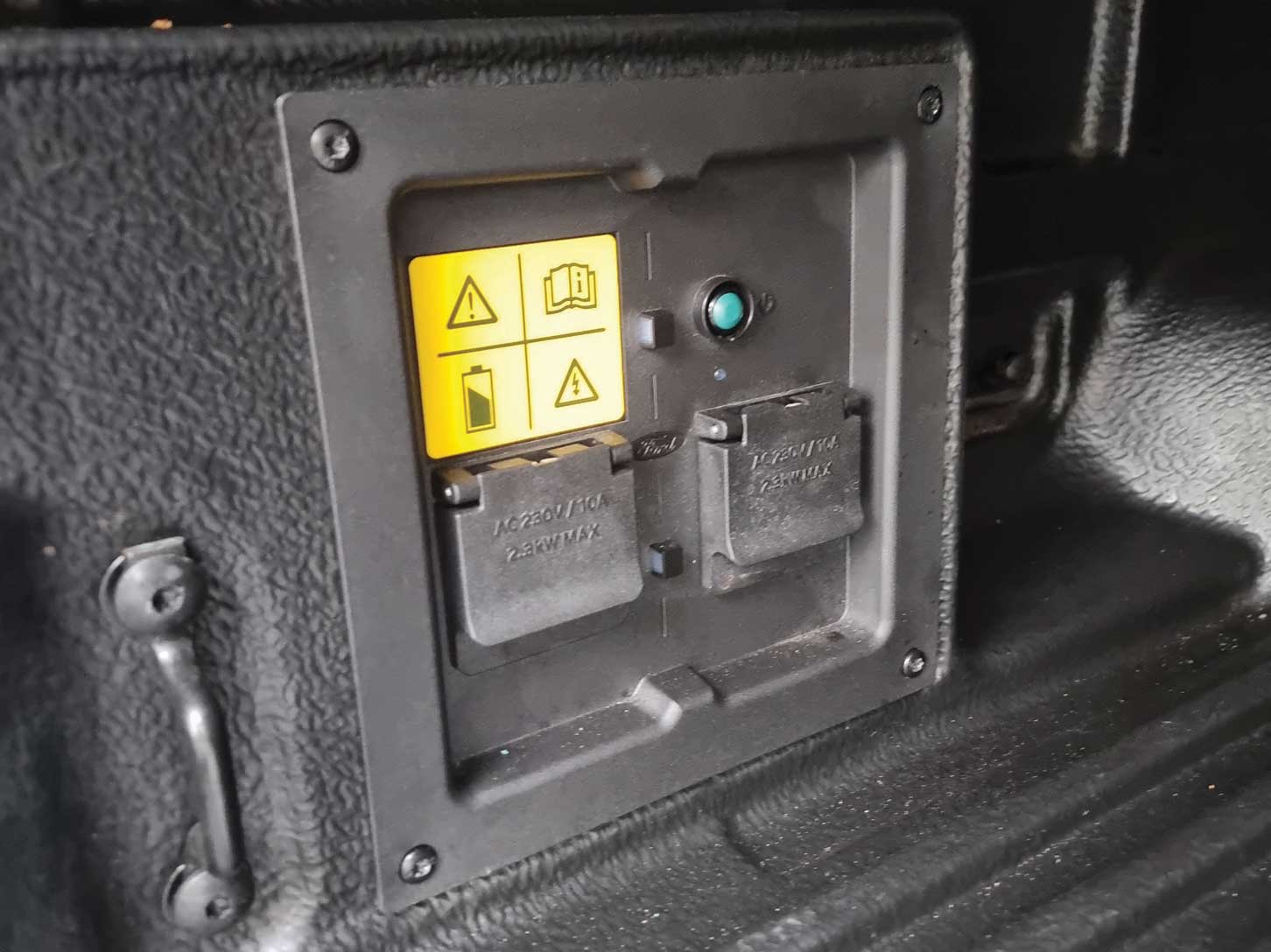
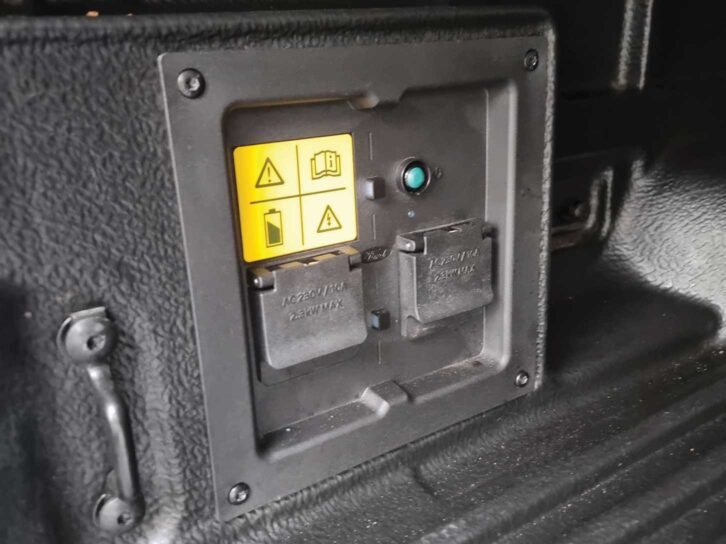
There’s plenty of storage dotted around, and there are USB-A, USB-C and 230-volt sockets in the rear of the cabin.
Buying and owning
The Ranger is not cheap. The PHEV version in high-end Stormtrak specification costs £51,141 before VAT.
On the other hand, changes to the way that double-cab pick-up trucks are taxed for company car drivers make the low-emissions Ranger PHEV an attractive proposition if the vehicle is supplied by your employer.
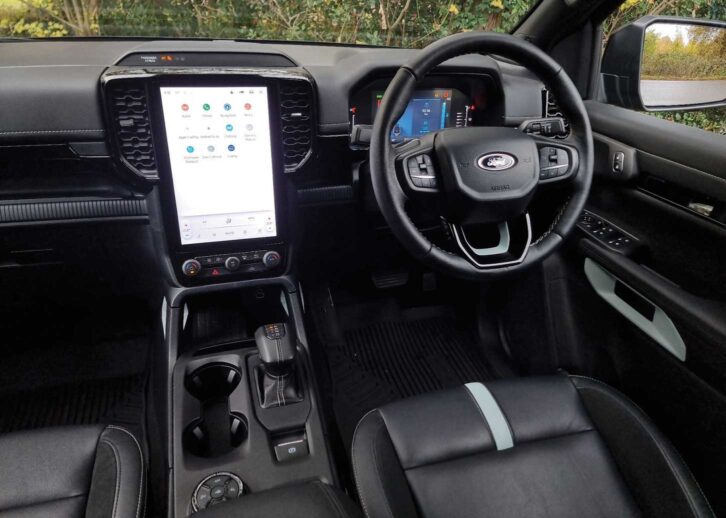
Stormtrak models come with wireless phone charging, dual-zone climate control, electric driver’s seat adjustment, an eight-speaker stereo, heated front seats and steering wheel, and 18-inch alloy wheels.
The Ranger achieved five stars when tested by Euro NCAP’s safety experts and comes with a wide range of driver aids. In official tests, the PHEV can travel 25.5 miles on electricity alone. Our experience suggests that high ’teens is more realistic.
Alternatives to consider
If you’re thinking of a pre-owned Ranger instead, see what we made of buying a used Ford Ranger, too.
Interested in a petrol 4×4? then how about the Volkswagen Tiguan 2.0 TSI 265PS R-Line 4Motion? We thought it was a fine tow car when we put it to the test, offering stable towing and proving to be easy to manoeuvre.
Or, if you’re also considering an EV, see what we made of the Kia EV6 GT-Line AWD when we put it to the test, an electric car which has a spacious interior and both an increased towing capacity and range.
Technical spec of the Ford Ranger 2.3 PHEV Stormtrak
- Price: £51,141 (ex VAT)
- Kerbweight: 2511kg
- Retained value after three years: N/A
- Kerbweight: 2511kg
- 85% of kerbweight: 2134kg
- Gross vehicle weight: 3500kg
- Max towing limit: 3500kg
- Gross train weight: 6600kg
- Towball limit: 350kg
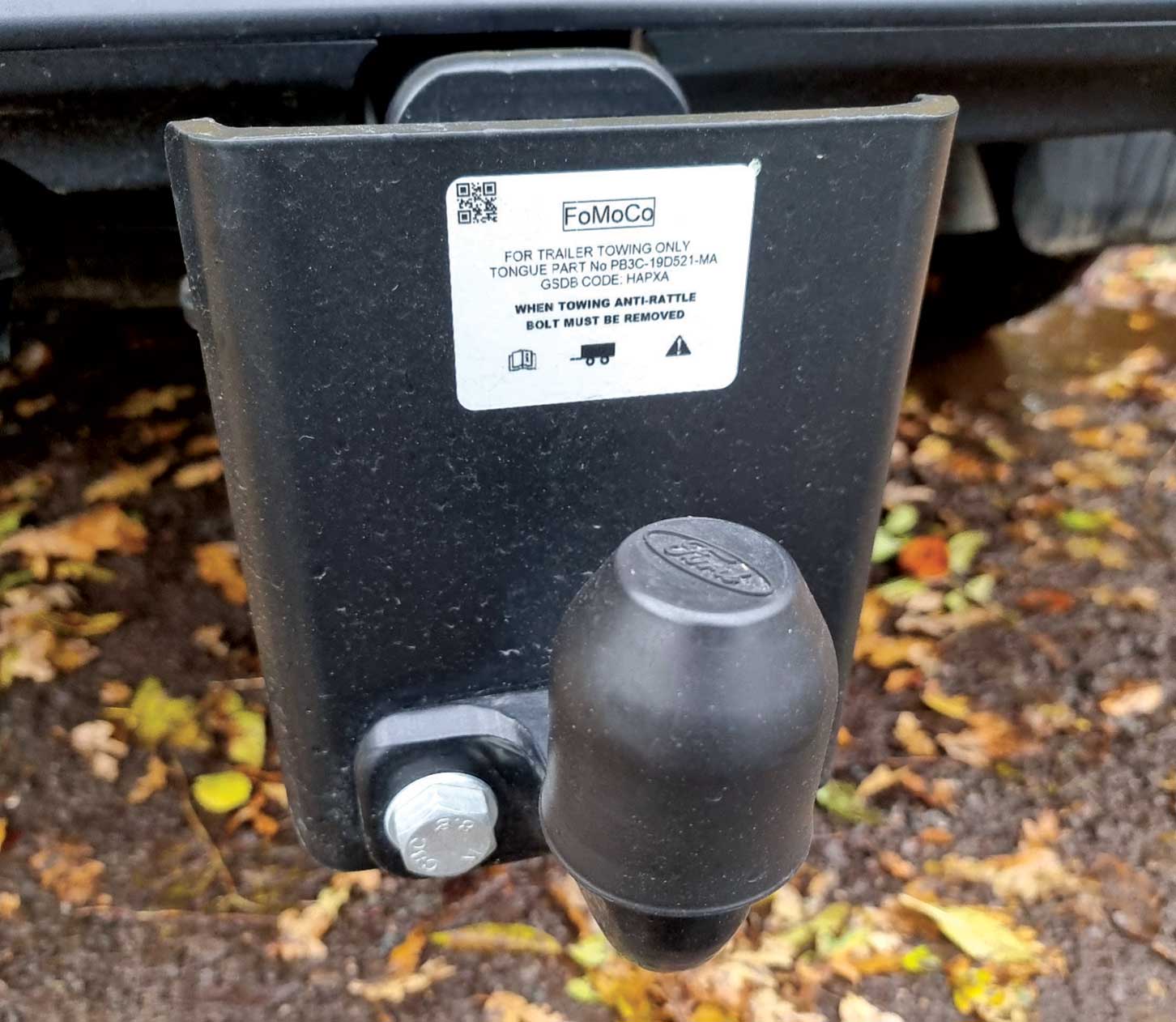
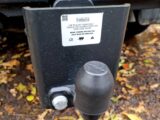
- Price of towball: £400 (ex VAT)
- Load bed (L x W x H): 1638 x 1224 x 498mm
- Payload: 1043kg
- Test conditions: Damp
- Engine size: 2261cc
- Power: 281bhp
- Torque: 514lb ft
- Official fuel economy: 94.2mpg
- Towing economy: 34/23.2mpg
- CO2 emissions: 68g/km
- First year car tax: £345
- Second year car tax: £345
- Insurance group: N/A
- Euro NCAP rating: 5/5
If you’ve enjoyed reading this article, why not get the latest news, reviews and features delivered direct to your door or inbox every month. Take advantage of our brilliant Practical Caravan magazine SUBSCRIBERS’ OFFER and SIGN UP TO OUR NEWSLETTER for regular weekly updates on all things caravan related.
Technical Specifications
| Engine Size | 2261 cc |
| Kerbweight | 2511 kg |
| 85% KW | 2134 kg |
| Towball Limit | 350 kg |
| Maximum Towing Limit | 3500 kg |
| Power | 281 bhp |
| Torque | 514 lb ft |
| Offical MPG | 94.2 mpg |
| Towing MPG | 34/23.2 mpg |
| CO₂ | 68 g/km |