Verdict
The more powerful engine has made the Defender an even better tow car. However, the spare wheel is in the way when hitching up, and running costs are high.
Pros
- Stable and composed on all kinds of roads
- Plenty of pulling power
- Plenty of space inside
Cons
- High running costs
- Tailgate will need opening to clear the spare wheel when hitching up
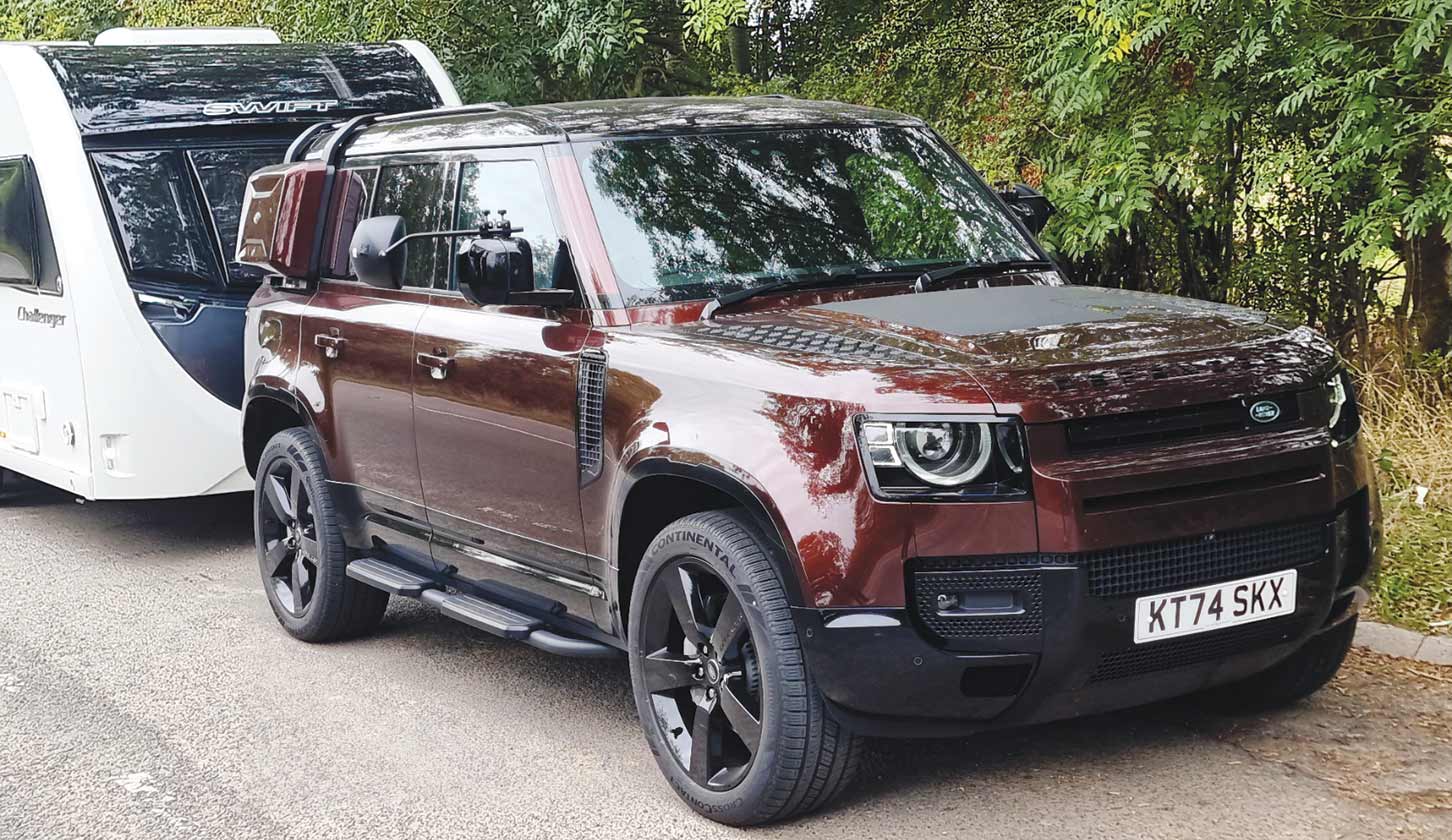
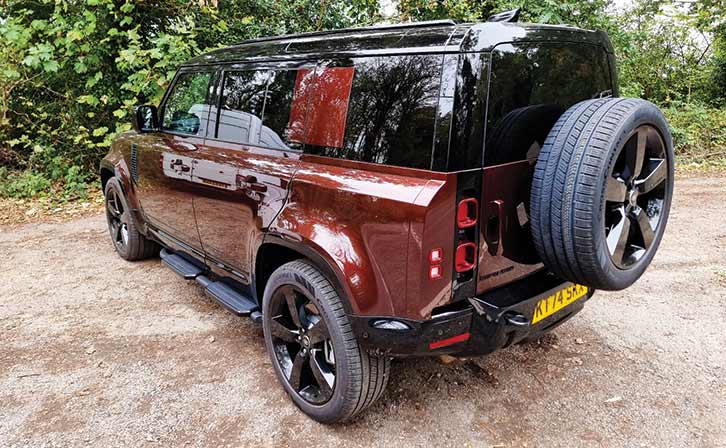
Land Rover’s reboot of the Defender has been around for a few years now. The D300 diesel has now been replaced by the more powerful D350 – as the number suggests, it has 350hp. We’ve been driving the high-spec Land Rover Defender 110 D350 Sedona Edition, with a price tag nudging £85,000.
What are we looking for?
Does the more powerful engine make a worthwhile difference to the Defender’s towing ability? Is the Defender as good on the road as off it, and is it among the best cars for towing a caravan?
Towing ability of the Land Rover Defender 110 D350 Sedona Edition
If you own a large tourer, the ideal tow car is heavy, has plenty of pulling power and four-wheel drive. That’s three big ticks for the Land Rover (although you can also take a look at our best tow car for a 2000kg caravan for more ideas).
The Defender weighs in at just shy of 2.5 tonnes. An 85% match, as recommended for stable towing when matching a car to a caravan, is 2071kg and the towing capacity is 3500kg. So, unless your caravan is made of lead, the D350 will tow it.
The 3.0-litre diesel’s 350hp is useful, but what really matters is the 536lb ft of torque. So much rotational force delivered from 1500rpm to 3000rpm makes the Land Rover’s engine ideally suited to towing.
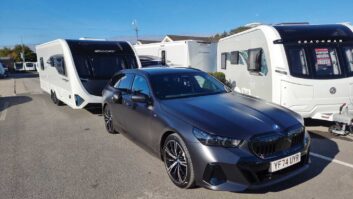
We matched the Defender to a Swift Challenger 650 caravan with a Mass in Running Order of 1549kg, borrowed from Raymond James Caravans in Atherstone.
With so much pulling power, car and caravan accelerated quickly, while the eight-speed automatic gearbox changed gears smoothly and promptly.
When really pushed, the diesel engine can sound a little gruff. It’s certainly noisier than a comparable petrol or a petrol-electric hybrid with a healthy battery. Once cruising along, though, the engine is quiet.
The Defender is stable and composed on all kinds of road. Although the suspension isn’t as taut or firm as a BMW X5’s, the Defender doesn’t feel sloppy on a country road.
On the motorway, the Defender tows beautifully. There’s almost no side-to-side movement, even if the wind picks up. It’s the kind of car that will happily tow all day without unduly fatiguing the driver.
Of course, the Land Rover is four-wheel drive – pulling a caravan over a damp camping field is no bother.
Reversing towards the caravan is made easier by the excellent surround-view camera system, which gives a clear view of the towball. If you’re not a fan of reversing onto a pitch, Land Rover’s Advanced Tow Assist can help by showing the predicted path of the caravan on the touchscreen. This system also allows the driver to steer the trailer using the Terrain Response control without needing a counter-intuitive turn of the steering wheel. It’s part of the £2285 Towing Pack.
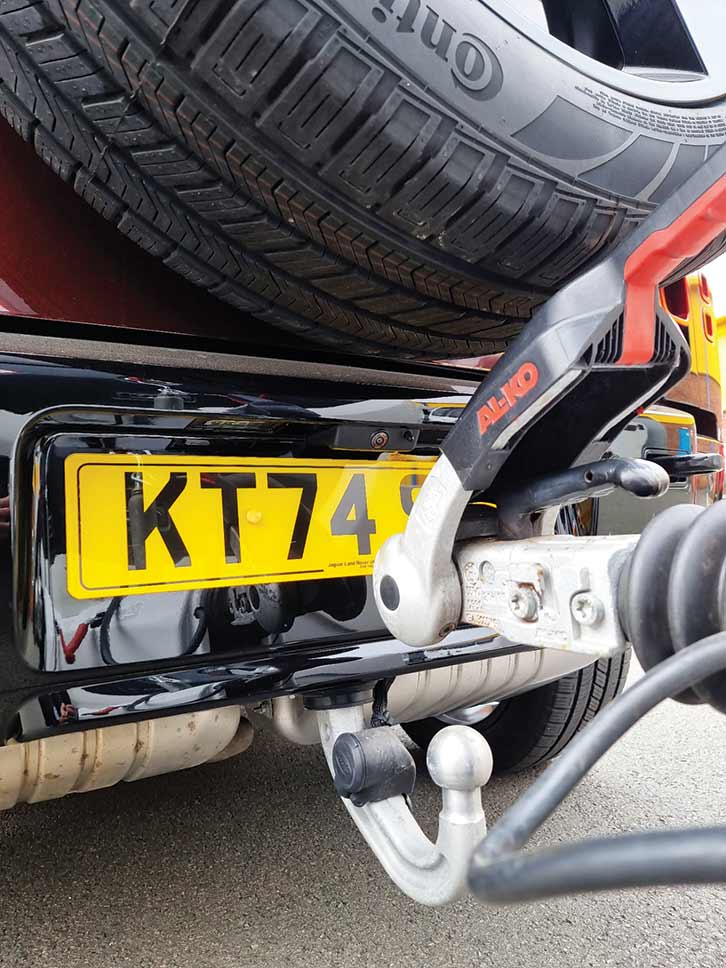
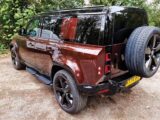
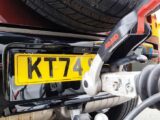
Clever stuff. What’s not so smart is the way the full-size spare wheel fouls the stabiliser lever when hitching up a caravan unless the tailgate is open. It’s a well-known irritation and Land Rover should have solved this issue by now.
Before embarking on a tour, be sure to check this caravan towing checklist to help you stay safe on the road.
Solo driving
The Defender takes a different path to road-focused SUVs such as the BMW X5 and Volvo XC90. It’s more of a dual-purpose machine, designed to perform off and on the road.
Sometimes, cars that have been engineered this way can feel imprecise on the road. The Ineos Grenadier is a good example, with amazing rough-stuff capabilities but a rough-and-ready drive on Tarmac.
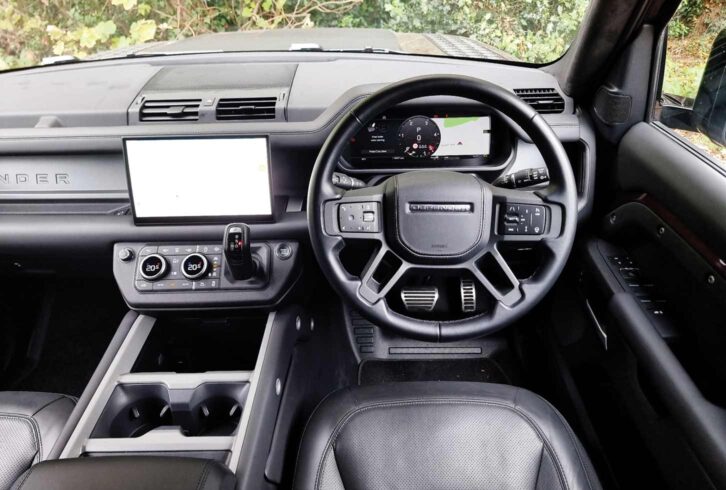
The Defender succeeds where the Grenadier fails: it’s a refined and comfortable road car. The air suspension (a £1615 option) is largely forgiving of poor surfaces, although the huge 22-inch wheels on our test car don’t isolate the cabin as well as smaller wheels and taller tyres on less expensive Defenders.
It’s not an agile car by any means – the Land Rover doesn’t disguise its bulk as well as an Audi Q7 or BMW X5. It leans more in corners than its sportier German rivals and feels better suited to a relaxed driving style. There’s some road and wind noise, but less of the latter than you might expect from the Defender’s square shape.
Space and practicality in the Land Rover Defender 110 D350 Sedona Edition
The Defender 110 comes with five seats or what Land Rover describes as ‘5+2’. That’s always a sure-fire admission that seats six and seven are very tight on space. If you want a roomy seven-seater, the Land Rover Discovery is a better bet.
Our test car had five seats, with plenty of room for everyone. In the front, the driver and passenger sit up high with a commanding view. The seats are very comfortable, even for long days behind the wheel.
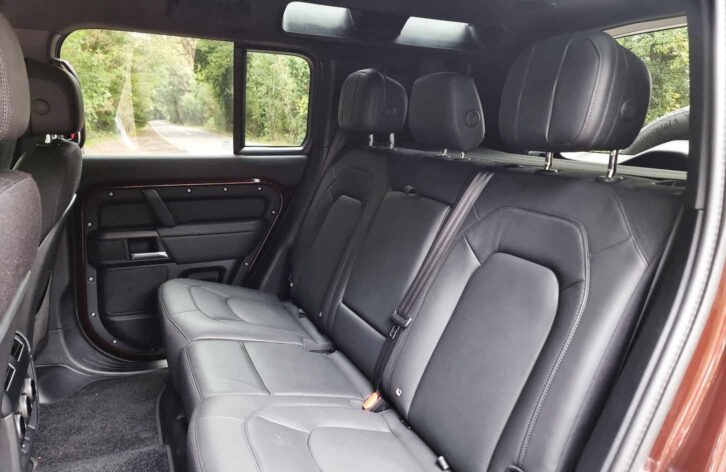
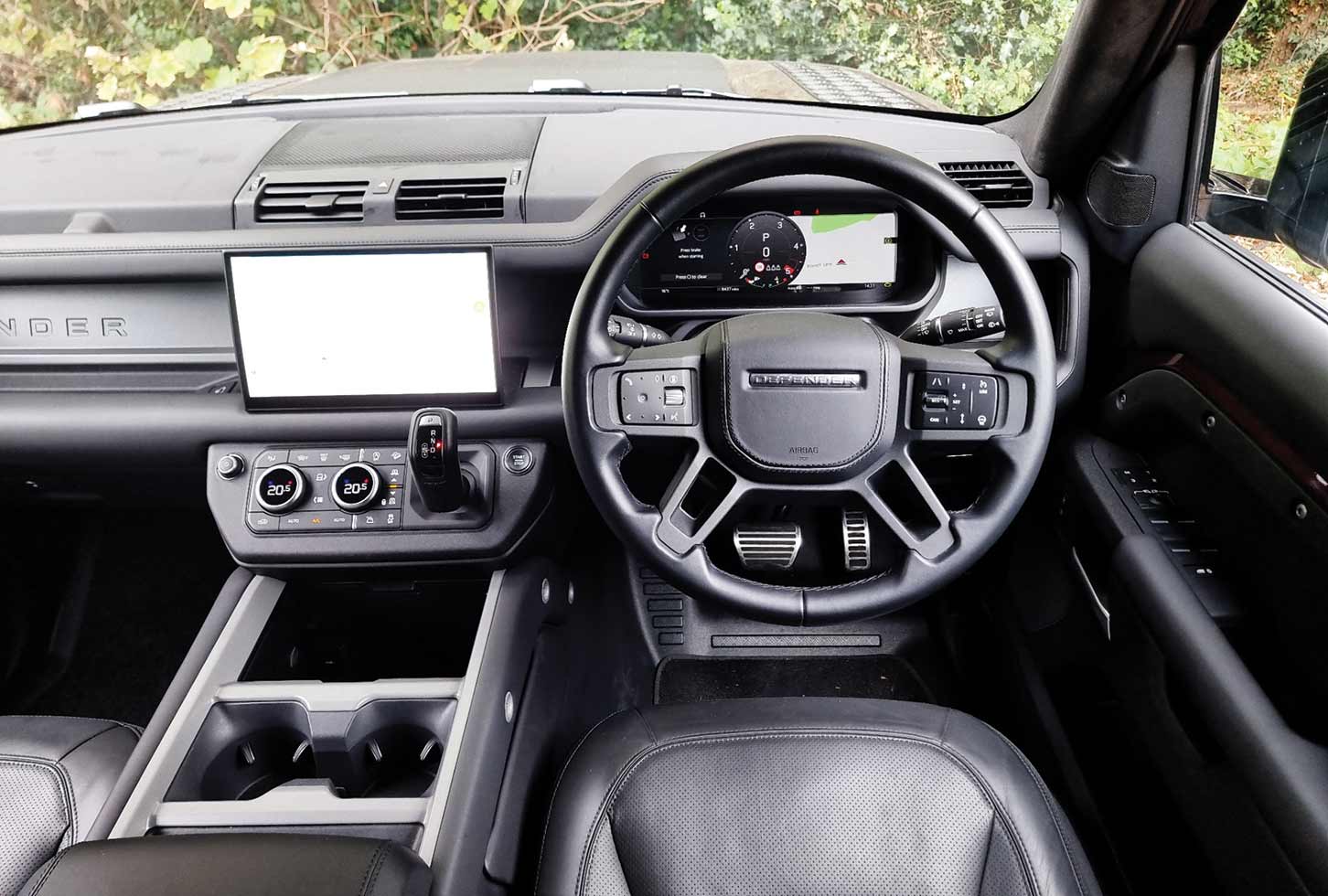
There’s plenty of storage, and Land Rover has provided separate physical controls for the air conditioning which make quick adjustments easy. The infotainment system looks good and is easy enough to use.
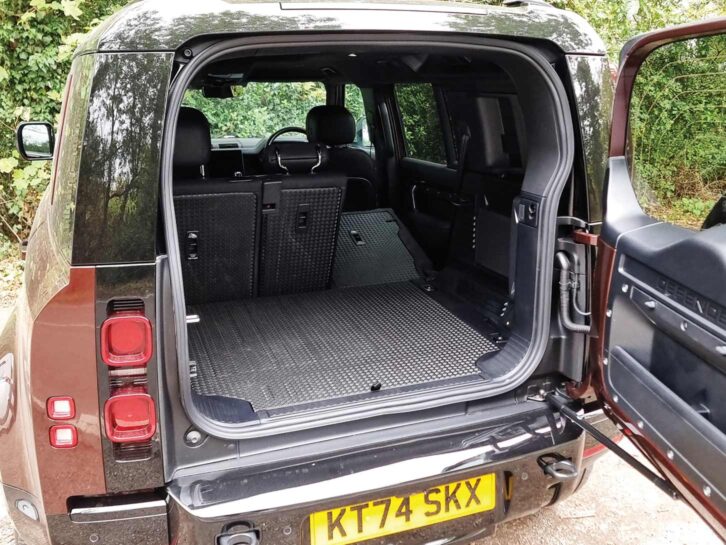
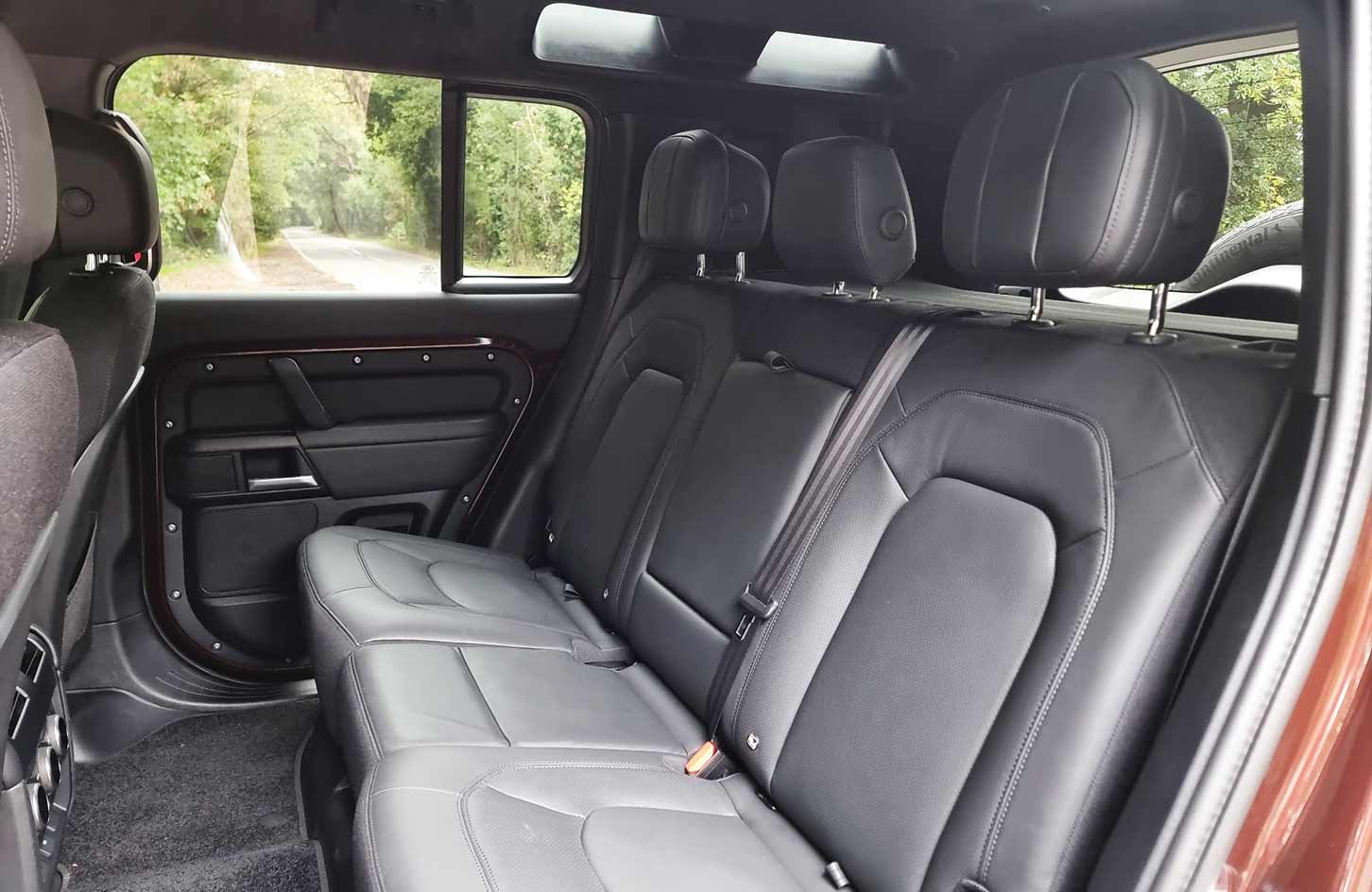
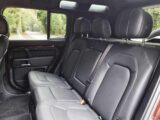
In the back, there’s more than enough space for adult passengers, and the cabin is wide enough for three to travel without elbowing each other.
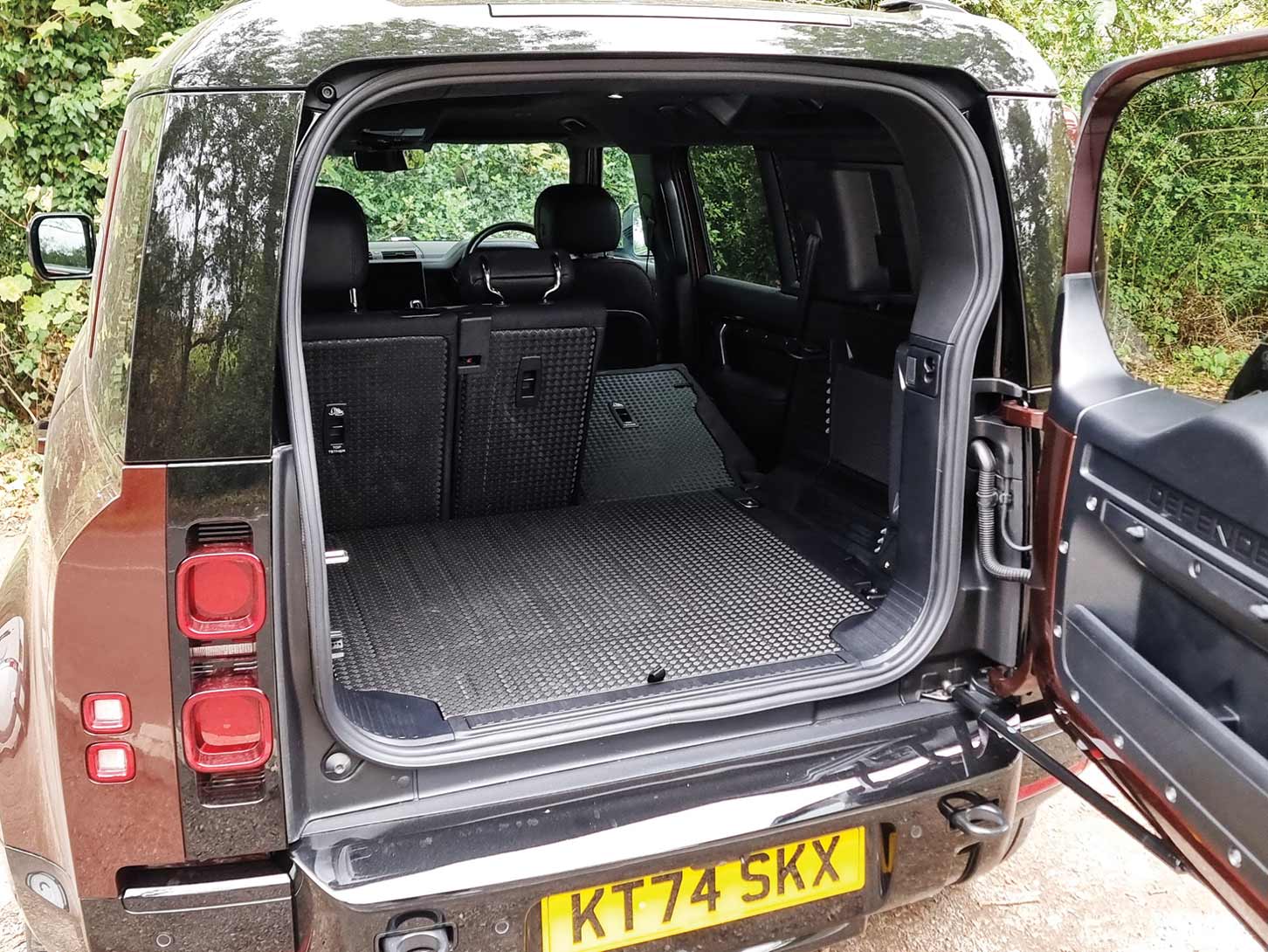
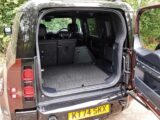
Luggage space is generous, although as you’d expect with a proper 4×4 the floor is high. Thanks to the air suspension it can be lowered.
Buying and owning the Land Rover Defender 110 D350 Sedona Edition
The Defender 110 range starts from £62,795. The three-door 90 costs less while the longer 130 is more expensive. Our special edition test car costs a hefty £84,470 before options, although it is well equipped.
Carbon dioxide emissions make for high tax bills for company car drivers, and fuel economy of 32.2mpg on the combined cycle is poor. On our towing economy route, the car returned a respectable 25mpg.
You’ll get all the safety features and driver aids you’d expect.
Alternatives to consider
The Volvo XC90 T8 AWD Ultra is a comfortable SUV that provides a spacious interior, plenty of stability and a third row of seats.
Alternatively, you could take a look at the Volkswagen Tiguan 2.0 TSI 265PS R-Line 4Motion – it’s a petrol 4×4 which tows with stability and is easy to manoeuvre.
You can also see what we have to say about buying a used Land Rover Defender, too.
Technical spec of the Land Rover Defender 110 D350 Sedona Edition
- Price: £84,470
- What Car? Target Price: NA
- Retained value after three years: NA
- Kerbweight: 2436kg
- 85% of kerbweight: 2071kg
- Gross vehicle weight: 3200kg
- Max towing limit: 3500kg
- Gross train weight: 6700kg
- Towball limit: 150kg
- Price of tow ball: £2285 (part of pack)
- Boot size: 786-1875 litres
- Payload: 764kg
- Test conditions: Dry
- Engine size: 2997cc
- Power (hp)/rpm: 350hp/4000
- Torque (lb ft)/rpm: 516/1500-3000
- Official fuel economy: 32.2mpg
- Towing economy: 25.5mpg
- CO2 emissions: 230g/km
- First year car tax: £4680
- Second year car tax: £620
- Insurance group: 45E
- Euro NCAP rating: 5/5
If you’ve enjoyed reading this article, why not get the latest news, reviews and features delivered direct to your door or inbox every month. Take advantage of our brilliant Practical Caravan magazine SUBSCRIBERS’ OFFER and SIGN UP TO OUR NEWSLETTER for regular weekly updates on all things caravan related.
Technical Specifications
| Engine Size | 2997 cc |
| Kerbweight | 2436 kg |
| 85% KW | 2071 kg |
| Towball Limit | 150 kg |
| Maximum Towing Limit | 3500 kg |
| Power | 350 bhp |
| Torque | 516 lb ft |
| Offical MPG | 32.2 mpg |
| Towing MPG | 25.5 mpg |
| CO₂ | 230 g/km |