


Verdict
The price is eyewatering, but the Mercedes E 450 d is practical, luxurious, and tows extremely well.
Pros
- Tows extremely well
- Plenty of space inside
- High level of standard equipment
Cons
- The price
- Relatively low maximum download on the towbar of 84kg.
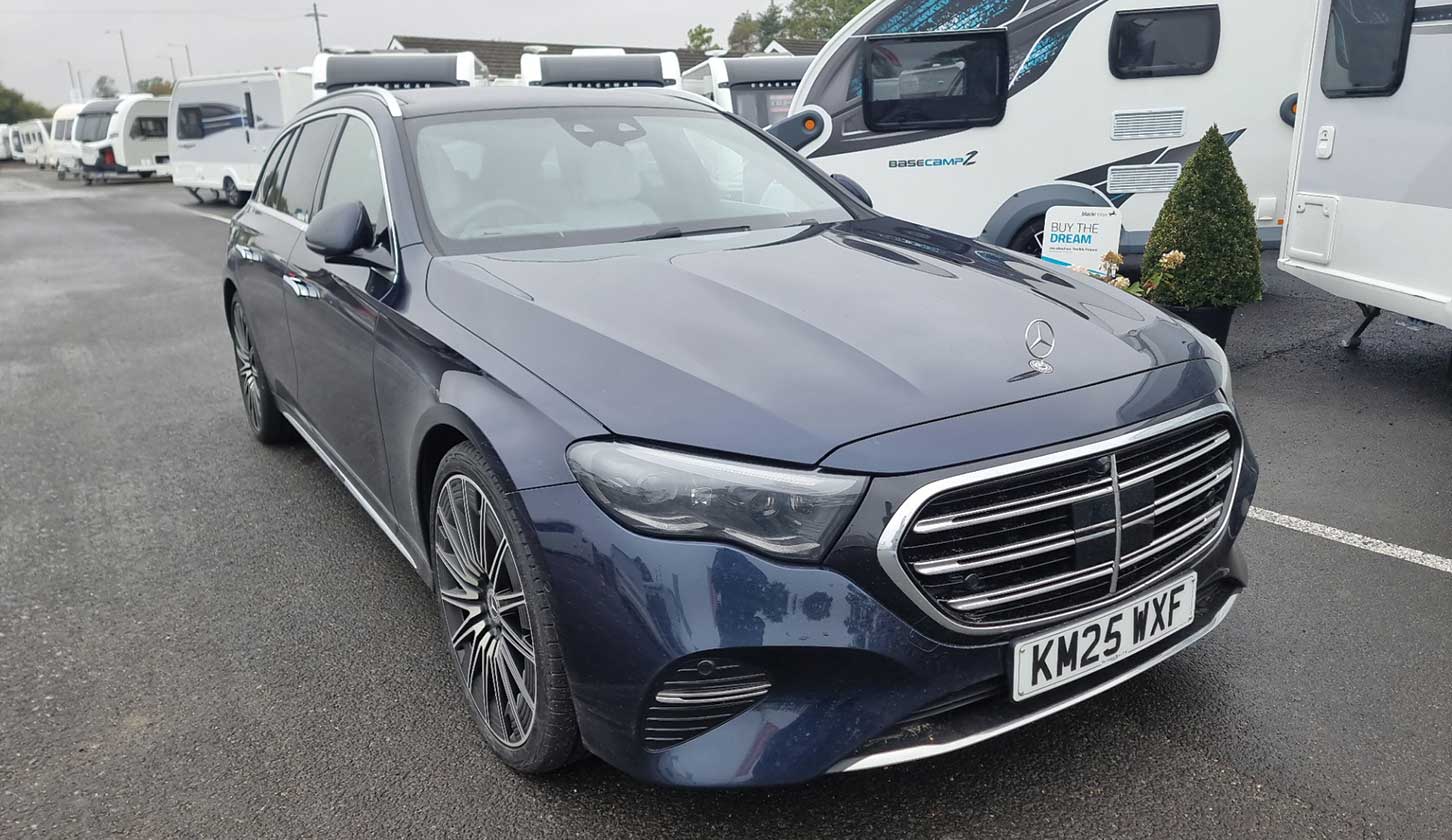
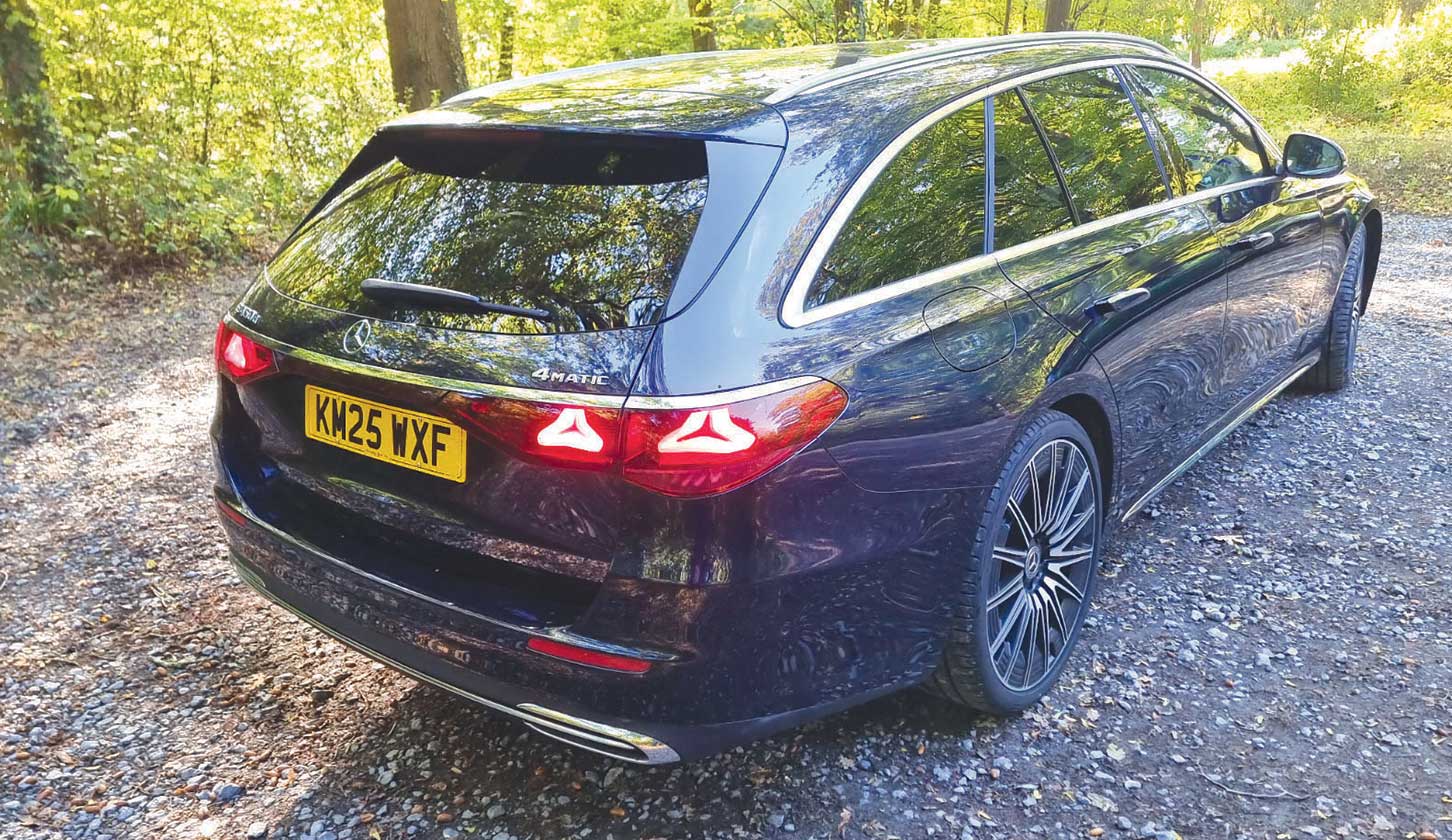
This is the latest generation of the E-Class Estate, Mercedes’s upmarket load carrier. I’ve been driving the E 450 d, a very powerful mild-hybrid diesel with four-wheel drive.
It’s heavy enough to rival luxury SUVs, but the price tag is very high.
What am I looking for?
Does the E-Class tow as well as a big 4×4 for towing a caravan does? I’m looking for stability, practicality and luxury in one compelling package.
Towing ability
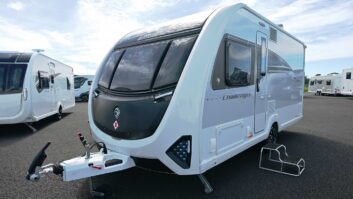
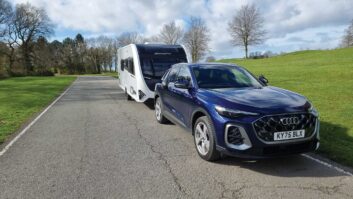
When it came to matching a car to a caravan, I opted to match the Mercedes to a Swift Conqueror 645 Grande with a Mass in Running Order of 1726kg (thanks to Couplands in Louth for the loan of the caravan). The E-Class handled this large twin-axle tourer without any sign of strain.
The E 450 d has 390hp and 553lb ft of torque. Those are big numbers and make for effortless towing. Even pulling such a heavy tourer, there’s almost never any need to work the engine hard. When you do, it makes a pleasant growl, but in regular driving you can hardly hear it.
The nine-speed automatic shifts very smoothly – you barely notice the change in gear ratio. The ’box responds swiftly and is rarely in the wrong gear.
Holding speed on hilly routes is easy, as you would expect in one of the best estate tow cars.
If you need to stop on a slope, the E-Class pulls away easily and without struggling for traction – one of the benefits of four-wheel drive. Join the motorway, and the Mercedes tows straight and true, always a trait found in good caravan tow cars. Very few movements from the caravan can be felt in the car’s cockpit.
The car has air suspension as standard, which can be adjusted through the different drive modes. In ‘comfort’ there’s a little back-and-forth pitching over expansion joints and changes in surface. It’s only slight, but it is noticeable. Changing to the ‘sport’ setting makes for tighter control of movements without making the Merc uncomfortable.
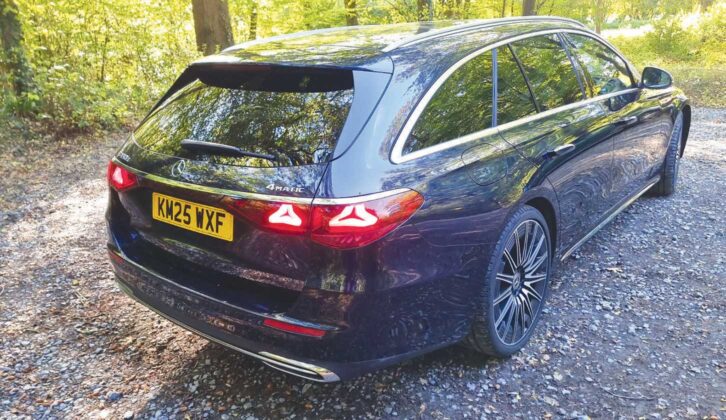
There’s little else to complain about. The most significant criticism is the relatively low maximum download on the towbar, which is just 84kg. It will take careful loading of the caravan to avoid exceeding this figure. I’d be happier with a noseweight limit of 100kg.
Does the E-Class tow as well as the best luxury SUVs? It’s very close to the standards set by the likes of the BMW X5 and Range Rover Sport. The E-Class doesn’t quite feel as unshakeable at speed as these cars, but the difference is small.
Solo driving
The E 450 d can feel different depending on the conditions and how it is driven.
Around town, it glides through traffic almost as quietly as an electric car. If you are gentle with the throttle there is hardly any noise from under the bonnet. For a car with low-profile tyres on 21-inch wheels (a £1000 upgrade over the 20-inch standard alloys) the ride is extremely comfortable.
Long drives are where the E-Class really comes into its own. With the air suspension set to comfort the car smooths over all but the worst bumps in the road surface, without feeling loose or sloppy as you drive over dips and crests.
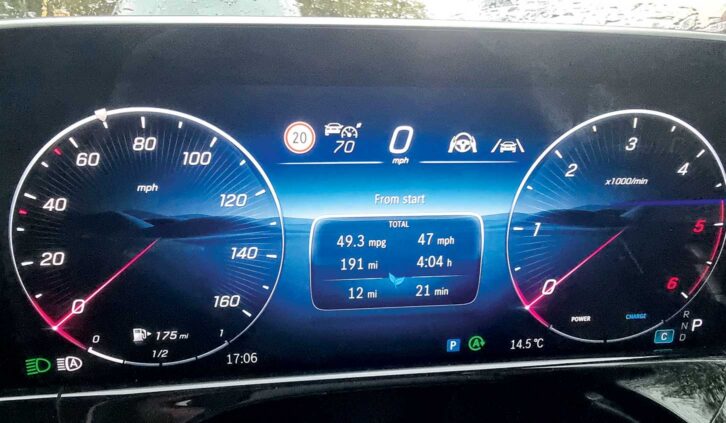
The cabin is quiet, aside from a little road noise from the large wheels and tyres. You are well insulated from any outside noise, which is partly due to the acoustic window glass. The driver needs to keep a close eye on the speedo to avoid travelling more quickly than intended.
Leave the motorway behind and head onto country roads and the E-Class handles extremely well for such a large and heavy car. The steering is precise if lacking in feel, and if you switch to the ‘sport’ driving mode there’s little roll while cornering. Being so heavy the E-Class isn’t truly agile, but it is a very satisfying car to drive.
Don’t miss my pick of the various towing gadgets that can make a big difference when you’re on the road, too.
Space and practicality
The E-Class is almost five metres from stem to stern, and that length has been put to good use inside.
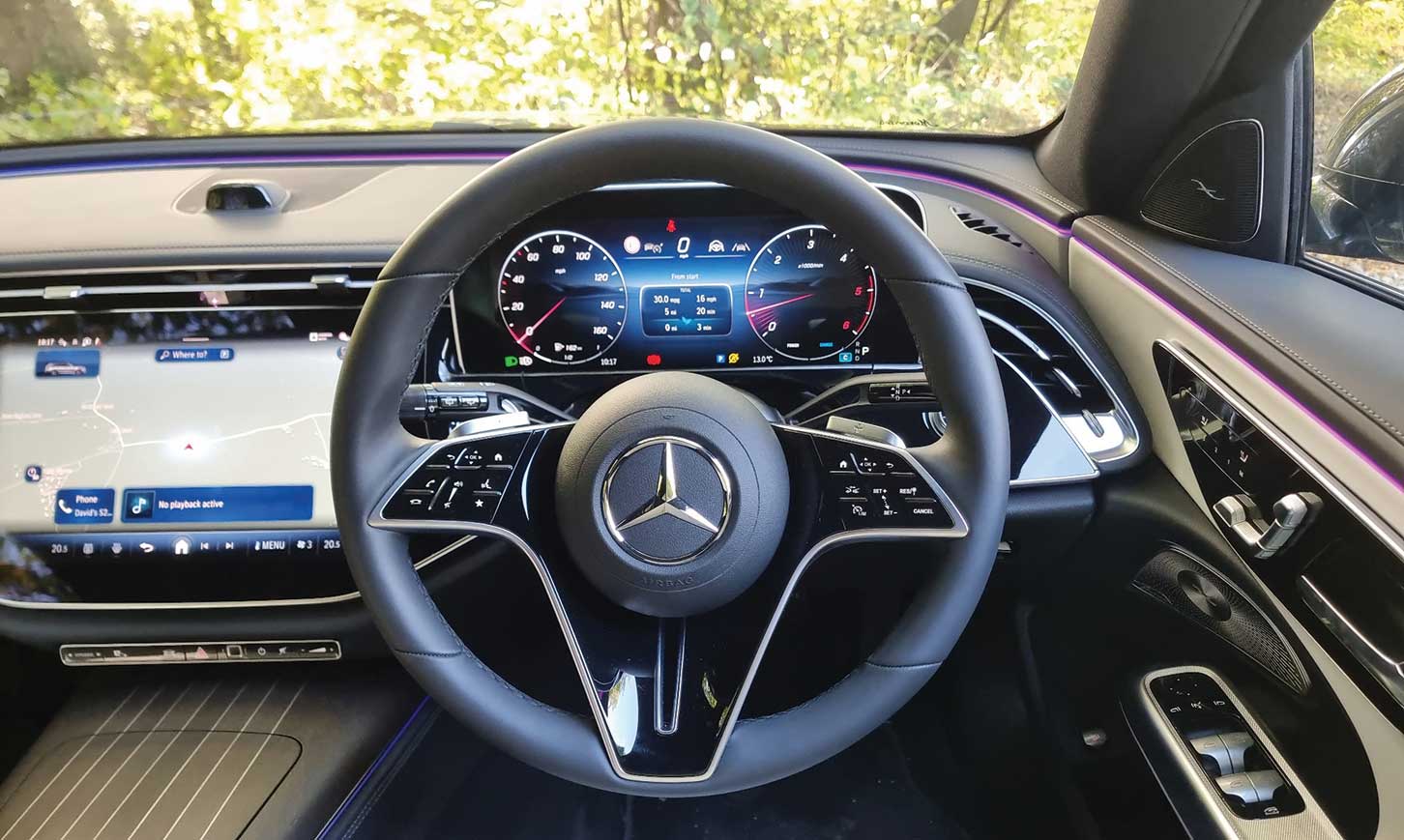
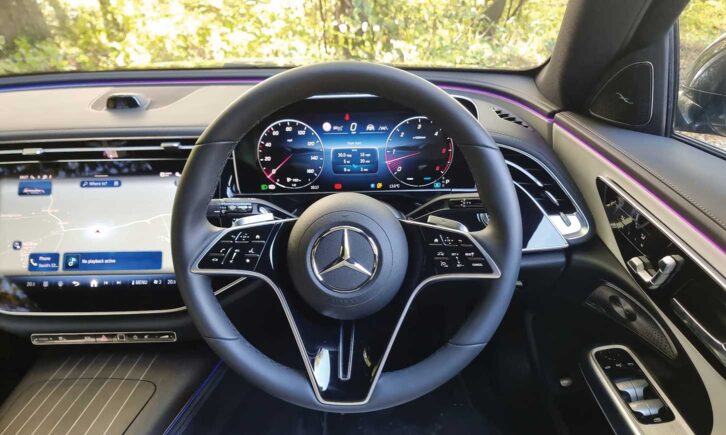
Front legroom is exceptionally generous – drivers well over six-feet tall won’t need to use all the travel. The front of the cabin blends high-tech with a very high standard of finish. The driver’s digital display and huge touchscreen infotainment system are surrounded by beautifully crafted materials.
The 14.4-inch touchscreen looks superb, but it takes a bit of practice to find your way around the various menus. I came to rely on the HBUX voice assistant, which is activated by saying ‘Hey Mercedes’. It’s surprisingly intuitive.
The passenger doesn’t miss out, with another screen that can’t be viewed by the driver while on the move.
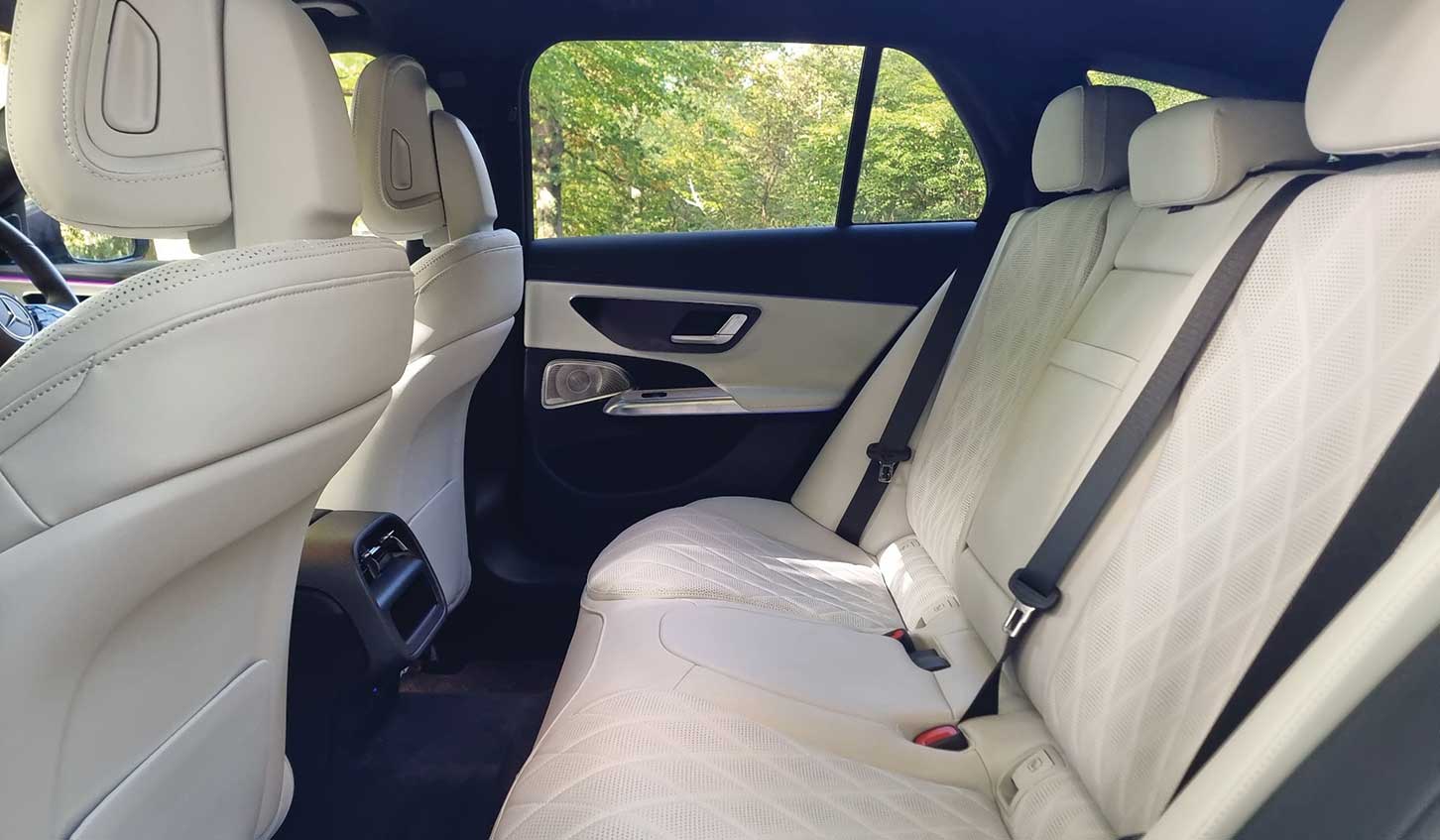
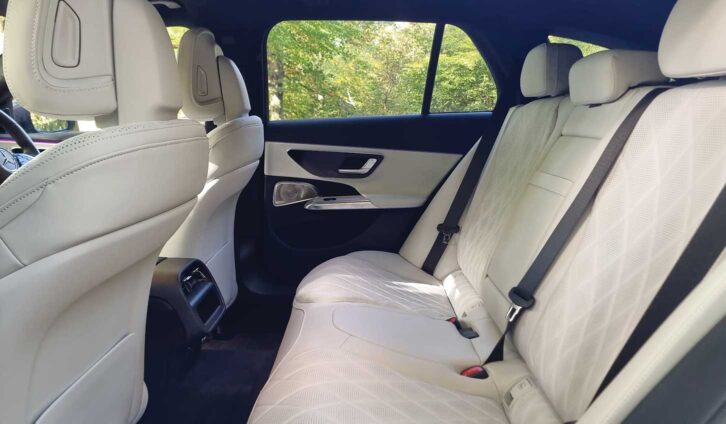
Travelling in the back is no hardship, with acres of head and legroom. A tall adult can travel behind a lanky driver with room to spare. There are air vents between the front seats, but no separate air-con controls.
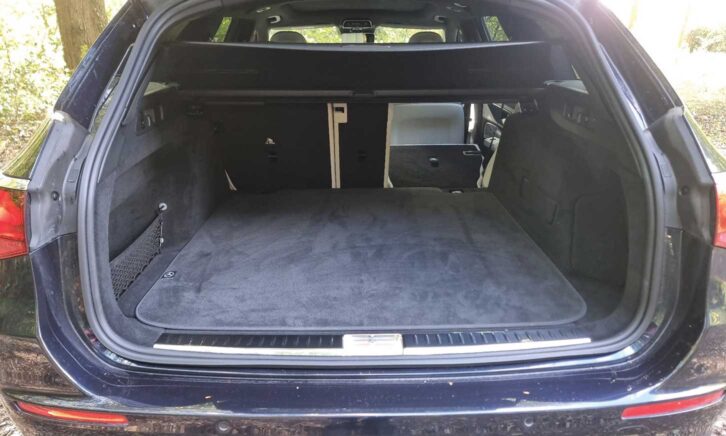
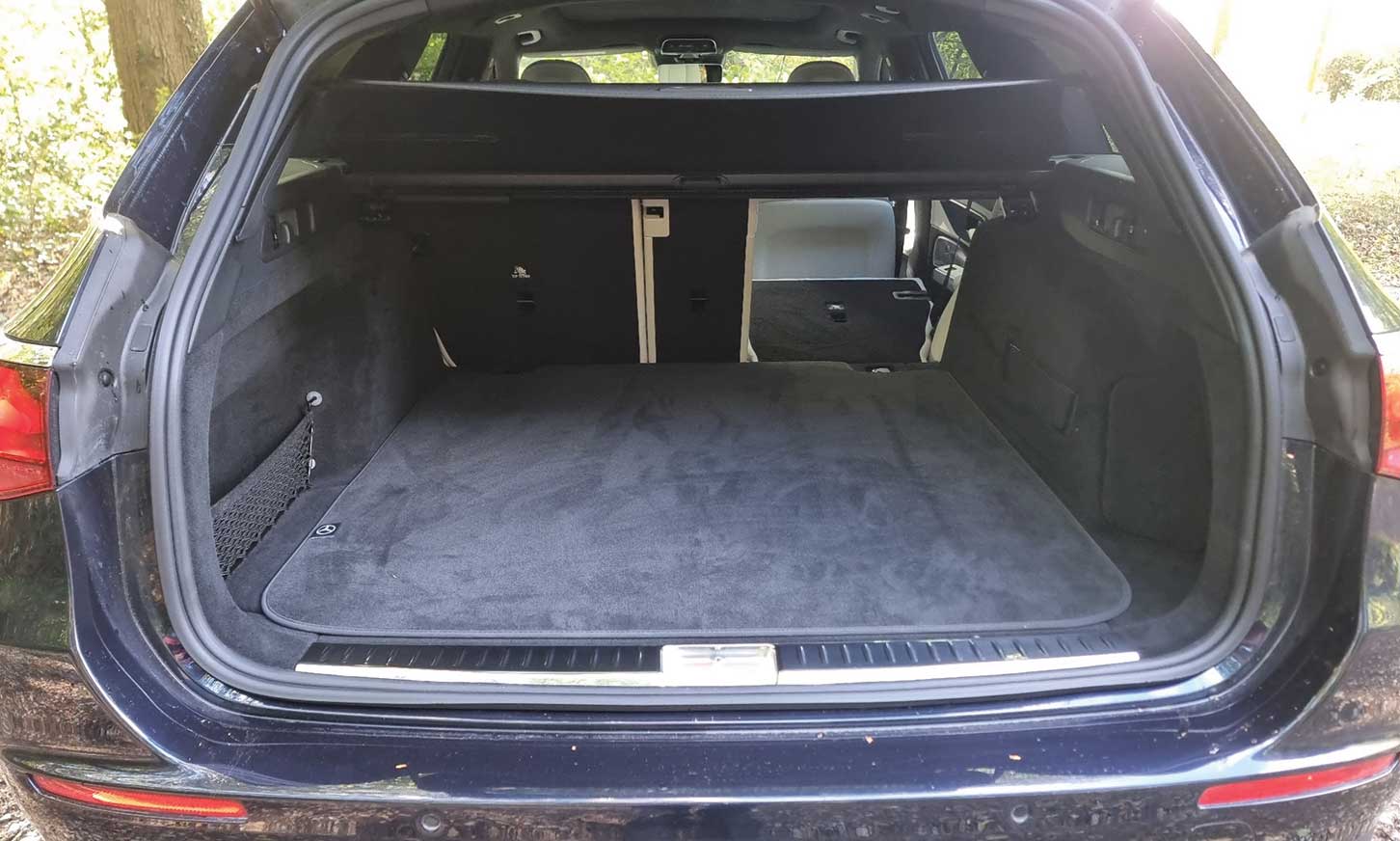
Luggage space is slightly less generous than in some previous generations of E-Class Estate, but 615 litres with the seats upright means there’s more space than the Audi A6 Avant
or BMW 5-Series Touring (see what we had to say about buying a used BMW 5 Series Touring).
Buying and owning
Whoever said the best things in life are free never went shopping for an E-Class Estate. My high-spec test car has a list price of £90,220 before options. That’s expensive, even next to high-end estates from other prestige brands. However, the widespread move away from diesel power makes it hard to find direct competitors.
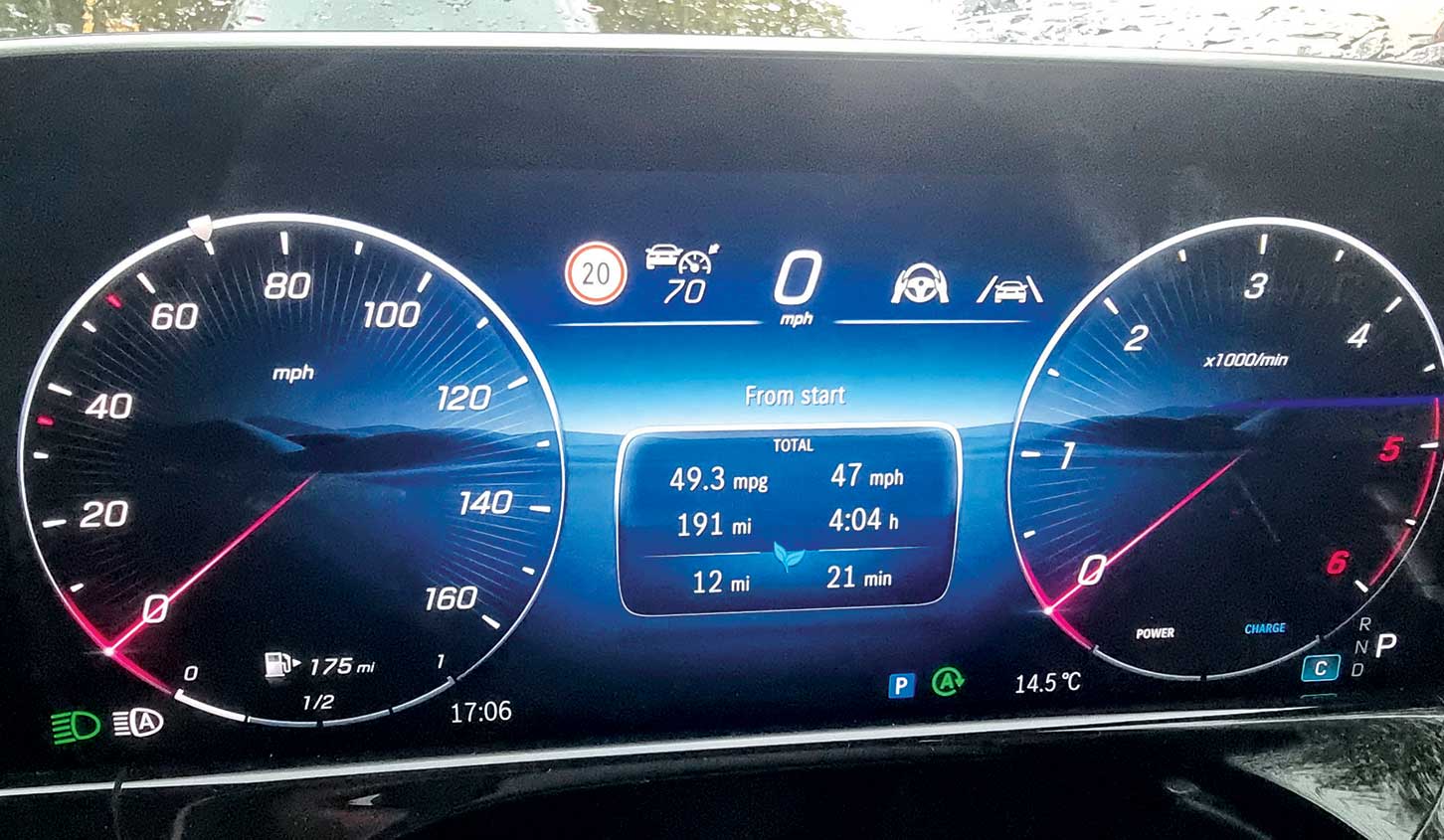
The high level of standard equipment goes some way to justifying the price, and at least fuel bills will be low. The official combined figure is 45.6mpg, and I saw around 50mpg on a steady motorway run. That dropped to 25.2mpg while towing.
The E-Class has a five-star safety rating from Euro NCAP.
Alternatives to consider
It may have high running costs, but I found the Land Rover Defender 110 D350 Sedona Edition provided a faultless towing performance, coming with plenty of pulling power and a spacious interior inside.
Or you could take a look at an SUV that impressed me recently, the Volvo XC90 T8 AWD Ultra – it’s a spacious tow car that offers comfort and stability.
Technical spec
- Model tested: E 450 d 4Matic Exclusive Premium Plus Estate
- Price: £90,220
- Kerbweight: 2140kg
- Retained value after three years: N/A
- Kerbweight: 2140kg
- 85% of kerbweight: 1819kg
- Gross vehicle weight: 2745kg
- Max towing limit: 2100kg
- Gross train weight: 4845kg
- Towball limit: 84kg
- Price of towball: £695
- Boot size: 615/1830 litres
- Payload: 605kg
- Test conditions: Damp
- Engine size: 2989cc
- Power (hp)/rpm: 390/N/A
- Torque (lb ft)/rpm: 553/1350-2000
- Official fuel economy: 45.6mpg
- Towing economy: 25.2mpg
- CO2 emissions: 164g/km
- First year car tax: £1360
- Second year car tax: £620
- Insurance group: 50E
- Euro NCAP rating: 5/5
If you’ve enjoyed reading this article, why not get the latest news, reviews and features delivered direct to your door or inbox every month. Take advantage of our brilliant Practical Caravan magazine SUBSCRIBERS’ OFFER and SIGN UP TO OUR NEWSLETTER for regular weekly updates on all things caravan related.
Technical Specifications
| Engine Size | 2989 cc |
| Kerbweight | 2140 kg |
| 85% KW | 1819 kg |
| Towball Limit | 84 kg |
| Maximum Towing Limit | 2100 kg |
| Power | 390 bhp |
| Torque | 553 lb ft |
| Offical MPG | 45.6 mpg |
| Towing MPG | 25.2 mpg |
| CO₂ | 164 g/km |