
Hybrid cars now account for more than a quarter of all new vehicles sold in the UK. That’s roughly five times as many hybrids as diesels. But with so many types of hybrid car on sale, how do you know which – if any – is right for you and your caravan?
In this guide, we’ll take a look at the different types of hybrid car, explaining the difference between a mild, full, and plug-in hybrid. We’ll also examine the pros and cons of the different types of hybrid car technology, to help you find the best tow car.
Types of hybrid cars
Full hybrids
Plug-in hybrid cars
Mild hybrids
Full hybrids
What is a full hybrid car?
Let’s start with full hybrids, such as the Ford Kuga 2.5 FHEV 183PS ST-Line X AWD, because this type has been around the longest. Pioneered by Toyota with the Prius, among other models, a full hybrid uses an internal combustion engine and an electric motor to drive the wheels.
Sometimes the best hybrid tow cars run on electricity alone, sometimes the engine, other times both. A few hybrid cars use the engine as a generator and will only power the wheels using electricity.
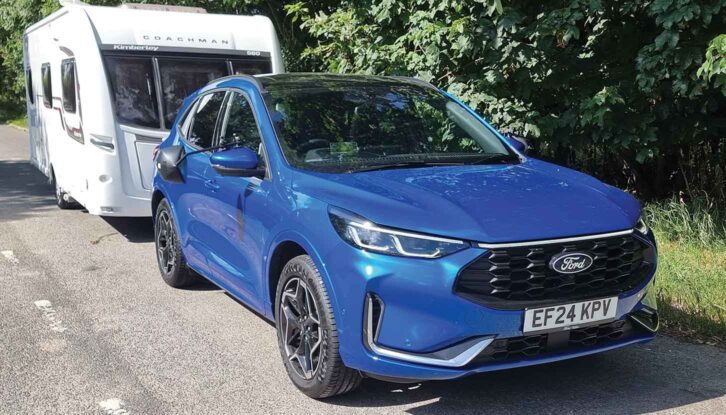
Either way, the battery is recharged using energy that would otherwise be lost when slowing down and braking. This process is referred to as ‘regenerative braking’. The engine might also act as a generator to top up the level of charge.
Unlike fully electric tow cars or plug-in hybrids, a full hybrid vehicle cannot be plugged in to boost the battery. The car takes care of charging with no intervention from the driver. This type of hybrid is sometimes referred to as a ‘self-charging hybrid’. Some drivers dislike the term, because it seems to imply that energy is created from nothing – it isn’t.
One way or another, the energy that powers the car started out in the petrol or diesel fuel, but the clever hybrid system means less of this energy goes to waste.
The pros of a full hybrid
- Consistently strong fuel economy in normal driving and towing
- No need for a home charger
- More affordable than a plug-in
- Short electric range
The cons of a hybrid
- Higher tax bills than a plug-in for company car drivers
- Not as economical as a plug-in with a healthy charge
Plug-in hybrid cars
What is a plug-in hybrid car?
A plug-in hybrid tow car operates in much the same way as a full hybrid, except that it has a much bigger battery, which can be charged up by plugging it into a domestic plug or preferably, a dedicated electric vehicle charging point. The advantage of a plug-in hybrid, such as the Volvo XC90 T8 AWD Ultra or the Honda CR-V 2.0 Plug-in Hybrid 2WD Advance Tech, is that it can travel much further on electricity alone than a full hybrid vehicle.
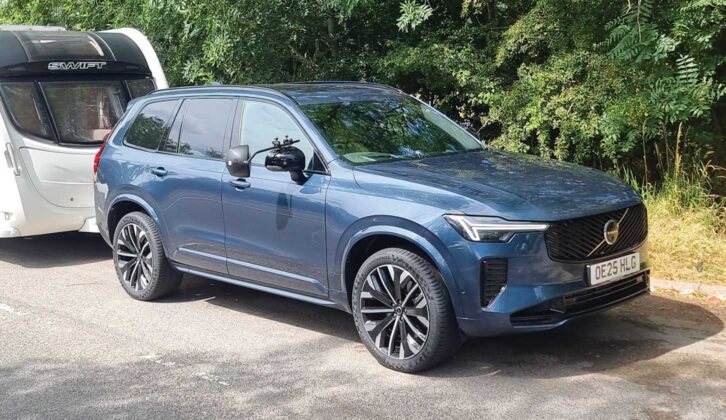
Whereas a full hybrid may travel a mile or so as an EV, perhaps less, a plug-in can complete many short-to-medium journeys on electricity alone. An official electric range of about 30 miles is common, but some recent models can travel much further. For example, the Omoda 9 SHS has an official electric range of 93 miles.
One misconception is that plug-in hybrids only recharge when they are plugged in, whereas they use regenerative braking in the same way as a full hybrid.
However, this isn’t sufficient to fully recharge a plug-in’s much bigger battery. There is a huge difference between the fuel economy that a plug-in can achieve with a healthy state of charge and with the battery running low.
The pros of a plug-in hybrid
- Longest electric range
- Heavy, which benefits stability while the car is towing
- Excellent economy with a healthy charge
The cons of a plug-in hybrid
- Weaker economy once the battery runs low
- Expensive to buy
- Not a good option if you can’t recharge at home
Mild hybrids
What is a mild hybrid car?
Some car makers use slightly different definitions for a mild hybrid (such as the Suzuki Vitara 1.4 Mild Hybrid Ultra Allgrip), but the simplest one is that a mild hybrid never uses electricity to drive the wheels directly.
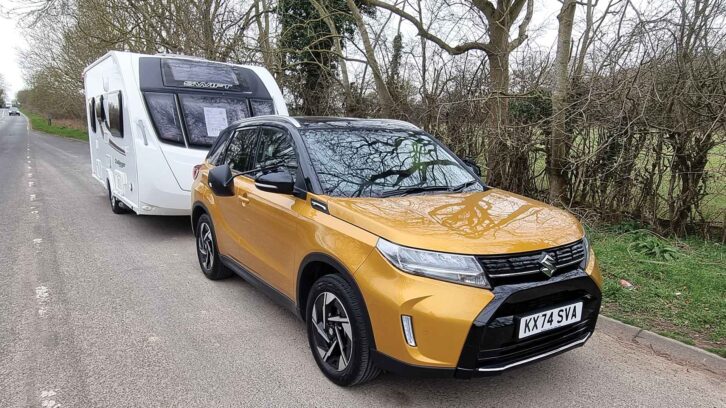
Instead, electrical power is used to run ancillary systems, taking the strain from the engine and improving fuel economy.
Most mild hybrids use a 48V battery and a belt-driven starter-generator. This allows the car to cut the engine and coast under certain conditions to save fuel. It’s the next step from the stop-start systems that are already a familiar feature of modern cars.
Pros of a mild hybrid
- Generally cheapest to buy
- Easy to adjust from driving a conventional petrol or diesel
- Simple to drive
Cons of a mild hybrid
- Only a small economy and emissions improvement over a conventional vehicle
- Cannot run on electricity alone
- Not a very tax-efficient choice for company car drivers
Which type of hybrid car is best?
All three main types of hybrid vehicle can make a good choice, depending on your budget and typical journeys.
A plug-in hybrid makes the most sense if you have a driveway or garage at home and can install a charging point. Otherwise, a plug-in is just a heavy full hybrid with a battery that will never be fully charged.
If you don’t have somewhere convenient to plug in, a full hybrid will work far better than a plug-in. You will have far more consistent fuel economy, with the added benefit of a lower purchase price.
A mild hybrid vehicle drives much like a conventional car and requires no real adjustment as a driver.
Mild hybrids are generally the cheapest to buy, but only offer a small economy improvement over a regular car.
For company car drivers, the tax savings to be made by choosing a plug-in hybrid are likely to seal the deal.
What about towing a van?
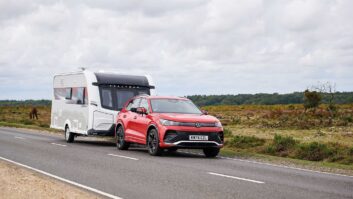
You could find yourself wondering which is better for towing – a mild, a plug-in hybrid or a hybrid? The standout plug-in hybrids, such as the BMW X5 50e, can make superb tow cars. For a start, they are very heavy, which benefits stability, and deliver exceptional fuel economy while the battery has plenty of charge.
Even when the car’s battery runs low, economy is generally better than that of a high-performance petrol model.
While towing, regular hybrids won’t go far at all without using their petrol or diesel engine. However, we’ve seen fuel economy of around 30mpg when towing with some full hybrids, close to the figures we would expect to achieve with a similar diesel model. We have been very impressed with the towing ability of the best mild hybrids, such as the VW Passat 1.5 eTSI. But this is down to the car’s qualities, rather than any advantage derived from the type of powertrain.
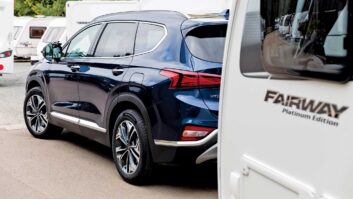
One important word of warning when you’re choosing between the various types of hybrid car. Although most hybrid vehicles are approved to tow a caravan, in some cases, their towing capacities are very restrictive. For example, the current Hyundai Santa Fe ought to make a very appealing tow car, but it’s hampered by a towing capacity of just 1110kg for the hybrid models.
If you’re also tempted by an EV, see what happened when a towing with an EV and a diesel were compared over a 1,200 mile trip.
Lead image: Getty Images
Future Publishing Limited, the publisher of Practical Caravan, provides the information in this article in good faith and makes no representation as to its completeness or accuracy. Individuals carrying out the instructions do so at their own risk and must exercise their independent judgement in determining the appropriateness of the advice to their circumstances and skill level. To the fullest extent permitted by law, neither Future nor its employees or agents shall have any liability in connection with the use of this information.
If you’ve enjoyed reading this article, why not get the latest news, reviews and features delivered direct to your door or inbox every month. Take advantage of our brilliant Practical Caravan magazine SUBSCRIBERS’ OFFER and SIGN UP TO OUR NEWSLETTER for regular weekly updates on all things caravan related.