




The ability to drive an electric vehicle (EV) around the UK has improved massively over the past few years, with more infrastructure and vastly improved technology.
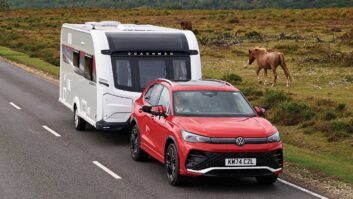
Added to this is the fact that with almost all manufacturers now producing all-electric and/or hybrid EVs, it is only natural to see more people towing with the best electric tow cars.
Carry out a quick online search for towing a caravan with an EV and you’ll find several examples of people’s EV towing experiences, including one very useful article that I came across about towing with a Tesla.
So we knew that towing was possible, but what I wanted to discover was, could you tow and tour from Gloucestershire to the Scottish border and beyond, to reach the legendary North Coast 500? And how would an EV compare with a diesel SUV tow car?
Is it difficult? Are there chargers available up there? What do you do with the caravan when you need to charge the EV when towing? Is it more expensive? Was it suitable to tour with a caravan? We decided to find out.
Challenge accepted
The idea for this trip began in November last year, when Raf, a friend of mine, asked me if we fancied following the NC500, the 516-mile scenic route around the Scottish coast, because I had just purchased my first-ever caravan (see: towing a caravan for the first time if this applies to you).
Raf was going to hire an RV, but I convinced him that his money would be better spent on buying a caravan, so he could continue his adventures after touring Scotland.
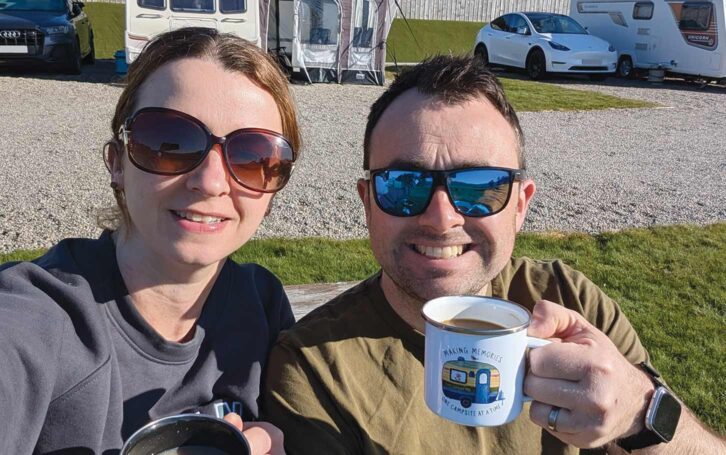
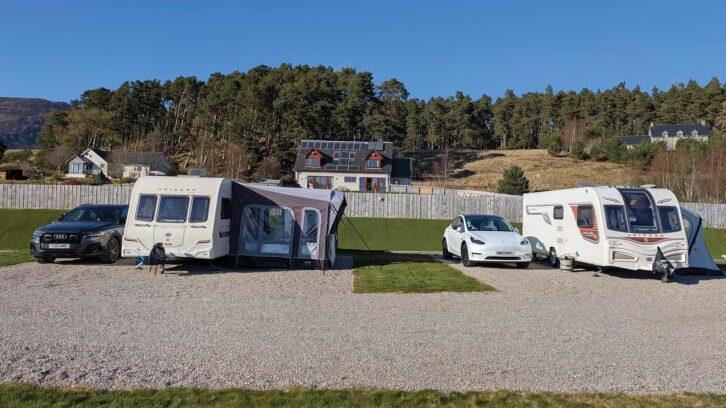
When it came to matching the car to a caravan, Raf drives an electric Tesla Model Y Long Range and had decided on a Bailey Unicorn Valencia Series 2, with an MTPLM of 1497kg. I have a diesel-powered Audi SQ7 4.0 V8, towing a Bailey Unicorn Valencia Series 1 with an MTPLM of 1565kg.
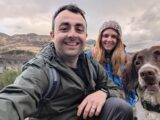
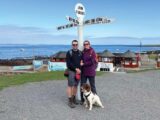
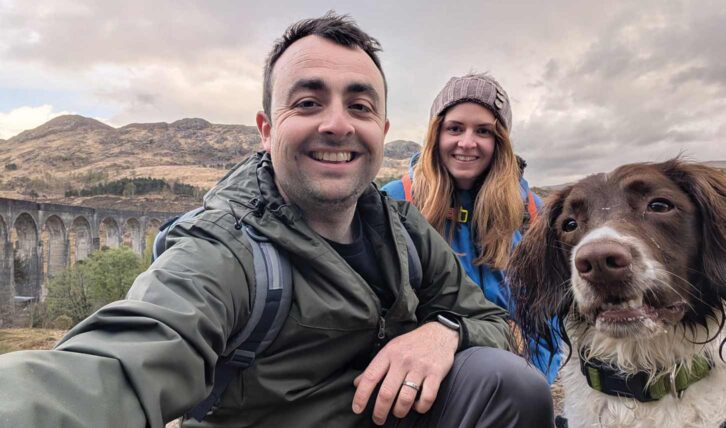
Raf was driving up with his wife, Laura, and dog Monty, while I would be joined for the trip by my wife, Sasha, and our dog Freddie.
Preparation is the key
As any caravanner knows, good preparation is the key to successful touring. It’s a good towing tip – the more prepared you are for any trip with your van, the easier it will be.
Touring Scotland, with or without a caravan, still required planning to ensure that we had enough time at each destination to visit our chosen attractions. But we also found that adding an EV to the mix did not add to the levels of stress, complicate planning, or indeed give us any particular range anxiety.
One thing we did learn early on was about caravan weights, namely, the fun of balancing your noseweight. The Unicorn 1 is known for its heavy nose and payload limitations, when we wanted to load the caravan with clothes for all of the different Scottish weathers, and food for at least a few days.
Unfortunately, Raf’s Unicorn 2 did not have the option for a weight plate upgrade, but our Unicorn 1 did. We took advantage of that and our caravan now had an extra 35kg on the payload. Overall, the Unicorn 1 was only 100kg heavier than the Unicorn 2, so our comparison would still be similar.
However, with the restricted payload, this is where the Tesla came into its own. With a frunk (storage compartment located at the front of an EV), huge boot and space under the boot, all the additional, low-usage, heavy tools, locks – and prosecco – could easily be spread around the car for excellent weight distribution, with no effect on the usage of the vehicle.
We did lots of research about the route – we read articles, watched YouTube videos and looked through NC500 books and maps to pick out Scotland’s top spots. From this, we were able to build an itinerary, seeing which campsites were available in the area that we could use for a base, taking into consideration access to sites while towing and travelling to attractions in our cars.
We used the CAMC site map to help choose campsites and all but one site that we visited were CAMC or CLs (certificated locations). I love a good CL, as they are quieter.
Designing the route
Once the sites were booked and confirmed, we fine-tuned the route. Gloucestershire to Scotland would require towing a long distance (regardless of whether you’re towing with an EV or diesel), and one that we wanted to break up.
We added some stops on the way up and down, to help divide the amount of towing involved. After adding some sites to the itinerary, we looked at all the charging locations on the route. With a Tesla, we can use Tesla Superchargers across the country, along with every other EV charger.
Our primary tool to find all the charging locations was Google Maps. We would enter the route and then select Electric Charging as an option to show us all the potential spots available on the way.

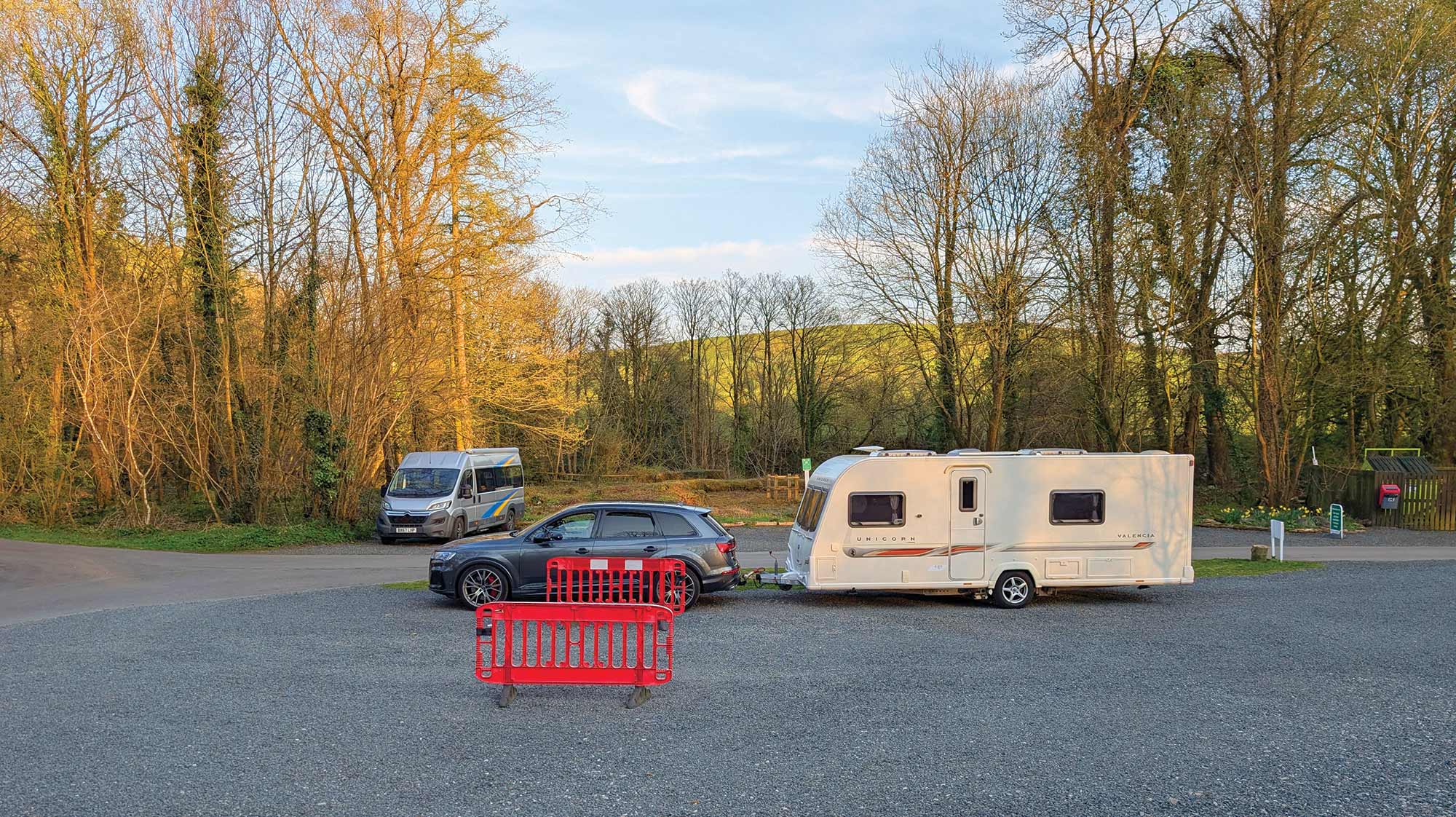
The biggest challenge is that, currently, almost all chargers require you to unhitch your caravan to charge your tow car. You also need to have appropriate caravan security accessories to keep your tourer safe too. So it was critical to ensure not only that there would be suitable caravan parking close by the chargers, but also that we wouldn’t get stuck in a one-way system at the services.
We initially planned our stops with a limit of 120 miles between each leg, but we soon learned this would be a little too much.
A slow start to Kendal
Early on a Thursday morning, we loaded up and set off from Gloucestershire, heading to our first CAMC site in Kendal, Cumbria. Owing to the distance involved, we planned two charging stops en route.
- Stop 1: Hilton Park Services, 80 miles
- Stop 2: Chorley Services, another 80 miles
- Destination: Kendal CAMC site, 52 miles
I would love to be able to report that this first day on the road went swimmingly, but it didn’t. We had a three-hour stint stuck on the M5, completely stationary, because of an accident. However, the beauty of the caravan meant that as everyone else exited their vehicles while we waited, we were able to get refreshments from the van.
Anyone with experience of an EV might start to have range anxiety – the Tesla would lose some charge from the air-con and other onboard electronics while waiting. However, we quickly adapted and found a small charging station nearby.
We continued our journey, battling our way through the centre of Birmingham and stopping at Keele Services and Chorley Services to charge the EV before we finally reached Kendal at around 7pm.
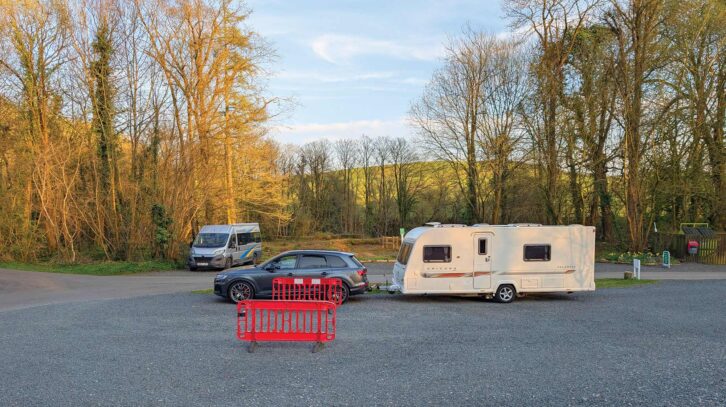
Although the diesel tow car did not need to stop to refuel, we found ourselves stopping each time anyway, enjoying the break from driving and using the services, because it had been such a long journey.
At the end of the first extremely long day, the pause was welcome. We were planning to spend a day exploring around Kendal and Windermere before heading on our way to Scotland on the Saturday.
The only concern regarding the EV was having to locate a different charger from the one we had earmarked on the itinerary, but this was easily done with the onboard map and Google Maps on our phones.
The two stops we made en route were much appreciated, and the chargers we used were all fast enough for us never to have to wait very long before setting off again.
However, we did have to adjust our plans once we were on the road. Driving at 60mph on the motorway (this is the speed limit when towing a caravan on a motorway), the Tesla was averaging 1% battery per mile, so we were looking at 80-85 miles max, before needing to stop for a charge.
We were also always conscious that we could hit traffic or even take a wrong turn, adding miles to the trip.
Charging on tour
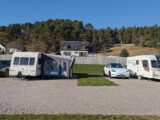
CAMC sites offer a wide range of benefits, and although none of the places we visited had dedicated EV charging, we were allowed to charge via the three-pin external outlet on the caravan overnight.
This did incur a small surcharge each night, but the cost was similar to charging at home and meant the car would be almost at 100% in the morning. The CLs offered this too, but some have metered electric, while the non-CAMC site that we stopped at provided dedicated chargers.
We also found a wide range of charging points available on our routes and nearby, which meant that we could make a quick detour to local supermarkets, charge up the EV and pick up some supplies while there.
Driving through Scotland
On the Saturday morning, we packed up and headed for Falkirk, and the Bonnyview Nursery CL. This was an excellent stopover, with fully serviced pitches among large trees for sound deadening and seclusion.
We had a fantastic time there, and met the incredibly friendly and helpful owners. With a secure gate on entry, local dog-walks and easy access to the Falkirk Wheel, the Kelpies and the Wallace Monument, there was no better brief stop on the way up.
Additionally, a short 30-minute drive away was a caravan accessories shop, which was crucial for us, as we needed to replace the van’s toilet pump, which had failed.
We left Kendal fully charged and were originally only going to stop once on the way. However, the second leg would have been 98 miles long, and would have been almost impossible in one go. So we decided to break the journey with four stops.
- Gretna Green Services: Some 70 miles from Kendal, this is probably one of the best stops, with dedicated caravan parking and easy access to EV charging. The 14 Tesla Superchargers and four Ionity meant no queues, and we charged up immediately on arrival. Great gift shop, too!
- Radstone Hotel: We added this stop to our itinerary, which was 68 miles from Gretna Green. This hotel with large car park was ideal, as it is a short distance from the motorway and has 16 Tesla Superchargers.
- Bonnyview Nursery CL: This site was a further 30 miles away. We left Bonnyview on Sunday, heading for Laggan Glamping, another CL. This was easily my favourite destination. With the sun shining, a warm 17ºC, incredible views over the hills, fully serviced pitches with electric hook-up available (although metered electric) and dog-walks on site, we enjoyed a good few days. We explored the local forest for a walk with the dog, and Glenmore Forest Park, which was a short drive away.
- Perth Park & Ride: On our way to Laggan Glamping CL, we only needed to stop once. Perth Park & Ride was just 40 miles from Bonnyview and a further 70 miles to Laggan. Although there were services, parking was not as easy as we expected, probably because it was a weekend and a peak time.
But it did have 12 Tesla Superchargers and seven ChargePlace Scotland chargers.
The East Coast
As Tuesday rolled around, we packed up and headed for the Brora CAMC campsite. We planned our east coast sites to follow the A9 and avoid any difficult narrow roads while we were towing the caravans. It also allowed us to stop at chargers on the way.
From Laggan to the Brora campsite was a journey of around 110 miles, and we only needed to stop once.
- Skiach Services: Some 68 miles from Laggan Glamping, this is just off the A9 and provides four ChargePlace Scotland charging points. There’s a good café onsite for hot drinks and snacks, and plenty of parking for the caravans.
A further 40 miles or so up the A9, we arrived at Brora Club Campsite, with only a beautiful golf course between the site and the award-winning Brora Beach. This location was easily one of the best we found on our trip.
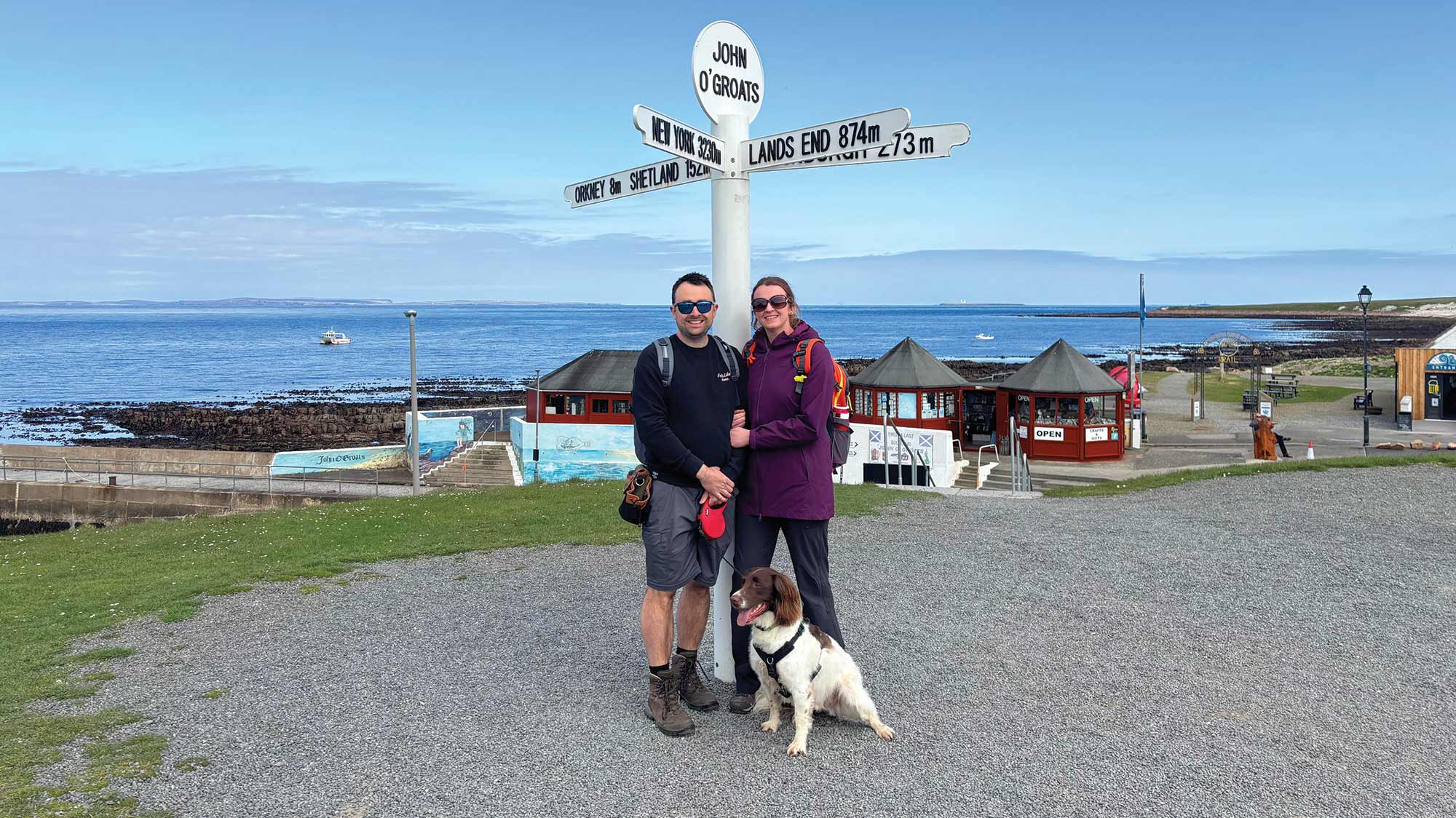
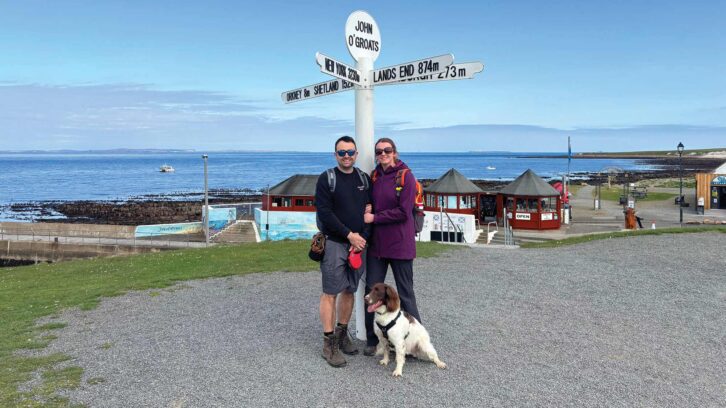
We stayed at Brora for four nights, with the dog-friendly caravan site allowing us three full days to visit the northernmost parts of Scotland without towing the caravan. We spent a day at John O’Groats, explored castles along the A9 and the surrounding areas, and then had a day on the north-west coast to see Balnakeil Beach, Talmine Bay and the Kyle of Tongue Bridge.
Our final day was spent with more local attractions, including Loch Brora, the Big Burn Walk and Brora Beach. With the sun shining and a calm sea, it was also the perfect opportunity for a dip.
As we were able to charge the Tesla overnight via the caravan site, it had no issues travelling around the north coast, with no need to charge until we returned to the pitch. But John O’Groats and other areas are set up for charging if required.
We were halfway through the holiday, and other than being mindful of the range, the stops were required for refreshments, using the facilities and allowing the dogs out to stretch their legs. Charging onsite couldn’t be easier and it was looking like it was cheaper than the diesel.
The Isle of Skye
We had great weather at Brora, although it was a bit windy at times. We packed up on Saturday morning and headed for Morvich Club Campsite, on the west coast.
There were two route options, one taking us down by Loch Ness and the other along the A835 and A890. The latter looked more scenic and also meant we wouldn’t be going on part of the same route that we would take when we left Morvich.
This resulted in us discovering a rather less touristy route, and we certainly knew it once we left the A9. The roads were tighter, sometimes even single-track with passing points, up some steep hills and riddled with potholes, some open craters, others filled but not smooth. It’s definitely not a route I would recommend to anyone towing!
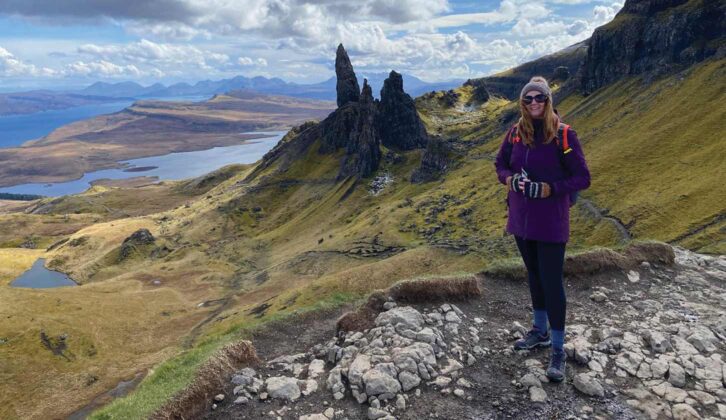
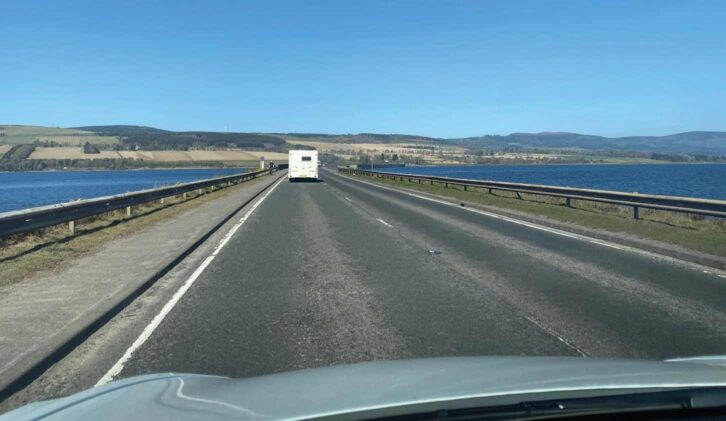
The route was 122 miles, the roads were 50mph and the Tesla was getting almost 1.5 miles to 1%, so we stopped at Skiach Services again to charge on the way through.
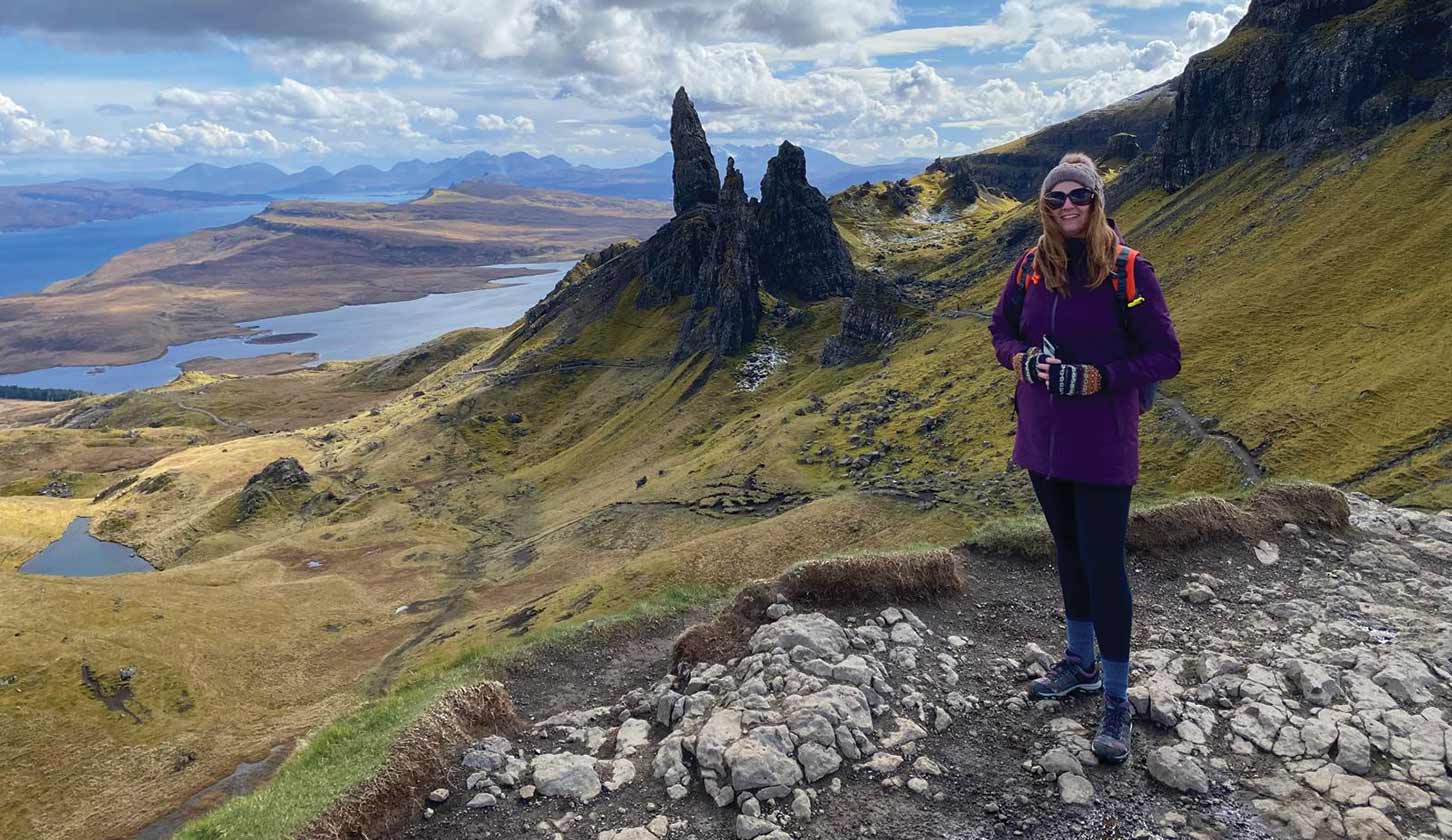
Morvich Campsite was a beautiful location surrounded by hills and mountains, a short drive away from Eilean Donan Castle and with easy access to the Fairy Pools, the Old Man of Storr and other amazing places on the Isle of Skye. Again, we charged the EV at Morvich overnight and could easily travel to all of the locations without charging.
I must also thank the wardens there, who were so helpful in supporting me when I needed to get a new phone delivered, after dropping mine at Brora!
Glen Nevis
Glen Nevis Holidays was our first and only non-CAMC site. This large campsite, at the foot of Ben Nevis, was ideally located for exploring the mountain, Fort Augustus and Loch Ness, and close to the town of Fort William, where we stocked up on essentials.
The journey from Morvich to Glen Nevis was just 63 miles, so we didn’t need to stop to charge up on the way. The site also has dedicated 11kW EV charging for guests.
The way home
Leaving Glen Nevis on the Friday, we headed past Loch Lomond to Strathclyde Country Park Club Campsite.
Again, we had two options and decided to follow the more scenic route, driving down the west side of Loch Lomond.
Although these roads were smoother and the views were spectacular, they were also some of the tightest, busiest roads that we encountered during the whole of our trip.
I would avoid this route next time. We did need to stop once on the way down.
- Osprey: There are EV chargers at the Queen of the Loch hotel, and with plenty of parking, six charging points and a friendly pub, this made a welcome and easy stop.
Strathclyde was a great campsite, with a country park to walk around, before making our way to Blackpool on the Saturday.
On our way to Blackpool, we stopped again at Gretna Green, then on Sunday, we headed home, stopping twice en route.
- Sandbach Services: There’s a good selection of charging points here, including nine fast chargers. We stopped in the coach parking zone, though, as there didn’t seem to be any dedicated caravan parking.
- Strensham Services: Although this had dedicated caravan parking, we found that it was the most difficult of all our stops to get to the chargers, and one we may consider avoiding next time.
Important points to consider when towing with an EV
If you are thinking of taking on a similar trip, there are a few key points to bear in mind.
- Security: You’ll need to unhitch your van to charge your EV, so ensure that you have the best caravan hitch lock and other security available. We travelled in a group, so we made sure someone was always with the van.
- Parking and charging: Check that your charging destinations provide space to unhitch the caravan, and that you can access the charging points after doing so. Some services have strict one-way systems.
- Nearby chargers: We scoped out nearby chargers at each of the campsites we stayed at, but we were extremely grateful that all campsites allowed us to charge onsite.
- Charging equipment: Ensure that you have your three-pin charging cable.
- Weight and noseweight: These are going to be important regardless of which type of car you use to tow – it’s a big trip and you need to take this into account.
My final thoughts on towing to Scotland with an EV
Towing to Scotland with an EV and enjoying the wonders of this fabulous country posed little more of a challenge than towing in a conventional vehicle would do.
It does involve a little extra planning to establish where to charge, which most EV drivers are already used to. There is the minor complication of ensuring a suitable spot to unhitch the caravan, though.
So overall, how did the EV compare to the diesel? It was obvious that the SQ7 would have no issues towing the 1600kg Unicorn 1, but the Tesla also had no problems – the instant power and acceleration from the electric motors ensured no situation was too much for it.
Note that the Al-Ko stabiliser doesn’t work with the Tesla, but with all the weight in the EV’s floor and good tyres on both car and caravan, there were no problems.
The Tesla cost around £270 in charging, whereas fuel for the SQ7 was over £500. Of course, more economical ICE cars are available, and most of the time, the Tesla was following the SQ7, although we doubt this slipstream added much range. So can you tour Scotland with an EV? Absolutely!
Something else which can make a difference when you’re hitched up to a caravan on the road will be having the right gadgets. If you’re not sure what to have, David Motton is on hand, as he shares the towing gadgets that he would choose to take the strain out of caravanning.
If you’ve enjoyed reading this article, why not get the latest news, reviews and features delivered direct to your door or inbox every month. Take advantage of our brilliant Practical Caravan magazine SUBSCRIBERS’ OFFER and SIGN UP TO OUR NEWSLETTER for regular weekly updates on all things caravan related.
What I wanted to discover was, could you tow and tour from Gloucestershire to the Scottish border and beyond? And how would an EV compare with a diesel SUV?