Are you caravanning for the first time this summer? You’ve just made a great decision that you won’t regret. There is so much to enjoy! Before you park your home-from-home on a pitch, though, there are a few things you’ll want to know about towing a caravan for the first time. You need to get the hang of towing, then the holiday fun can really start.
When you’re a beginner to caravanning, it’s understandable that the prospect of towing even the best caravan could seem daunting. However, a bit of preparation will go a long way – after all, towing isn’t tricky, but there are a few things to get to grips with when you start. I’m on hand to help, sharing these top tips which should help you tow with confidence.
Towing a caravan for the first time:
Meet your perfect match
Embark on some towing tuition
Use towing mirrors
The wind-back check
Load carefully
Speed limits are different
Be ready for a ‘snake’
Get a motor mover
Meet your perfect match
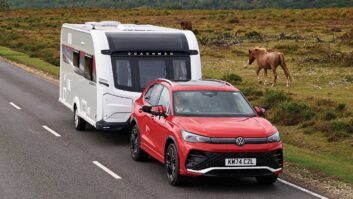
You may have heard other caravanners talking about the 85% ‘rule’. It’s more of a guideline than a strict rule, but it’s worth following if you want the first time of towing a caravan to be a happy and safe one.
The gist is this: your caravan should weigh no more than 85% of the kerbweight of your tow car. So, if your car weighs 1600kg, it’s strongly recommended that your caravan (including whatever you load inside it) should weigh no more than 1360kg (85% of 1600kg).
Now, your car will have an official towing capacity. This may be much more than 85% of its kerbweight, or it could be less. This figure is derived from the car’s ability to tow a trailer repeatedly up a slope. It is not a good indication of the size and weight of caravan your car can tow at 60mph without feeling nervous and twitchy.
The 85% guideline is a much better guide to pairing car and caravan so that the outfit (the car and caravan together) will be stable at motorway speeds – stability, is, after all, one of the all-important traits in the best caravan tow cars.
Embark on some towing tuition
Online articles and YouTube videos can give all sorts of pointers, but nothing beats hands-on experience of caravan towing courses. The first time you tow shouldn’t be when you collect your caravan, or on the first day of your holiday – it’s much better to have instruction from a professional.

Both major clubs (The Caravan & Motorhome Club and The Camping and Caravanning Club) run towing courses teaching the basics. You need to know how to hitch up, unhitch and reverse safely, and one of these courses will teach you. There are also independent providers, so wherever you live you aren’t far from a towing instructor.
Use towing mirrors
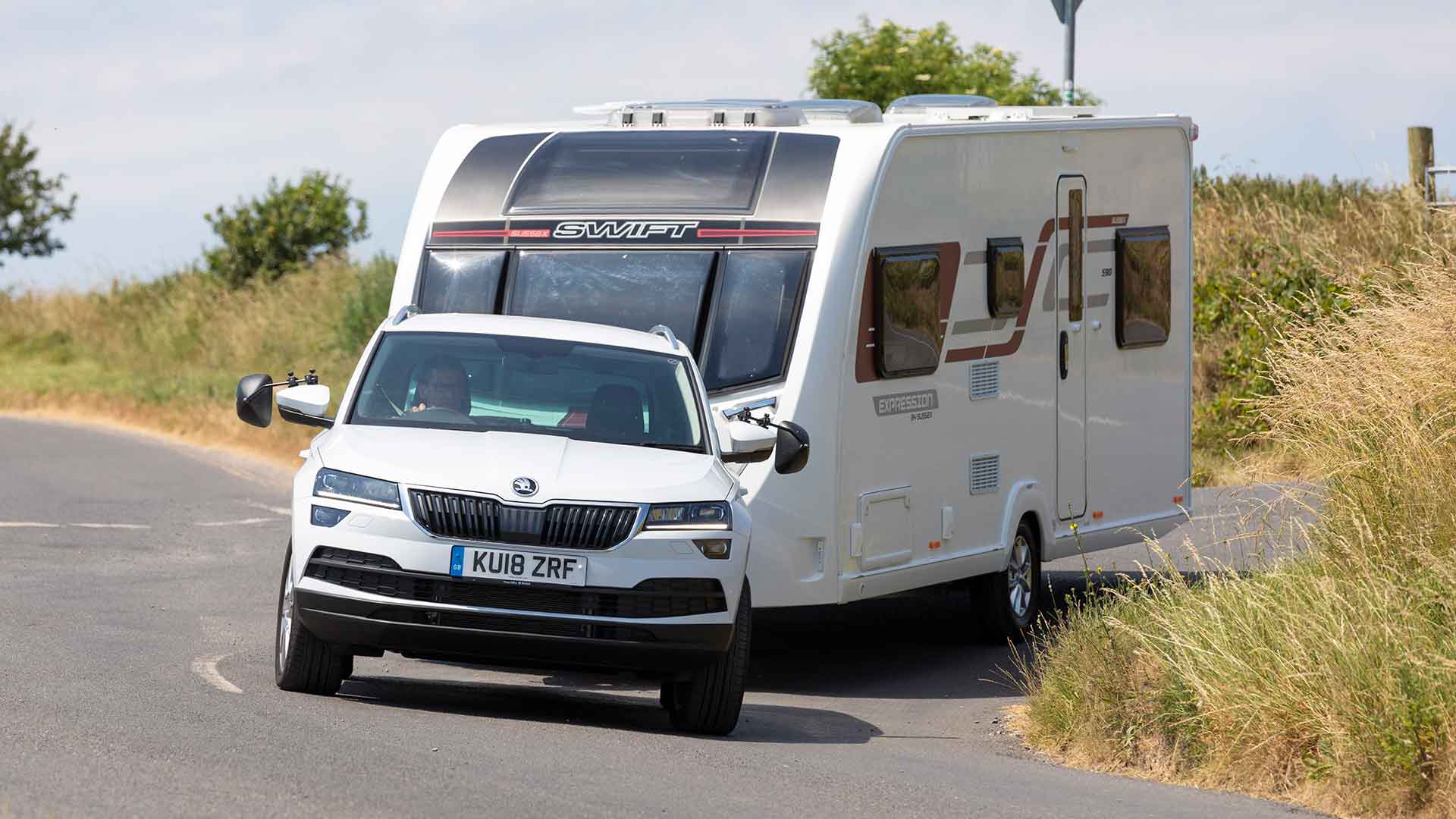
Whether to fit towing mirrors or not isn’t down to personal preference – towing mirrors are necessary to stay the right side of the law and to stay safe.

While extension mirrors aren’t legally required as such, the law does require that the driver can see 20 metres behind and four metres to either side. Unless you have a narrow micro-caravan and a very wide car, this simply isn’t possible without extension mirrors.
So, buy a pair of the best towing mirrors, fit them and adjust them carefully for a clear view down the side of your caravan every time you tow.
The wind-back check
If you take a towing course, your instructor will show you how to hitch up a caravan properly. A caravan dealer will also run through how this is done when you collect your van.
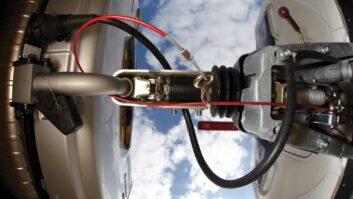
I won’t repeat everything they will tell you here, but I will emphasise one piece of advice: don’t forget the wind-back check. Once you think the caravan is securely hitched to the car, but before you stow the jockey wheel, wind it back down. This should lift the back of the car up slightly. If it does, you know car and caravan are correctly attached. You can then wind the other way and stow the jockey wheel.
Load carefully
I’ve explained the 85% guideline, and there’s no doubt that how much your caravan weighs plays a part in how stable it will be. However, it’s not the only factor to consider before towing a caravan for the first time. Where the weight is carried is also very important, which is where knowing how to load a caravan comes in.

Heavy items should be carried low down and close to the axle (or axles). Otherwise you can start a pendulum effect which can lead to instability. With heavy items in the middle of the caravan it should tow straight and true. Use non-slip matting or load bars to stop your camping gear from moving around during the journey.
If you buy a caravan with a fixed bed near the back there will be lots of space underneath for storage. This is fine for a few light items, but don’t overload it. Keep the overhead lockers and any storage space at either end of the van for very light items, or better still, leave them empty until you unpack the car at the end of the journey.
Speed limits are different
So long as you have been sensible with the car/caravan matching, you should find a modern car pulling a well-matched caravan should easily keep up with the pace of traffic, but that doesn’t mean you should.
This is where knowing the speed limits when towing a caravan comes in. On the motorway, while the limit in regular driving is 70mph it drops to 60mph when towing a caravan (or any other kind of trailer). The same applies on a dual carriageway with a 70mph limit.

If you are driving on a single-carriageway road where the national speed limit applies (60mph) the limit while towing is 50mph.
At lower speeds, the limit doesn’t change. So, if the posted limit is 50mph, 40mph, 30mph, or 20mph, the same applies to a vehicle towing a caravan unless a sign indicates otherwise.
Be ready for a ‘snake’
Towing safely is well within the capabilities of a competent driver. After some instruction and with a safety-first attitude, nothing should go wrong. But it pays to be prepared.
‘Snaking’ is when the caravan begins to move from side to side, with these alarming movements becoming more pronounced and starting to pull at the back of the car. It can lead to a crash if the driver doesn’t take action.
Avoid a snaking caravan by sticking to the speed limit or travelling more slowly in bad weather. If you do notice snaking, don’t accelerate and don’t brake. Gently ease off the throttle and keep the steering wheel pointing straight ahead. The side-to-side movements should ebb away and car and caravan should begin to tow normally again.
Get a motor mover
Plenty of experienced caravanners hate reversing their tourer. An instructor will show you how to reverse a caravan – and it’s really not as hard as you might think.
But you don’t have to do it if you don’t want to. The best caravan mover lets you unhitch your caravan and reverse onto a pitch using a remote control.
Why make life any more stressful for yourself? You’re on holiday!
You can also take a look at my caravan towing tips if you would like further advice on how to stay safe when you’re on the road.
Future Publishing Limited, the publisher of Practical Caravan, provides the information in this article in good faith and makes no representation as to its completeness or accuracy. Individuals carrying out the instructions do so at their own risk and must exercise their independent judgement in determining the appropriateness of the advice to their circumstances and skill level. To the fullest extent permitted by law, neither Future nor its employees or agents shall have any liability in connection with the use of this information.
If you’ve enjoyed reading this article, why not get the latest news, reviews and features delivered direct to your door or inbox every month. Take advantage of our brilliant Practical Caravan magazine SUBSCRIBERS’ OFFER and SIGN UP TO OUR NEWSLETTER for regular weekly updates on all things caravan related.