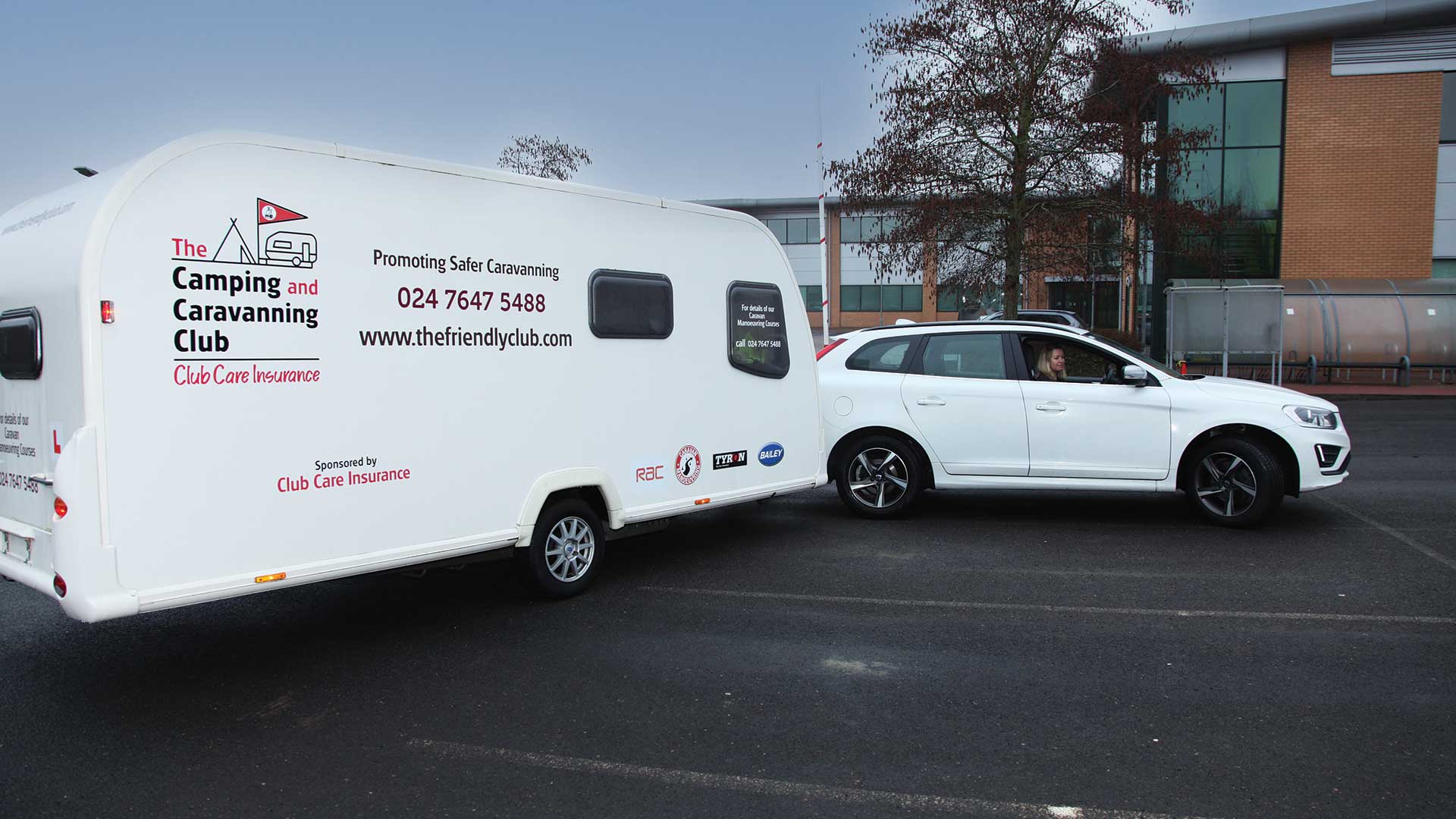
Caravan towing courses can really have huge benefits. In fact, my first words to anyone entering the magical world of leisure-vehicle touring are always: “Go on a course”. Whether they’re talking caravans or motorhomes, my advice is always the same.
In response, they generally look a bit nonplussed, and they rarely exude any hint of positivity or excitement. Clearly, the thought of going back to the classroom, or stepping out of their comfort zone and being ‘assessed’, doesn’t hold much appeal.
However, even if you have the best caravan tow car and the best caravan, towing tuition can be very worthwhile, so I persist, give them a quick overview, and, as we leave, I do a ‘Columbo’ – my parting words are always, “Oh, don’t forget to look into caravan towing courses.” It’s the best advice I can offer.
I think that indicates how highly I value tow training and caravanner coaching: it’s not just a nice-to-do, it’s an essential.
Over the years, I’ve done several club courses myself, and I’ve reported on as many again. Every caravan towing course follows a similar pattern: the morning starts with nervous and reticent participants, but ends later that afternoon with confident and enthusiastic caravanners, who have an excellent grasp of the skills and ‘tricks’ needed to become safe and assured on the road, whether towing a caravan for the first time or just wanting a refresher.
So, if you’re new to caravanning, have maybe had a towing ‘scare’, or simply want to polish your skills, check out a towing course now!
To back that advice up, here are my answers to some of the frequently asked questions about towing courses for caravans.
Don’t miss what I had to say about what PSI your caravan tyres should be, either.
Why should I do a towing course?
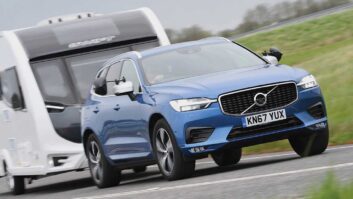
You could soon be pulling a near two-tonne white box on wheels down a motorway at 60mph, or threading your outfit along busy city streets. Gadgets such as the best caravan sat nav may help here, but do you really want to do that without any training or insight?
Towing training courses are accessible, cost-effective, straightforward and, yes, fun ways to get up to speed with everything you need to know to about caravan safety.
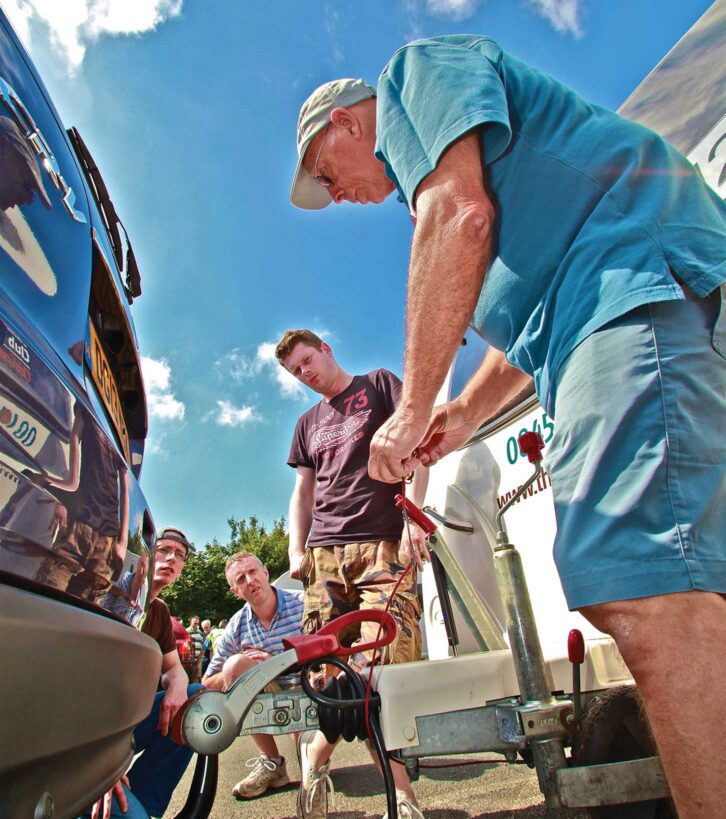
All the knowledge required is delivered quickly, usually in a day, and I’ve yet to meet a group of towing trainees that were anything but friendly and supportive. As everyone is in the same boat – and some distance from their comfort zones – a great sense of camaraderie develops, even in just a few hours.
Which companies offer caravan tow training?
The best and most cost-effective courses are run by the Camping and Caravanning Club (C&CC) and the Caravan and Motorhome Club. These organisations have honed their courses over many decades, so that they are comprehensive yet concise.
Can I dip my toe in the water without committing to a towing course?
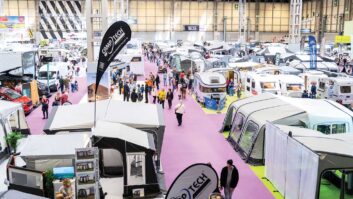
Yes, you can. Just pop along to one of the caravan shows at the NEC (February and October – see what our takeaways were from the recent Caravan, Camping and Motorhome Show if you missed it) and you can have a crack at towing a caravan, under the watchful eye of excellent tutors.
This experience will give you a good feel for what a full-day course will be like. The tuition is free, too: check online near show time to book a slot.
Do I need any previous experience before attending?
None at all. In some ways it’s best to go without any preconceptions or half-knowledge. The courses are delivered in such a way that they cater to all experience levels, though most attendees have limited knowledge or are total novices.
You just need to take your own tow car, which (for its course) the CAMC states will need a towbar that has a minimum clearance of 70-80mm between the centre of the towball and bumper of the car. I’d suggest calling them if this is an issue.
Caravans are provided by the clubs.
When is it best to book caravan towing tuition?
I would endeavour to do your tow training within a week or two of your first or your next planned caravan tour.
That way, you can quickly put into practice everything you’ve learned on the course. A gap of several months may lead to you forgetting some of the detail you’ve been taught.
Because you will be outside for quite a long time, you may want to book a course between May and September.
On the caravan towing course
What do the towing courses teach me?
Each club offers two caravan towing courses, which deliver a mix of pure towing/manoeuvring as well as practical caravanning advice, covering things such as water systems, levelling a caravan, and so on.
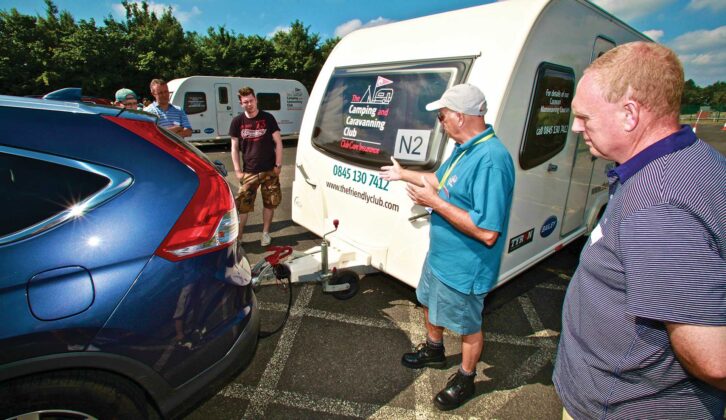
For the novice caravanner, these practical tips can be essential, so consider calling the clubs to discuss which type of course is best for you, or do both.
In my experience, all courses deliver much more essential information than is listed here, including some tiny (but important) details and advice from the tutors’ personal experiences.
Caravan and Motorhome Club Practical Caravanning Course
- The step-by-step process of hitching up a caravan
- Understanding caravan weights, loading and balancing
- Pre-towing checks
- Planning ahead
- Basic manoeuvring and reversing a caravan around a bend
- Lane discipline when towing
- Fitting and using extension mirrors
- Dealing with pitching and a snaking caravan
- Essential emergency equipment
- Towing in adverse weather
- Caravan levelling, front-to-back and side-to-side
CAMC Caravan Manoeuvring Course
- Straight-line reversing
- Reversing around a bend
- Caravan levelling, front-to-back and side-to-side
- Confident manoeuvring
- Hitching up and towing safely
- Manoeuvring through cones
Camping & Caravanning Club Confidence Builder Course
- Towing laws and regulations
- Caravan loading and balance
- Levelling your caravan on site
- Tight manoeuvring through cones
- Manoeuvring through a slalom course
- One-to-one on-the-road driving session with an instructor
- Reversing in a straight line
- Reversing around a bend
C&CC Pitch & Progress Course
- Three-hour, one-to-one session with an instructor
- Towing on a dual-carriageway/motorway
- Towing on rural roads
- Reversing onto a camping pitch
- Group (off the road) reversing exercises
What can I expect on the day?
Each course starts with introductions and some classroom work.
Here, the tutors will enlighten you about some of the theory and legalities (speed limits when towing a caravan, licences and so on) surrounding towing a caravan.
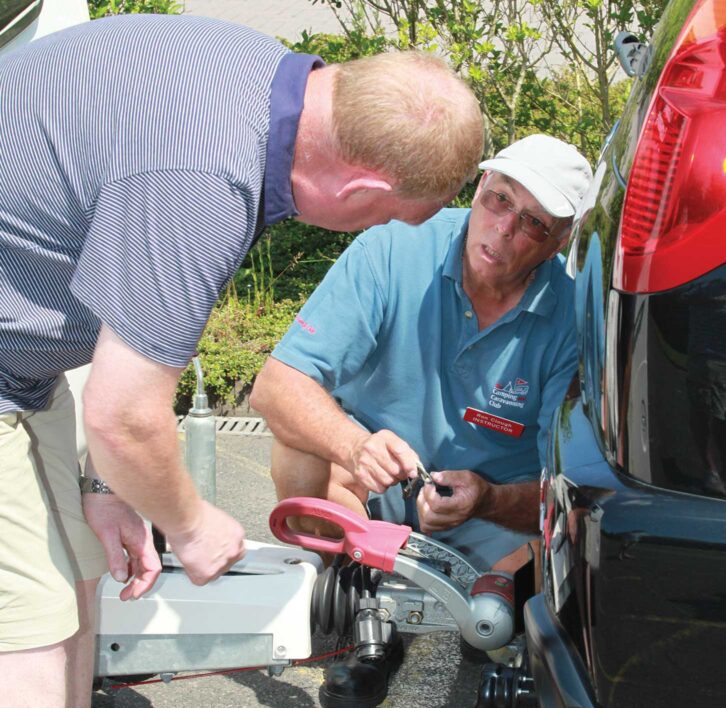
This information is delivered in an accessible and friendly way that makes it easy to digest, so it’s in no way overwhelming, even if you haven’t been in a classroom scenario for 40 years or more!
This typically takes just one to two hours, before you head outside to get ‘hands-on’.
What’s a typical trainee like?
In my experience, everyone has been very friendly, and most are novice caravanners. There are a wide range of tow cars. Typically, there have been one or two women on each course.
What practical towing elements are included?
Once outside, the tutors teach in a chronological (and logical) order – all the time reinforcing the practical steps with lots of personal caravanning wisdom.
Typically, this will include manoeuvring to the hitch; hitching and associated advice; levelling; straight-line towing; turning and sharp turns (the jack-knife); basic manoeuvring; and tight slalom manoeuvring.
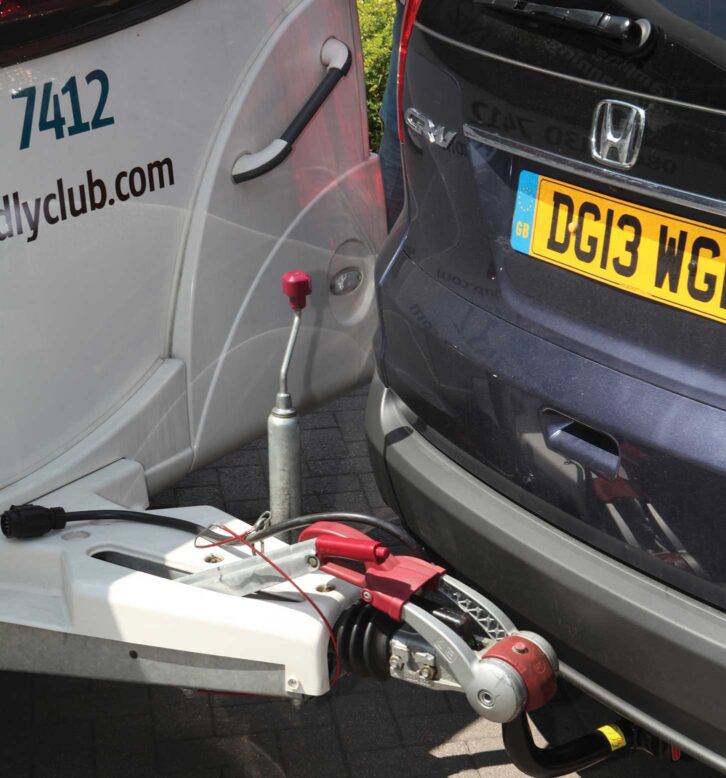
Next, you learn to reverse in a straight line, including all the safety aspects involved. Later, you’ll learn how to reverse around a bend.
Will I be able to tow a caravan on the road?
This is where the two clubs vary significantly in their approach.
CAMC courses take place on private land (an old airfield, when I did them), and do not include driving on the road.
C&CC course training takes place at the club’s HQ near Coventry, but the day concludes with one-to-one driving sessions on the road.
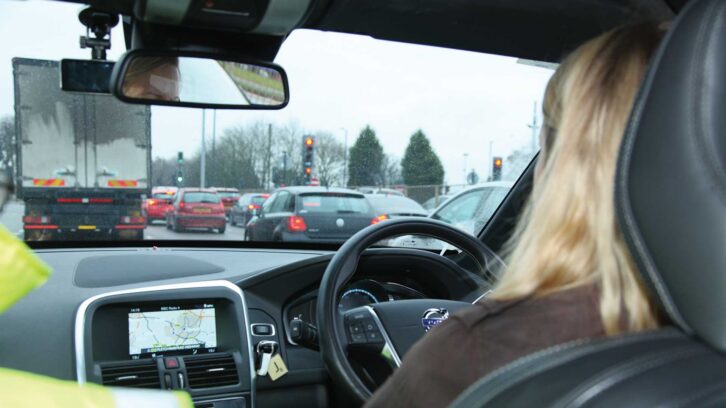
You’ll head off with a tutor for a 20-minute drive around Coventry. The route takes you through Warwick University campus and onto the Coventry ring road and the city’s urban streets.
Following the day’s training, all the participants have all the knowledge and support needed for a really successful city-centre tow.
While it may sound daunting, this challenge is the icing on the cake, instilling genuine can-do belief in the trainees. Participants on this course feel a wonderful sense of achievement, knowing they can do it ‘for real’.
What do I need to bring?
Don’t forget these essentials:
- A tow car with standard towball and 13-pin electrics (see what I had to say about caravan towing electrics for more on this)
- Towing mirrors (see our guide to the best caravan towing mirrors if you need a pair)
- Your driving glasses (there’s a simple vision test before going on the road)
- Driving licence
- Car insurance
- Proof of MOT (where applicable)
- Warm clothes on a cold day
- Sunscreen and water on a hot day
- Packed lunch (the C&CC provides tea and coffee)
I don’t want to embarrass myself. What’s the secret of success?
It’s really simple. Listen, and keep an open mind. Ask questions and be supportive. You will find stepping outside your comfort zone never felt so good!
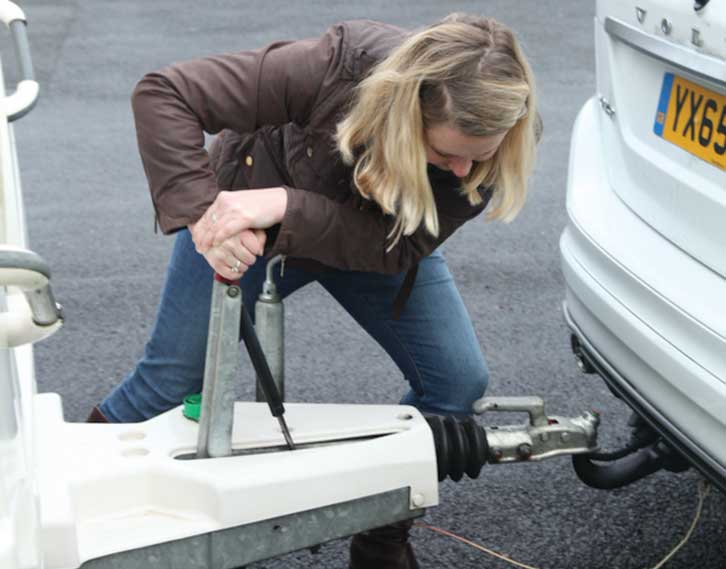
Caravan towing course information
Where are the towing courses held?
The Camping & Caravanning Club holds its courses at its HQ in Coventry. The address is: Greenfields House, Westwood Way, Coventry CV4 8JH
The Caravan & Motorhome Club has 18 Training Centres across the UK.
- Alan Brown Driver Training, Grangemouth
- Askham Bryan College, Askham Bryan, York
- Boston LGV Training, Boston
- C&M Training Ltd, Edgmond, Shropshire
- go!driving, York
- GPD Driver Training, Nottinghamshire
- Hills Driver Training, Plumpton, East Sussex
- JW Driver Training Gwent
- Keep Legal Ltd, South Ockendon, Essex
- Ken Irwin Class One Driver Training, Northern Ireland
- Kent Training, Kent
- Lancaster Driver Training, Lancaster
- P Vowles Training, Figheldean, Wiltshire
- RoadSafe Wales Llanelli, Carmarthenshire
- Sparsholt College Winchester, Hampshire
- Tilston Training Llay, Wrexham
- Trans Plant Mastertrain, Devon
- Towing Solutions, Macclesfield, Cheshire
Which towing course is best for me?
That’s hard to say, as there are too many factors to consider, including geography and your caravanning knowledge needs. Safe to say, all the courses are excellent, and I guarantee you’ll come away bursting with towing confidence and knowledge.
How much do they cost?
Both clubs offer a member discount. Here’s what you can expect to pay:
C&CC
- Confidence Builder: £205 non-member, £180 member
- Pitch & Progress: £225 non-member, £200 member
The C&CC offers the opportunity to do both courses over a weekend, taking the skills and confidence from the first course on the Saturday to the next level, with Pitch & Progress on the Sunday. Two-day participants receive a 25% discount on an overnight stay at the club’s Kingsbury site on the Saturday.
CAMC
- Practical Caravanning: £227 for 1.5 days
- Caravan Manoeuvring: £194 for 1 day
The first course I ever did was the CAMC’s Practical Caravanning training, which was over two days and excellent in every way.
Are there any other benefits?
The CAMC offers a 5% club insurance discount for trainees.
- 01342 607 514
The C&CC offers a 5% discount for Confidence Builder trainees, and 10% for those who undertake Pitch & Progress training.
- 0800 124 4633
Other insurers may offer discounts too, so best to ask.
Can I book a one-to-one session?
Currently, the best club courses are for groups of six to eight trainees. There are so many benefits to learning as part of a group, not least the shared experience (and cost), that I hesitate to recommend doing it any other way.
On the day, you will receive one-to-one attention for each of the key training elements, until you reach an acceptable level of competence. Each participant on the C&CC’s Pitch and Progress Course receives three hours of one-to-one coaching, split across the course of the day.
How do I book a towing course?
Simply go online, or telephone the relevant club directly.
Caravan & Motorhome Club
- 01342 336 666
- caravanclub.co.uk/advice-and-training/training-courses/
Camping & Caravanning Club
- 0247 711 0212
- campingandcaravanningclub.co.uk/club-courses/
When you’re ready to tow, you’ll be all set for getting ready to embark on your tours. One thing that can make a difference to a getaway is having the right kit – take a look at my pick of the standout caravan upgrades to see what I have to say about the gear which can make a big difference.
Future Publishing Limited, the publisher of Practical Caravan, provides the information in this article in good faith and makes no representation as to its completeness or accuracy. Individuals carrying out the instructions do so at their own risk and must exercise their independent judgement in determining the appropriateness of the advice to their circumstances and skill level. Individuals should take appropriate safety precautions and be aware of the risk of electrocution when dealing with electrical products. To the fullest extent permitted by law, neither Future nor its employees or agents shall have any liability in connection with the use of this information. You should check that any van warranty will not be affected before proceeding with DIY projects.
If you’ve enjoyed reading this article, why not get the latest news, reviews and features delivered direct to your door or inbox every month. Take advantage of our brilliant Practical Caravan magazine SUBSCRIBERS’ OFFER and SIGN UP TO OUR NEWSLETTER for regular weekly updates on all things caravan related.