






Caravanning is a basically simple endeavour. Yes, it will involve a little elbow grease when setting up, but nothing is too mentally taxing. However, one thing that did catch me out once was the towing electrics of my caravan.
Back then, I was still a bit of a newcomer to caravanning, and the issue involved the tourer’s 13-pin connector.
Every other time I had been touring, the van’s connector slotted straight into the tow car’s receiver – a quick twist, then the ATC light would flash on and I’d hear a whirr as the system prepped itself.
However, on this occasion, the socket’s internal plastic lug wouldn’t line up with its slot when the external ‘push and twist’ thread was aligned. There was simply no way of connecting up the two. I was, quite frankly, baffled.
Brute force wouldn’t work – I even considered chiselling the lug off with a penknife – but after a stressful, vocally colourful 20-minute battle, I finally gave in and called the manufacturer who had loaned us the tourer for a feature that I was writing.
Unable to help out remotely, they said to leave the van on site and they would collect it. Now that’s great if you’re a journalist, but it would not have been much use for any other caravanner.
Practical Caravan is supported by its audience. When you purchase through links on our site, we may earn an affiliate commission. Learn more.
A common problem with the caravan connector
Back home, I researched the issue online and discovered this misalignment is actually a fairly common caravanning problem.
Many caravanners will get to experience it at least once or twice over the years, but some have to deal with it on almost every trip.
The solution is simple and very cheap – you just need to purchase an alignment tool from your local dealership or online. They cost around £5, and I’d recommend keeping one of these caravan essentials permanently in your van or tow car at all times, just in case.
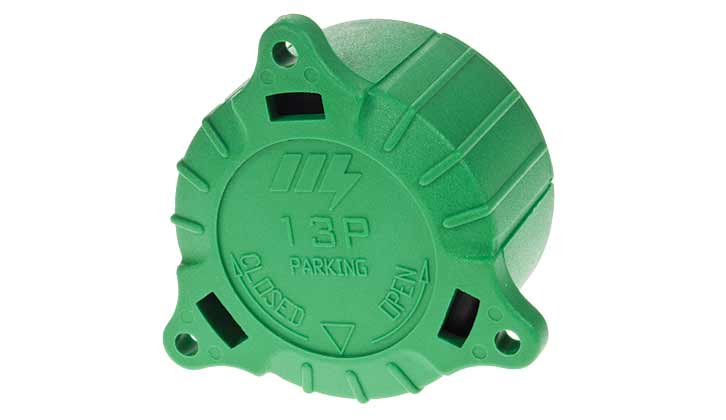
This cheap plastic ‘holiday saviour’ slots onto the male caravan connector, allowing you to turn the alignment lug independently of the external casing with its screw-thread.
One or two tweaks and you’ll have the lug and screw-thread channel in perfect alignment (in other words, diametrically opposed). Crisis over!
Do note that this problem only affects 13-pin connectors. I believe every dealer should tell their customers about this potential issue in the handover, and give them a free alignment tool. Now, what great customer service that would be.
Electric caravan towing cables
The common-or-garden caravan electric towing cable supports a vital link between your tow car and your caravan.
It provides the power for key lighting and systems, ensuring you’re visible, legal and safe on the road, and can relax on site with the best caravan leisure battery fully charged and a chilled Pinot or pint.
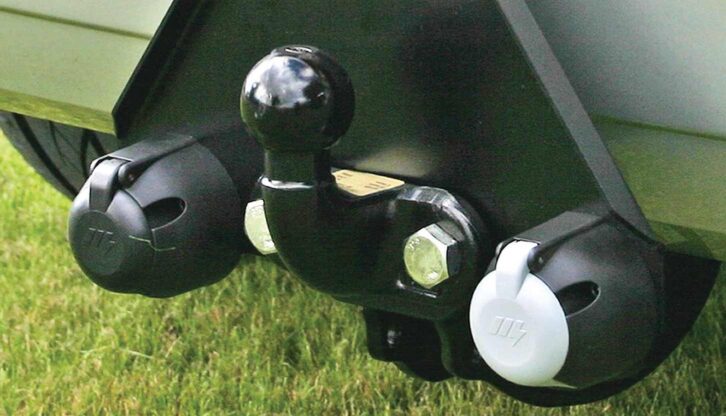
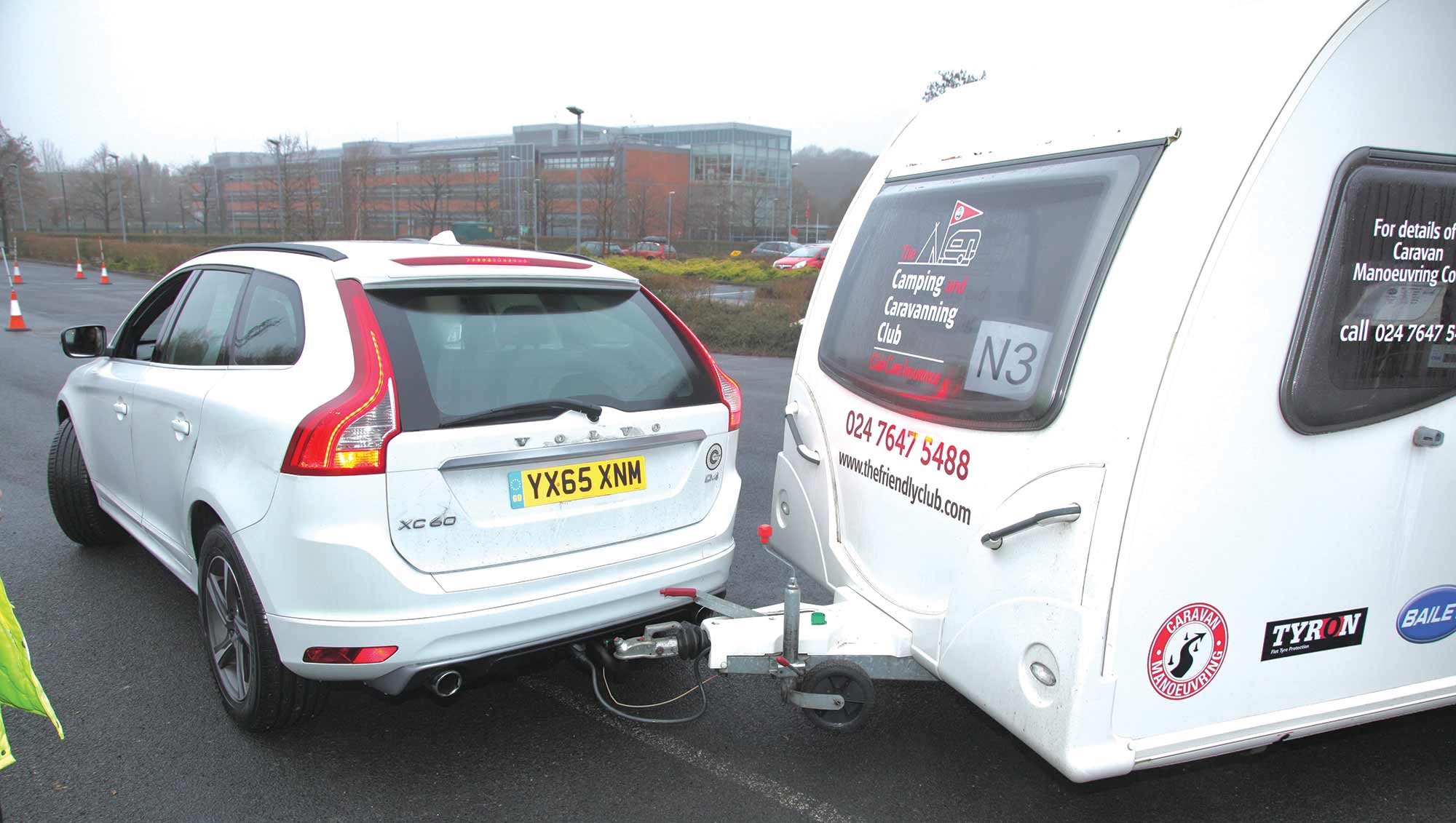
The towing cable connects the electrical systems of your car to those on your caravan.
This includes the rear lights, indicators and brake lights and, depending on the type of plug, additional features such as the fridge power and battery charging.

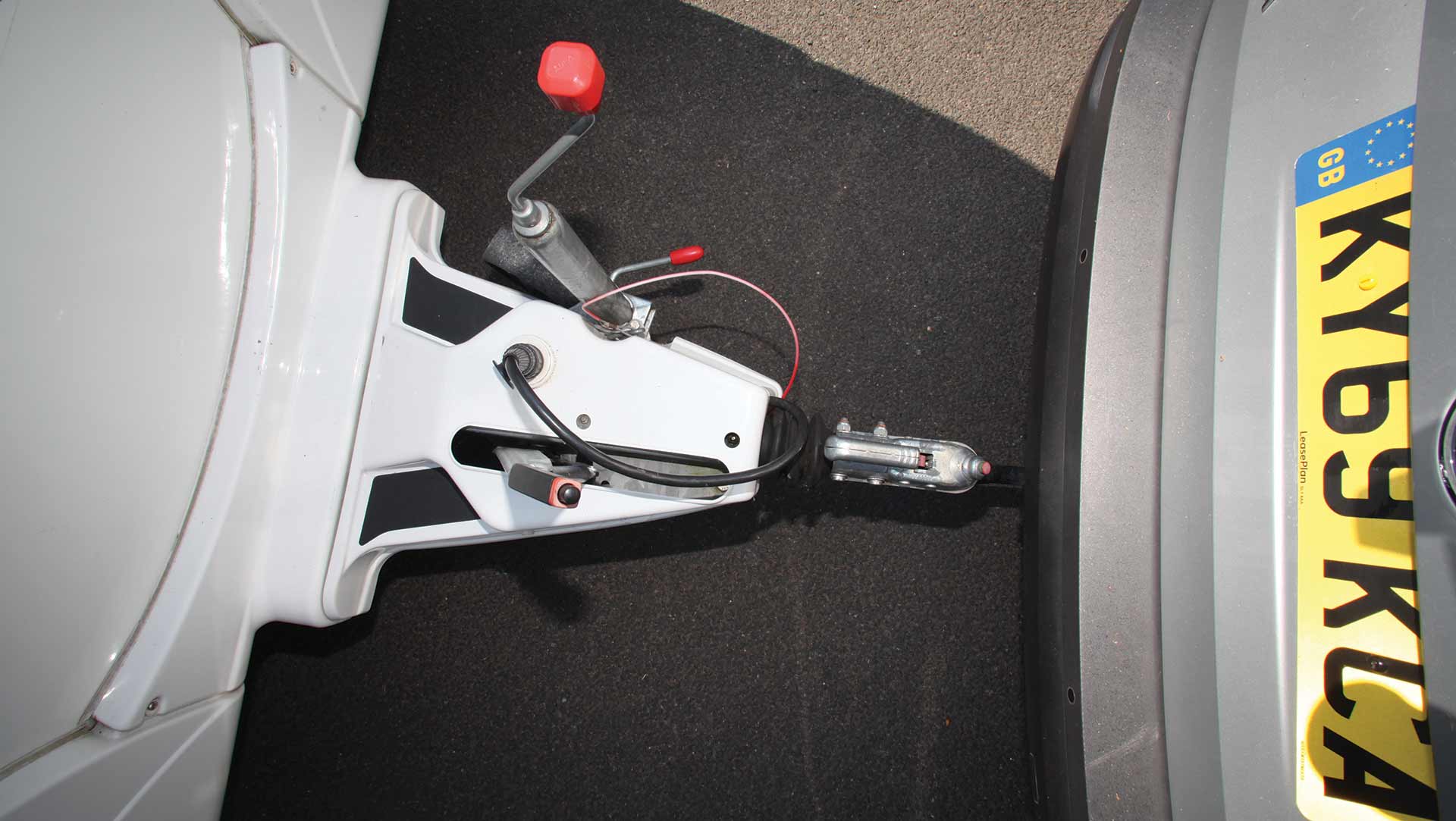
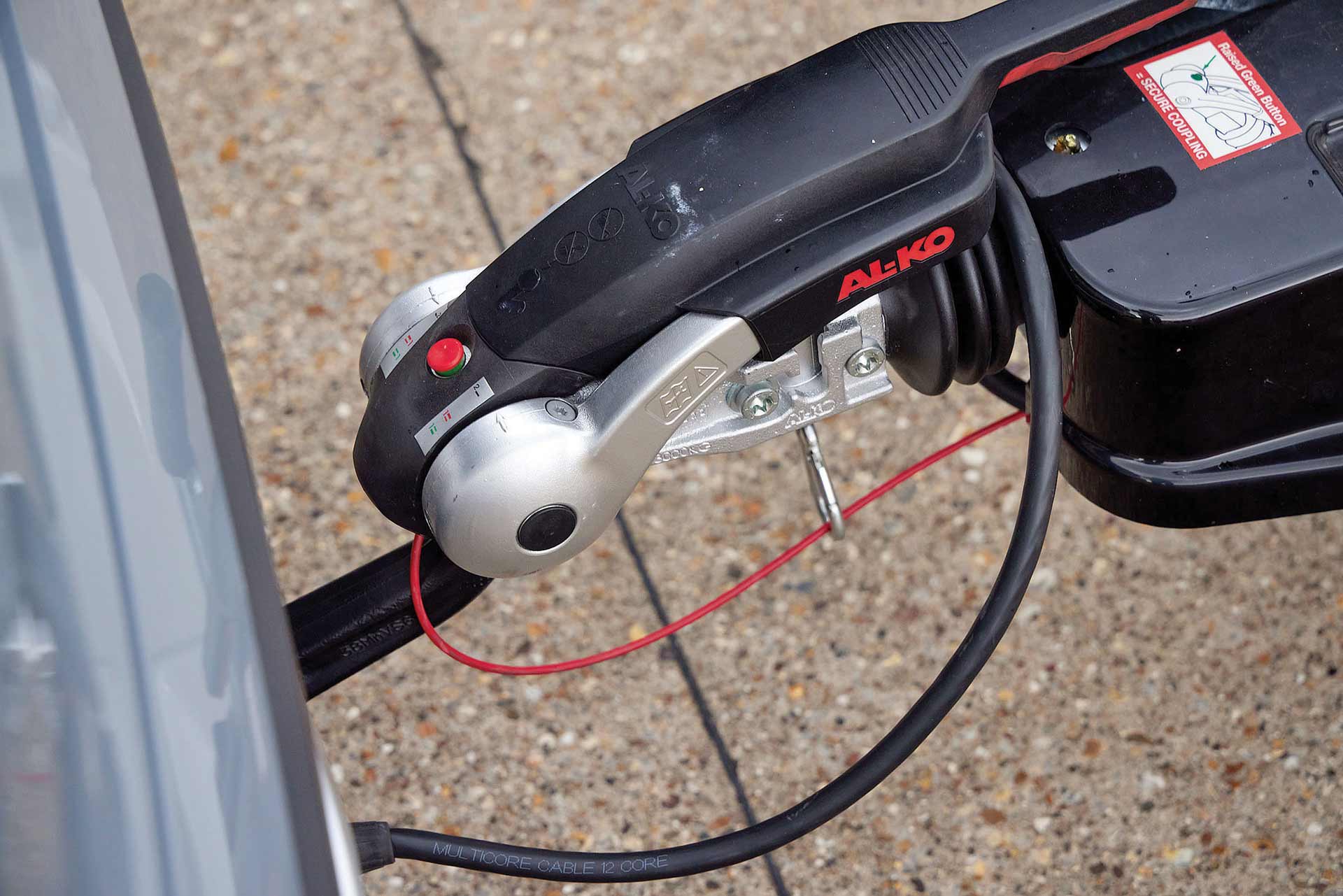
The cable is permanently attached to the caravan and connects to the car through a plastic ‘block’ which contains metal connections.
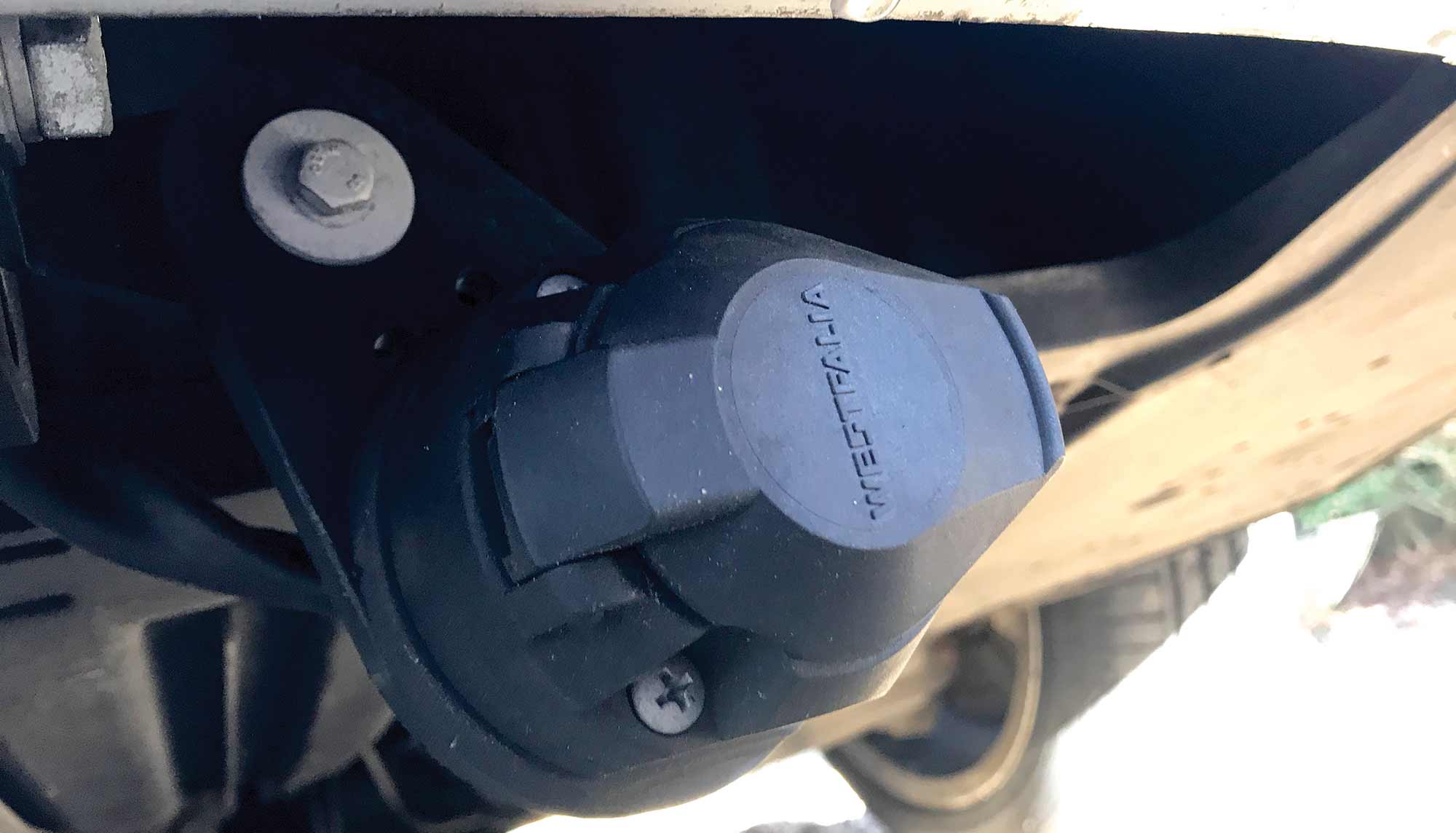
Your tow car has the female receiver, while the electric cable on the caravan contains the male pins.

Most of the pins supply power to a specific part of the tourer, for example, the brake lights or fridge, but some are earths, and there’s usually a spare link, too.
The different types of towing socket
The towing socket is the unsung hero of your electrical set-up – it’s where your tow car and your caravan connect to share power. There are three main types of towing connectors: the single 7-pin connector, the two 7-pin plugs, and a 13-pin connector – here, I’ll run through them.
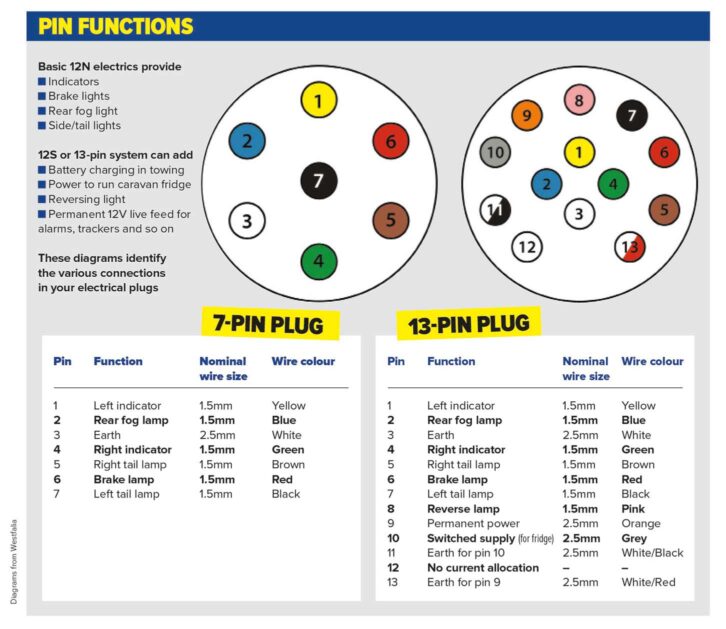
Single 7-pin connector (12N)
These are an older, more basic design for trailers. The N stands for ‘Normal’. They just power the lights, and are not a suitable choice for modern caravans and tow cars.
Two 7-pin plugs (12N + 12S)
This system is designed to add certain caravan functions to the 12N set-up. It was used on older caravans and involves two separate plugs – 12N for the lights, and 12S for the fridge and the battery.
The S in the name stands for ‘Supplementary’. These can still work very well, but they are rather more prone to corrosion and decoupling.
13-pin connector
Back in 2008, the much neater and simpler 13-pin plug was introduced to the market.
This will handle all of the necessary power connections (lights, battery charging and fridge) through a single, twist-to-lock connection.
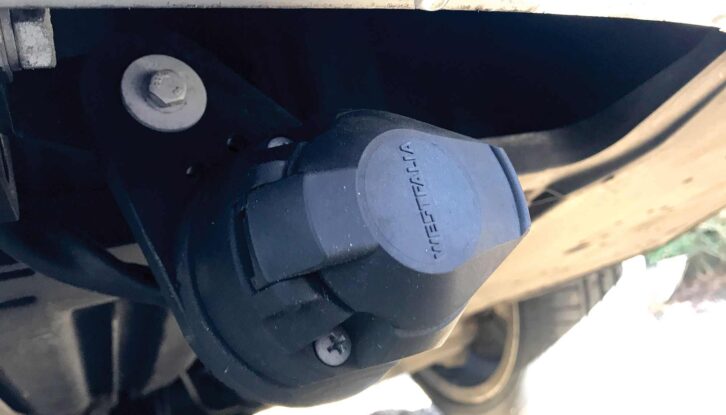
If you have mismatched connectors – an older tow car with a new caravan, or vice versa – don’t panic.
Simple adaptors are widely available for about a tenner and will easily bridge the gap between old and new systems with a quick twist.
Bypass or vehicle-specific towing electrics
Modern caravan electrics sort the pros from the pretenders.
If you’ve bought the cheapest towbar kit going, chances are it includes a basic bypass wiring system. These set-ups don’t exactly integrate with your car’s electronics – they simply work around them.
A bypass system will get your lights blinking and your fridge humming, but that’s about it.
Crucially, the car won’t even realise it’s towing. That means key systems like traction control, ABS and adjustable suspension don’t know to recalibrate.

Even your rear parking sensors might start having a meltdown, when they think a caravan’s tailgating you at three feet!
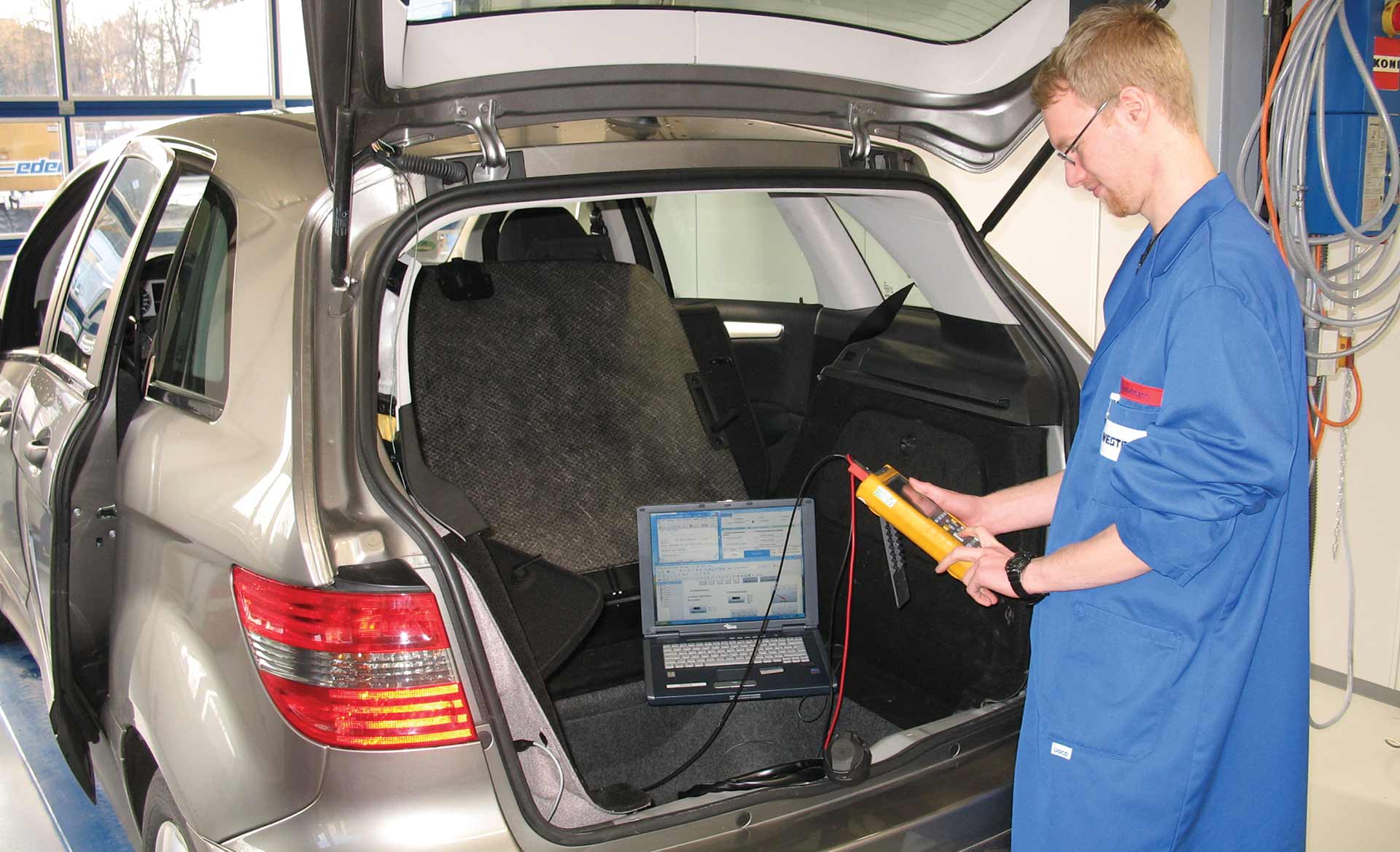
Now contrast that with a vehicle-specific wiring loom. This plugs directly into the car’s brain – known as the CAN bus – allowing it to ‘chat intelligently’ with the caravan.

The result? Everything works in harmony, from adaptive suspension to trailer stability programmes. In effect, it’s the towing equivalent of driver and co-driver in perfect unison.
OE factory-fit towbars are fully integrated – but they often cost well over a grand and can hold up a new car delivery. However, top-tier brands (such as Tow Trust, Witter and Westfalia) now offer tailored kits for many models, usually for around half the OEM price. Fitting takes three or four hours.
How to connect your electric towing cable
1 Ensure the car and caravan are parked on level ground with the brakes on and the ignition off.
2 Put a twist in the cable to tension it and keep it off the ground (but not too tight, as a sharp turn could pull on it and cause damage).
3 Align and insert the plug (twisting to lock if it’s a 13-pin).
4 The spring-loaded cover should close on the connector, preventing it from turning.
5 Always check all lights are working before setting off. Ask a second person to help, or use a reflection in a window or garage door.
Maintenance tips for your towing connectors
- Keep both the plug and the socket clean and dry.
- Use electrical contact spray or WD-40 to repel moisture. Do this whenever you’re storing your caravan, and after each trip.
- For 13-pin plugs, use a protective cap when not in use. The alignment tool also serves this purpose.
- Regularly check the cable for signs of wear, crushed sections or exposed wires. If a cable has dragged on the floor during towing, it makes sense to have it replaced, unless the damage is only very superficial.
- If you spot corrosion on any of the pins, treat this as a matter of urgency.
- If your leisure battery isn’t charging or your caravan fridge isn’t cooling when you’re towing, check the towing cable connections, as poor unions can cause these issues.
Legal and safety points
- It’s a legal requirement for van lights to work correctly. Non-functioning indicators or brake lights can lead to fines, or worse, accidents.
- If you’re towing a newer caravan with an older car (for example, with 12N/12S), you might need an adaptor to convert to the 13-pin system – and vice versa.
- Always disconnect the electrics before unhitching, to avoid straining the cable or damaging the socket.
Caravan stabilisers are another important towing aid you will want to know about too – they are an important accessory that helps to improve the stability and safety of your tourer.
Future Publishing Limited, the publisher of Practical Caravan, provides the information in this article in good faith and makes no representation as to its completeness or accuracy. Individuals carrying out the instructions do so at their own risk and must exercise their independent judgement in determining the appropriateness of the advice to their circumstances and skill level. Individuals should take appropriate safety precautions and be aware of the risk of electrocution when dealing with electrical products. To the fullest extent permitted by law, neither Future nor its employees or agents shall have any liability in connection with the use of this information. You should check that any van warranty will not be affected before proceeding with DIY projects.
If you’ve enjoyed reading this article, why not get the latest news, reviews and features delivered direct to your door or inbox every month. Take advantage of our brilliant Practical Caravan magazine SUBSCRIBERS’ OFFER and SIGN UP TO OUR NEWSLETTER for regular weekly updates on all things caravan related.