Planning a grand tour of the Continent this summer? Before you start making space for the Merlot, there’s a bit of pre-trip admin to tackle.
All types of caravan weighing more than 750kg heading to the Continent now needs to be registered with the DVLA before you go.
Yes, paying more money to the government probably has all the appeal of contracting pneumonia, but the trailer registration process is fairly painless and registration lasts for 10 years. It also means you can head off in search of a jambon-beurre without the gendarmes taking an interest.
One thing worth bearing in mind is that the registration number cannot be transferred to a new caravan, should you decide to upgrade or downsize to one of the best small caravans. This is because the DVLA Trailer Registration Scheme ties the registration to the caravan as opposed to the caravanner.
Don’t let the government portal put you off. While navigating official websites can sometimes feel like trying to pitch an awning in a gale, the process is straightforward if you know what to expect.
To save you ferreting around in document wallets and drawers, gather all the paperwork and information you need before you start.
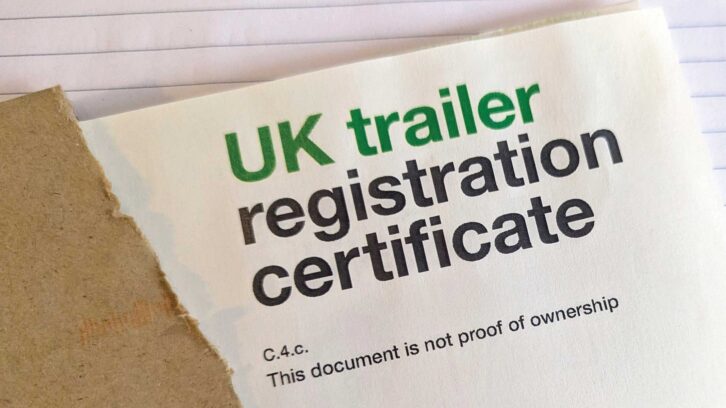
Most of the issues are down to unfamiliar language. Conventional trailers and caravans have all the same data attached, but they have different labels. Work it all out before you start and the whole process should be a breeze.
Don’t miss our advice on importing a caravan to Italy, either.
What if you don’t register a caravan for Europe?
Tempted to skip the admin and just wing it? Here’s why that’s not a great idea.
- Travelling without registration in countries where it’s mandatory can land you a fine of up to €1000. Worse still, you could find yourself turned around at the border, watching your holiday disappear before it’s even started.
- Countries including Ireland, Spain, Malta and Cyprus don’t require registration themselves, but you’ll almost certainly drive through ones that do (bonjour, France!). If you’re crossing those borders, you’ll need the paperwork.
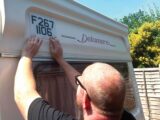
- You’ll need a separate, trailer-specific numberplate and a ‘UK’ sticker clearly visible on the back of the caravan. Sort it out before you go and save yourself a very expensive conversation with a border official later on.
How much does it cost to register a caravan?
The fee to register your caravan is £26 plus £21 to issue the registration certificate. If you lose or damage the certificate a replacement costs £10.
Gateway ID
Additionally, you need to supply your email address and have a payment card to hand to pay the fee. Finally, you’ll need a Government Gateway user ID and password. If you don’t already have one, don’t worry, you can create one as part of the process.
In the initial stages of the process, you will be asked a couple of questions and for 99% of caravanners the answers are all the same.
Unless you use your van for work, it is ‘Non-Commercial’ and unless your caravan is very old or was built by Matchbox, the gross weight (MTPLM) will be more than 750kg, so say ‘Yes’. It will also weigh less than 3500kg (see what we have to say about caravan weights if you need a hand with knowing what weight is what).
If you confirm you’re travelling to countries that require registration, you will be prompted to create a ‘Trailer Account’. To learn more or apply, you head to the official page at https://gov.uk/register-trailer-to-take-abroad and click the big green ‘Start now’ button.
Registering a caravan for Europe: a step-by-step guide
Creating the account
1. Click ‘Create a trailer account’ and advance through the subsequent confirmation screens. You will then be prompted to log in using your standard Government Gateway account details. If you don’t have one, you can set one up on this page.
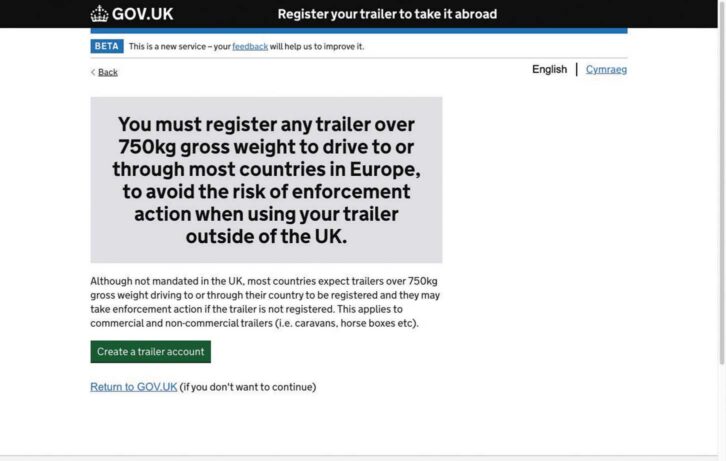
2. You’ll need to confirm and submit the ‘Trailer keeper declaration’. This simply verifies that you are a UK resident and that the tourer is for non-commercial holiday use. Fill in your details to create the ‘Trailer dashboard’.
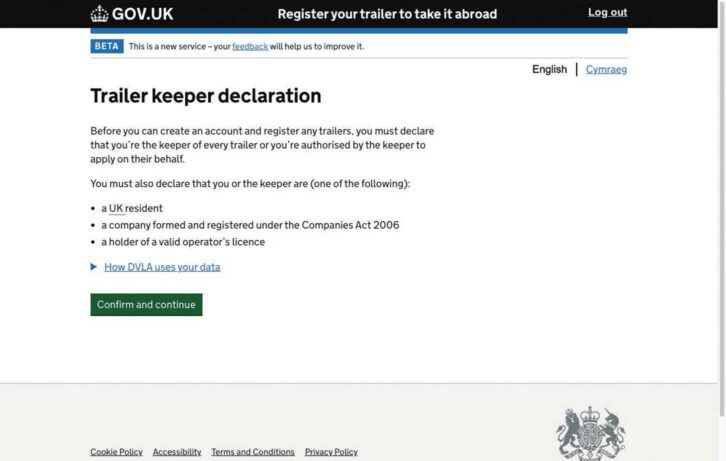
3. The portal will ask you to confirm that you understand which trailers need registration. As discussed earlier, it won’t be used commercially, does not weigh more than 3500kg and yes, it has a chassis number. Click submit.
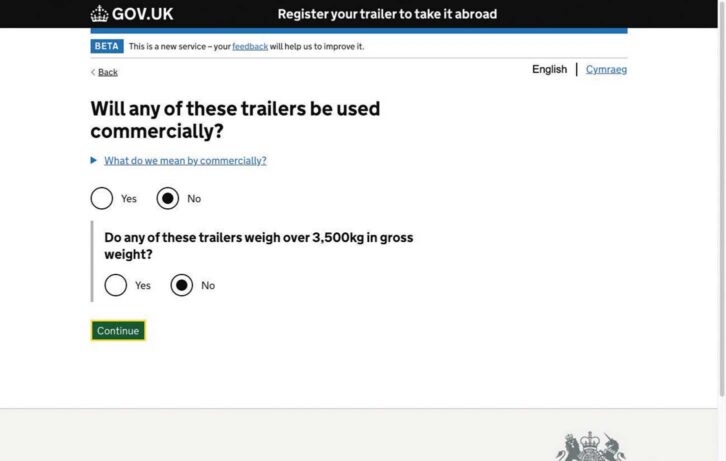
Register your caravan for Europe
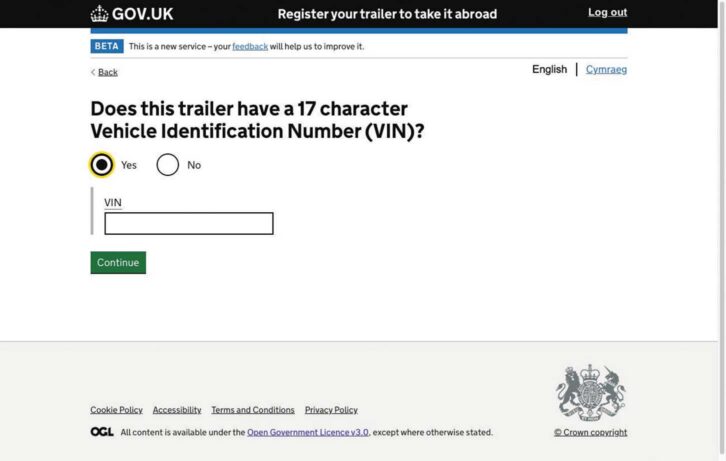
4. Select the ‘VIN’ field and carefully type in your caravan’s CRiS number and click ‘Continue’. Then go to the ‘enter the trailer manufacturer’. Don’t panic if your caravan brand isn’t there. When we tested it, most were not.
5. Click the ‘Manufacturer not listed’ link, type your caravan’s brand name into the text field, and click continue. Only the name of the caravan manufacturer is needed, so leave out the model or other qualifiers. The DVLA isn’t bothered.

6. If you’ve done your homework, you’ll have your caravan weight data to hand. Enter ‘Gross weight’ (kg) and ‘Unladen weight’ (kg) and when asked for the trailer type, select ‘Caravan’ and hit submit.

Order your plate
7. With all the data entered, the most painful bit is settling up. The total cost is £47, which covers the £26 registration fee and £21 for your official certificate.
8. Head back to your trailer dashboard and click ‘View all trailers’. You will see your newly registered caravan listed alongside its unique certificate number which you will need to order a plate.

9. We ordered our plate from a supplier on eBay. We had to send ID details for us, and the trailer certificate, before the order was accepted. It cost around £17.

Final step: Attaching the plate
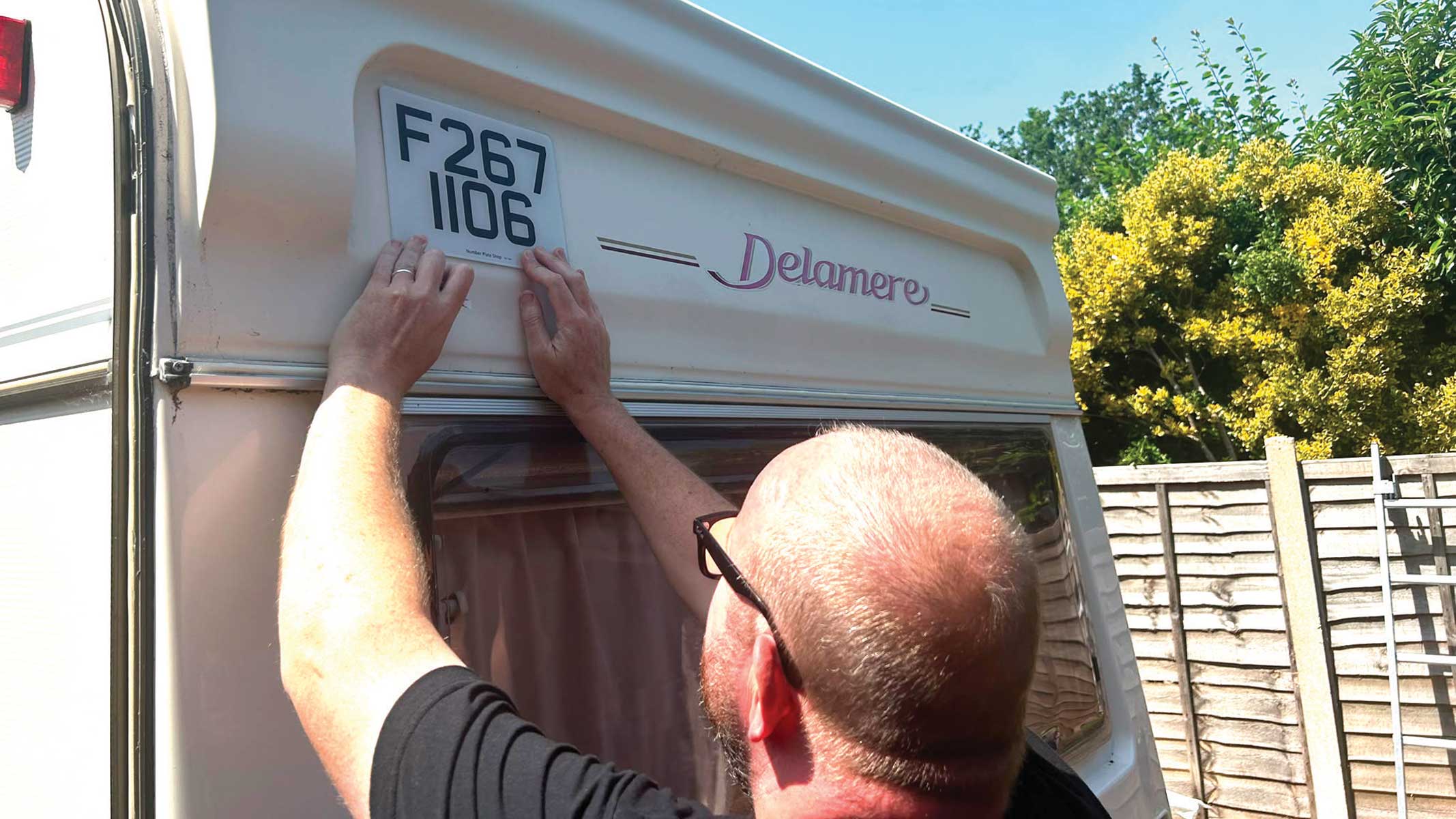
10. Official advice is to place the plate on the back of the vehicle but not too close to the car numberplate. Top-left corner is the favoured location but each van is different, so plan before you stick!
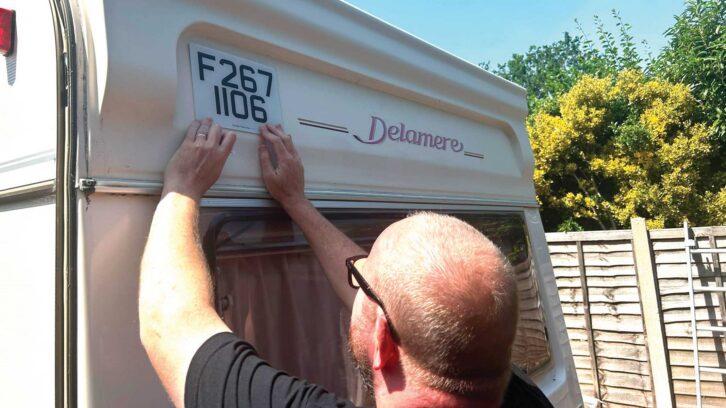
11. We cleaned the back of the van with an alcohol swab to ensure good adhesion, and attached numberplate sticky pads to the back of the plate. We chopped them into four to ensure a good hold.


12. After much careful lining up, we attached the plate as far up as we could. This was made more tricky by the fact Penny has a large rear window occupying most of the back wall. We found a spot next to the logo.

Technical terms you would need to know from the DVLA’s website
- Manufacturer name: Most caravan makers are not listed, so you will probably need to add it manually
- Trailer type: Easy one: caravan
- Trailer VIN: Caravanners commonly refer to this as a CRiS number
- Gross weight: You know it as MTPLM
- Unladen weight: Look for the MiRO on your chassis plate
Once you’re registered, you can start looking forward to seeing your tour. Something you will want to avoid are the common touring errors that can occur – our guide to the caravanning mistakes to avoid can help.
If you enjoyed reading this article, why not get the latest news, reviews and features delivered to your door or inbox every month? Take advantage of our brilliant Practical Caravan SUBSCRIBERS’ OFFER and SIGN UP TO OUR NEWSLETTER for regular weekly updates on all things caravan related.