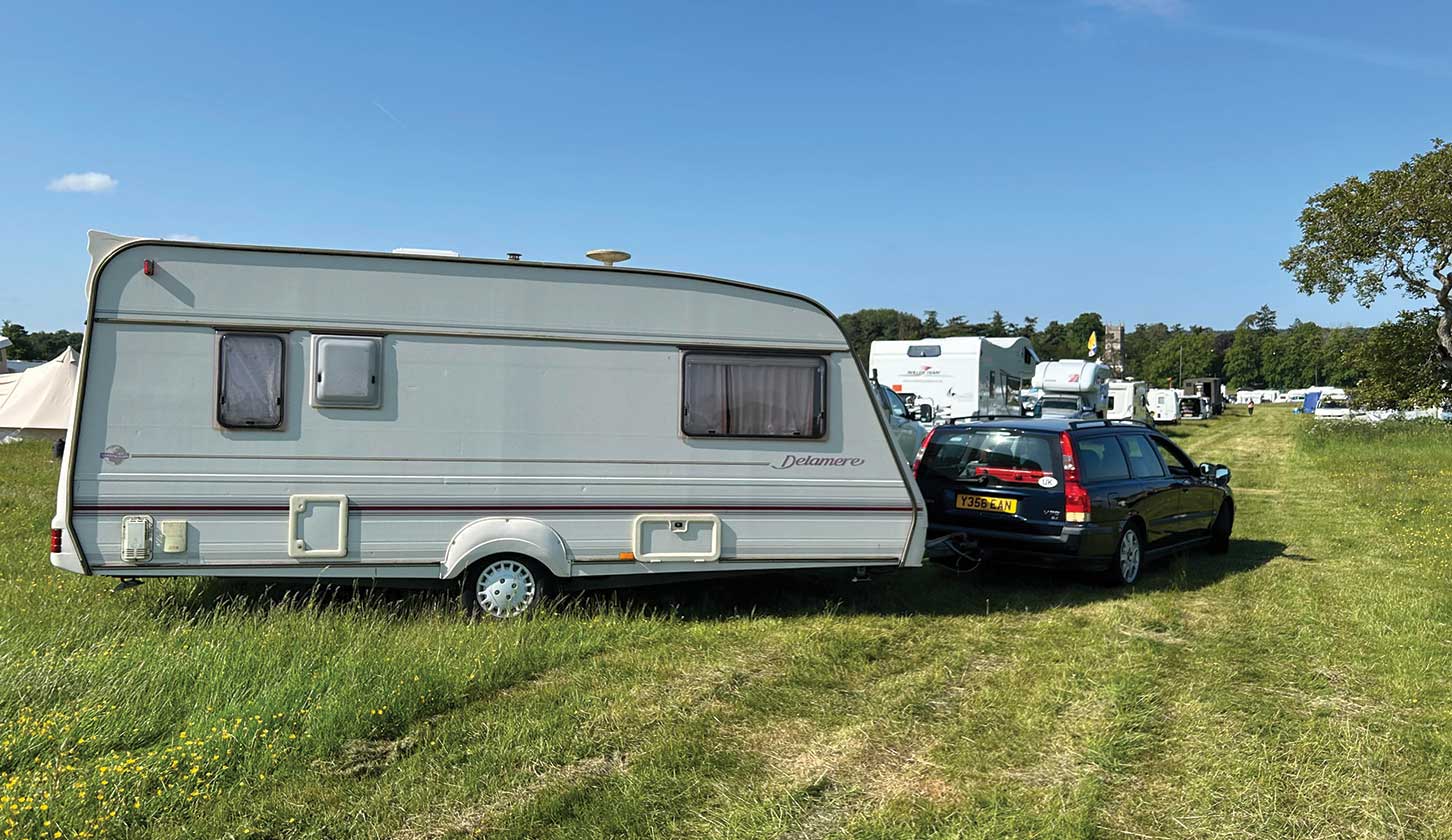

Pretty Penny, our well-used 1998 Bailey Delamere was always planned to be predominantly an off-grid caravan. We like going to low-tech sites and music festivals and have concentrated a lot of our upgrades and improvements with this in mind.
There is still much we can improve ahead of this year’s festival season, but here is a summary of the main things we have done so far to get Penny ready for off-grid caravanning. Don’t miss our tips on how to power a caravan off-grid, either.
1. Solar Panel
The biggest expense, the most work but potentially the most important thing we did to Penny was installing a caravan solar panel and MPPT charge controller last spring.
The reason for this was that on a previous outing, even with a new and fully charged leisure battery, a few days of off-grid festival living with device charging, water pump and lighting were enough to put a dent in our available power.
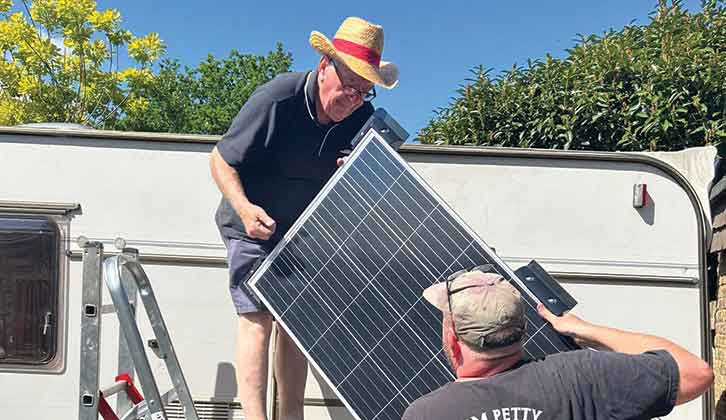
With a caravan solar panel mounted on the roof, however, our battery capacity during our trip to the Red Rooster Music Festival never dropped below 95% all weekend.
If you’re thinking of getting one, we can help you find the one for you, as we answer “what size solar panel do I need for a caravan?“.
Top tip: A portable power bank is a great back-up in case of gadget-charging issues – you can take it to the festival site, too.
2. Wi-Fi Router
There are two schools of thought when it comes to getting access to the internet in a caravan: just use your mobile phone and tether laptops and iPads to it as a hotspot, or install a dedicated router in the van.
The former is simpler, but the latter gives more options. We opted for a dedicated router, so we could get Wi-Fi in a caravan easily.
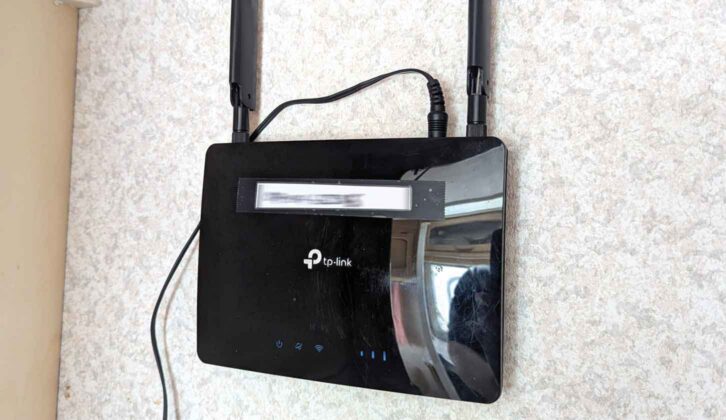
The secondhand unit was cheap and is easy to convert to 12V operation for off-grid use using a small DC-DC voltage stabiliser. We use a cheap data SIM card in the router, which is easy to swap if there is no network coverage or we head abroad.
Also, it allows us to have a Wi-Fi network in the van, so we can use Wi-Fi smart speakers such as Alexa without relying on the phone staying in the van.
3. Water Supply
Off-grid living depends on reliable onboard water, so we ensured that Penny has dependable running water without relying on site facilities by restoring the external pump connector, replacing broken retaining tabs, fitting a new Filtapac water inlet, and cleaning and reviving the electrical contacts.
It’s a simple system, so now that it’s working we do plan to upgrade the washroom and make the drains flow better, but at least everything now operates well.
4. 12V Charging Points
Having a healthy battery that is chock-full of free power is no good if you can’t get the power out. To charge devices when off-grid, we’ve added new surface-mount 12V sockets using heavy-duty cabling and connectors. These allow phone and tablet charging directly from the battery without needing mains supply.
We went with cigar lighter- style sockets rather than USB connectors. We have two adapters – one has traditional USB-A connectors while the other has the USB-C type. Opting for these means that swapping to mini-USB or whatever else we need is plug-and-play, rather than a wiring task.
5. Battery Monitor Install
To avoid guessing how long the battery will last when off-hook-up, we added a battery monitor that shows real-time consumption, state of charge and remaining run-time – essential information when relying solely on the leisure battery for your lights and power.
The Renogy Battery Monitor we opted for is a straightforward upgrade, although you do need to reconfigure a few connections. Once fitted, you tell it how large your battery is, fully charge it, and it does the rest. Now we know how long the lights will stay on for!
6. LED Light Upgrades
Old lighting is one thing that really dates a caravan. We replaced Penny’s ancient fluorescent tubes and tungsten bulbs with LED lighting throughout the caravan.
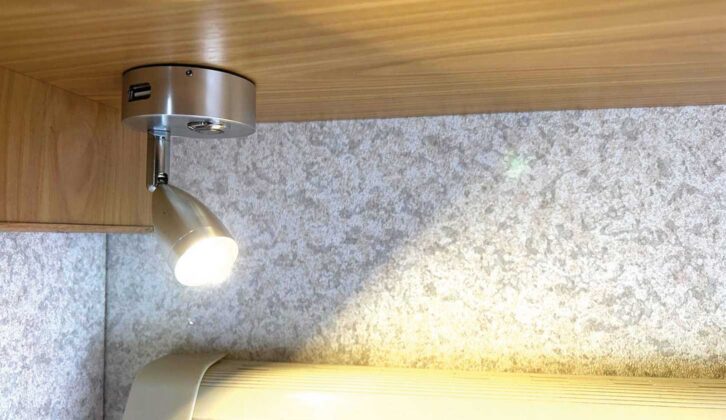
We had a couple of missteps where the replacements were a little too ‘blue’ and made Penny feel like a public toilet inside, but swapping out to warmer LEDs gave us a nice light, and they use a fraction of the power, produce less heat, and extend the usable battery life during off-grid stays.
7. Busbars/Power Distribution
Lovely heavy-duty cables and new connectors are great, but the quick way to add caravan accessories is to run additional cables direct to the battery. That defeats the object of nice terminals.
Instead, we ran our new cables into a pair of busbars – essentially terminal blocks which allow you to run all cables to one central mounting, and then a single cable from there to the battery. It is very common in boats. That cleared the way for the simple addition of a few nice upgrades.
8. Upgrading Cables
While modern tourers come with relatively sophisticated low-voltage power set-ups as standard, Penny was not so lucky. Factor in 25 years of active service and she was due a bit of an electrical makeover.
The battery was toast, but that was to be expected. However, the state of the cables from the battery to the 12V system didn’t look great. Given we wanted to know we had strong connections to a good battery, we beefed up all the cables from the battery into the van to ensure that a duff connection or a dodgy battery were not going to dampen the festival mood.
If you’ve enjoyed reading this article, why not get the latest news, reviews and features delivered direct to your door or inbox every month. Take advantage of our brilliant Practical Motorhome magazine SUBSCRIBERS’ OFFER and SIGN UP TO OUR NEWSLETTER for regular weekly updates on all things motorhome related.