If you want to tow a caravan, you’ll need a towbar fitted to your car.
However, they come in various shapes and styles, so knowing which type will suit you best is not always the easiest of prospects, particularly if you’re a newcomer to caravanning.
There are a variety of types to choose from, however, and before you begin thinking about those gadgets that can help you on the road, such as the best caravan sat nav or the best caravan rear view camera, you will want to make sure you get your towbar sorted.
Where do I get a towbar?
If you’re ordering a new car, you can choose a towbar from the manufacturer, have one fitted by the dealership, or you can add an aftermarket one. Typically, the latter will cost about half as much, but it may not have all the electronic integration or fit the car without modifications. Check beforehand.
Don’t rule out buying a used towbar online, though, of course, you’re unlikely to get any sort of warranty.
How do I choose the right towbar?
These are the choices you may have to make when selecting your towbar.
- Cost – you’ll need to set a budget
- Style – swan-neck, flange or removable
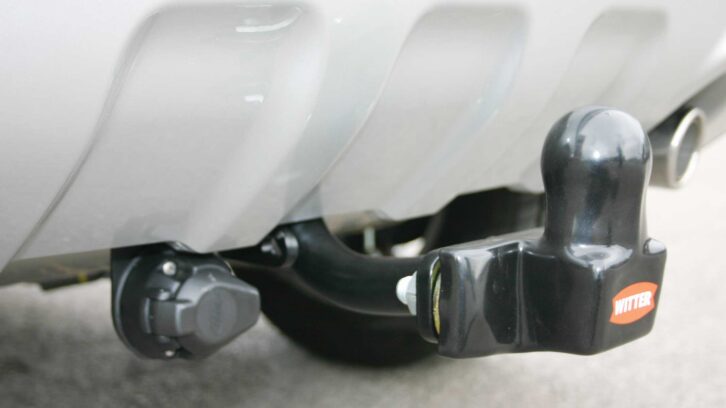
- Towbar profile – will my tow car’s bodywork need to be adapted?
- Electrics – fully-integrated or by-pass system?
- Who’s fitting it?
- What sort of electric socket do I need?
- Is it compatible with my car?
Before you set off too, something you might want to embark on, particularly if you’re new to touring, will be some caravan towing courses – they can have an enormous benefit and help to make you more confident on the road.
How much is a towbar for a caravan?
As with many pieces of towing equipment, you will find towbars span a wide price range, and where you buy makes a noticeable difference. Factory-fit options ordered with a new car are convenient, but rarely cheap – four-figure sums aren’t unusual. Leave it until later, and a main dealer installation can push the bill higher still.
The independent route is often more palatable. Specialist suppliers and fitters can undercut dealer prices significantly, while offering a broader choice of systems.
That said, this isn’t the place to cut corners. Modern cars are packed with electronics, from parking sensors to stability systems, and your towbar needs to integrate seamlessly. A cheaper kit that doesn’t communicate properly with the car can cause more headaches than it’s worth.
Spend wisely, and ensure the system is fully compatible with your vehicle’s wiring and onboard tech – it’ll pay off every time you’re hitching up a caravan.
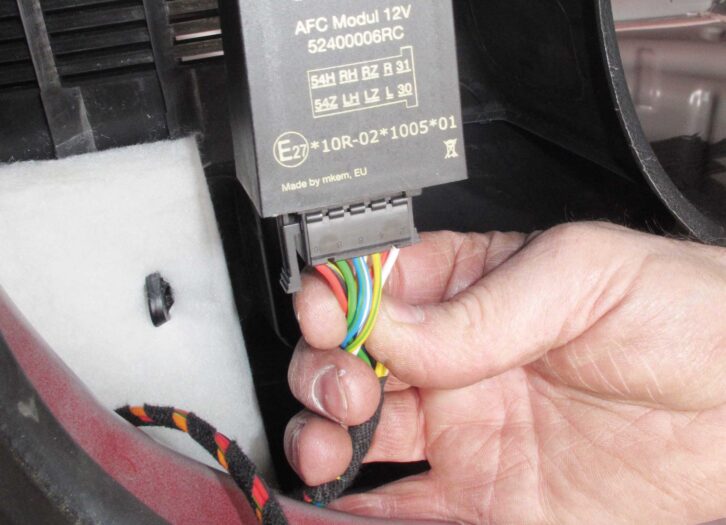
You can expect to pay from £300 for a budget towbar with basic electrics, fitted. A high-quality, fully integrated, aftermarket system from a reputable manufacturer/supplier is likely to cost from £600. Ordering from a manufacturer or dealership could easily exceed £1000.
I’ve always bought mid-range, integrated systems, for my VW, Volvo and BMW caravan tow cars, and always been very happy with my choices.
Finally, be aware that the prices quoted on some websites may not include fitting and/or electrics. Check before you commit, because it’s often a significant extra cost.
What towbar do I need for a caravan?
The now universal 50mm towball – a standard since Westfalia’s Franz Knöbel introduced it in the early 1930s – remains one of the simplest, most effective pieces of towing hardware ever devised.
Its ball-and-coupling arrangement allows generous movement in all directions, yet locks together with reassuring security. That combination of flexibility and strength is precisely why it works so well for everything from utility trailers to touring caravans.
While the towball itself is a standardised design, the way it’s mounted to the car varies considerably – and that’s where choice comes in, just as there is when choosing between flat or convex towing mirrors.
When it comes to towbars, these are the types you will find.
Flange towbar
This is the no-nonsense option. A flange towbar bolts directly to the rear structure of the vehicle, with the towball fixed via a plate using two substantial bolts. It’s robust, affordable and widely compatible with accessories such as cycle carriers.

The downside? It’s always on display – which won’t appeal if you’re precious about your car’s lines.
Swan-neck towbar
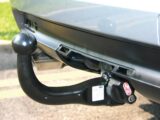
More elegant in execution, the swan-neck design sweeps out from beneath the bumper in a smooth curve, placing the towball in position without the need for a bulky plate.
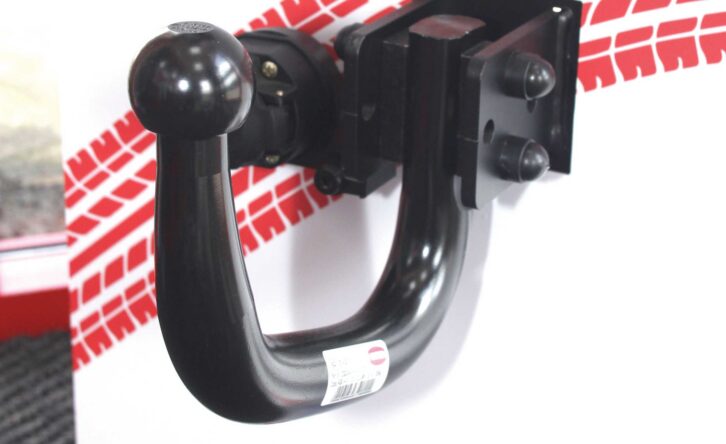
It often avoids the need to cut the bumper and looks far neater. Available as fixed, detachable or retractable, it’s the popular all-rounder.
Detachable towbar
For those who don’t want ugly protrusions permanently fixed to their beautiful car, detachable systems are ideal.

The towball assembly slots into a receiver hidden beneath the bumper and locks securely in place, usually with a reassuring click and visual indicator. Remove it when you’re done, and it disappears entirely.
Retractable towbar
The cleverest solution of all. Permanently installed, but hidden when not required, retractable towbars swing or motor neatly into position at the press of a button. When the job’s done, they tuck away out of sight.

Retractable towbars are the ultimate blend of convenience and clean design, but you will have to pay handsomely for these attributes.
How do I know if my car can have a towbar fitted?
Before you even think about choosing a towbar, it pays to establish whether your car is actually rated to tow – and, if so, how much it can safely/legally pull for your car and caravan matching.
Your first port of call could be your VIN plate – usually tucked under the bonnet or on the driver’s door pillar. This sticker or aluminium plate displays the information you need.
You’re looking for the Gross Vehicle Weight and the Gross Train Weight. The former is the car’s maximum laden weight; the latter is the combined limit for car and trailer. Subtract one from the other and you’ve got your towing ceiling. If there’s no train weight listed, or it matches the vehicle weight, that’s your answer: towing isn’t on the menu.
If neither that nor the car’s manual are conclusive, a quick (safe!) crawl underneath can be revealing. Many cars have reinforced mounting points or pre-drilled holes on the rear structure for a towbar – these are potential signs that a towbar can be fitted.
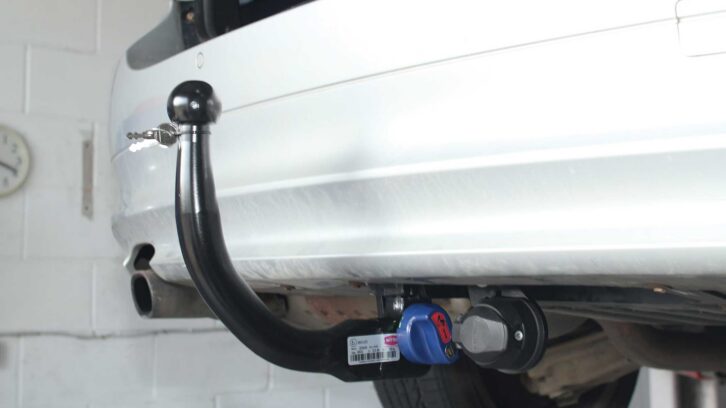
Removable panels in the bumper also hint at provision for a detachable system.
Still unsure? Reputable towbar supplier websites will let you check compatibility using your registration or VIN – a quick and reliable cross-reference.
Finally, don’t ignore any legal restrictions. Post-1998 cars require type-approved towbars, and some vehicles – particularly high-performance models and certain electric tow cars – simply aren’t homologated to tow at all. In those cases, no amount of enthusiasm will change the rule book.
What about towing electrics?
So where do the caravan towing electrics factor in? Modern towcars are as much about software as steel, and towbar electrics need to keep pace. Many mainstream towbars now benefit from dedicated wiring looms designed specifically for a vehicle. These plug neatly into the car’s systems, allowing everything to work in harmony – from lighting to safety aids.
You can opt for a cheaper by-pass relay, and it will do the basics, but don’t expect full integration.
The smarter route is a vehicle-specific kit, which allows the car to recognise when it’s towing a caravan. Once installed, a technician will typically connect to the car’s diagnostics port and code the system accordingly. The result? Parking sensors are muted automatically when the car senses a caravan is attached, rear foglights are disabled, and, in some cases, tweaks to suspension and gearbox settings are made to better suit the extra load.
Remember to also check that your caravan’s electric lead and your tow car’s socket are compatible.
Tom Miller, CEO at tow-trust.co.uk says: “The choice between a universal or vehicle-specific electric kit should be an informed decision made by the customer. A vehicle-specific kit offers the most reliable connection, as it is designed to integrate with designated points on the vehicle specified by the manufacturer.
“If the vehicle includes safety features that need to be activated when towing, a vehicle-specific kit is strongly recommended. It ensures proper communication with the vehicle’s systems and helps maintain full functionality of these features.
“Another important consideration is the vehicle manufacturer’s warranty policy, because failing to use a vehicle-specific kit may affect warranty coverage.”
What should I know about towbar electric sockets?
Tow car to tourer connections, the cable and connector that link power and controls between car and caravan, are vital.
Older caravans often use the familiar 7-pin plug, which is still perfectly serviceable. However, the 13-pin system – now the industry standard – brings everything into a single, more robust connection, powering lights, fridge and auxiliaries in one go. It’s also neater, particularly with detachable towbars, because the socket can be tucked discreetly out of sight. If you’re mixing old and new, inexpensive adaptors bridge the gap with minimal fuss.

Occasionally, socket pins can become misaligned, making cable connection awkward. A simple alignment tool – cheap and widely available – will usually sort it in seconds. Expect to pay about a fiver.
Will the towbar go straight on?
Some towbar installations require the rear bumper to be trimmed or adapted, and not always discreetly. On my sweepingly beautiful, new VW CC, a large section was eviscerated from the lower bumper, which was annoying as the towbar was removable.
If preserving your car’s looks matters, it’s worth choosing a system – often a higher-end detachable – that sits behind a removable panel, keeping any necessary surgery out of sight.
How long does it take to fit a towbar?
To fit and test a fully integrated towbar typically takes three to four hours, depending on whether body cuts are needed.
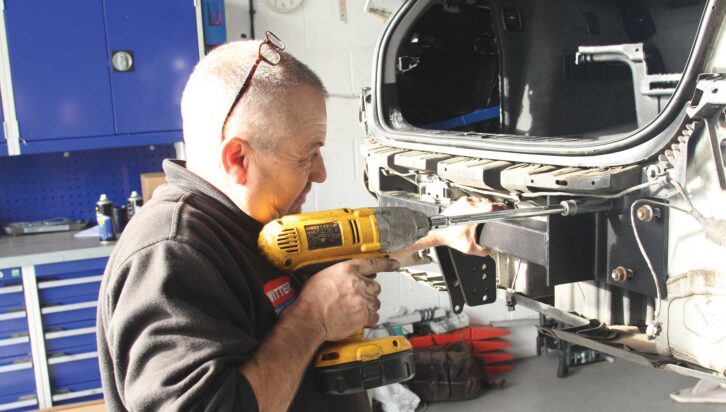
A more basic system can be fitted in around two hours.
Do I have to maintain my towbar?
A towbar may be a fit-and-forget piece of kit, but a little routine care will keep everything working smoothly, and avoid costly and annoying niggles down the line.
Start with the towball itself. If it’s new, it’ll often be coated in a protective film of grease or paint. That’s fine for storage, but not for towing. Clean it thoroughly with a solvent such as white spirit, and a lint-free cloth, and if necessary, lightly key the surface with fine abrasive paper.
Why? Because stabilisers, like those from Al-Ko, rely on clean, dry friction pads to do their job properly. Any contamination will seriously reduce their effectiveness and may cause interminable squeaking (see: “why is my caravan creaking when I’m towing?” for more on this.
If you’re running a detachable system, keep the receiver clean, lubricated and protected. Refitting the cover when the towbar is removed will prevent dirt and corrosion building up. This will make life much easier when you come to refit it.

While you’re there, give any moving parts a light lubrication to keep everything operating freely. The same applies to retractable systems and swivelling electrical socket pivots; a touch of lubricant now prevents seized mechanisms later.
Electrics deserve equal attention. Check cables for chafing, inspect socket pins for corrosion, and treat them occasionally with a water-displacing spray or contact cleaner. When not in use, keep the socket covered to keep the worst of the weather out.
Finally, don’t overlook the simple things. Keep spare keys safe and separate, and make a quick visual check part of your pre-tow routine. It’s hardly onerous, but it’s exactly the sort of quiet diligence that keeps towing trouble-free.
Do I have to tell my car insurer?
We’d recommend you tell your insurer if you have a towbar fitted – they may define it as a ‘modification’. While we think that’s unlikely, it’s better to be safe than sorry.
Can I fit a towbar to my company car?
Adding a towbar to a company or lease car isn’t off-limits, but it does require a bit of due diligence. In most cases it’s perfectly acceptable, provided the installation is carried out professionally and, crucially, the leasing company is kept in the loop.
After all, it’s their asset – and any modification can have implications for insurance and end-of-contract conditions.
In practical terms, the process is usually straightforward: inform the lease provider, confirm approval, and ensure the work is done by a reputable specialist.
Paperwork can crop up, too. If you need additional numberplates for a caravan or bike rack, you may have to obtain the correct vehicle documentation from the leasing company before suppliers will oblige.
The golden rule? No surprises. Keep everyone informed, stick with quality components and experienced fitters, and there’s little reason why a towbar can’t slot neatly into company car life.
Now that you’re all set to hit the road, don’t miss our reversing a caravan tips, either, to help make the manoeuvre easier.
Future Publishing Limited, the publisher of Practical Caravan, provides the information in this article in good faith and makes no representation as to its completeness or accuracy. Individuals carrying out the instructions do so at their own risk and must exercise their independent judgement in determining the appropriateness of the advice to their circumstances and skill level. Individuals should take appropriate safety precautions and be aware of the risk of electrocution when dealing with electrical products. To the fullest extent permitted by law, neither Future nor its employees or agents shall have any liability in connection with the use of this information. You should check that any van warranty will not be affected before proceeding with DIY projects.
If you’ve enjoyed reading this, why not get the latest news, reviews and features delivered direct to your door or inbox every month. Take advantage of our brilliant Practical Caravan magazine SUBSCRIBERS’ OFFER and SIGN UP TO OUR NEWSLETTER for regular weekly updates on all things caravan related.