

Verdict
The T-Roc is an appealing all-rounder, so long as it is heavy enough to make a sensible match for your van.
Pros
- Tows with stability and easy to manoeuvre
- Works well as an everyday car
- Improved interior
Cons
- Currently only available as a front-wheel-drive
- Towbar needs locking in position by hand
This is the second generation of the T-Roc, VW’s compact SUV. The new model builds on the strengths of the old car with more tech and space.
What are we looking for?
How well does the Volkswagen T-Roc 1.5 eTSI 150PS R-Line DSG tow? Should it be in the discussion for the best small tow car, and is it worth the relatively high price?
Towing ability of the Volkswagen T-Roc 1.5 eTSI 150PS R-Line DSG
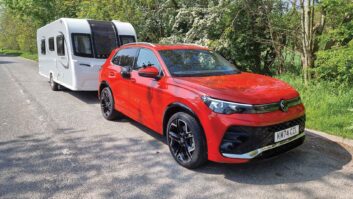
For quite a small car, the T-Roc has a promising spec for towing. The 150hp petrol we’ve been driving has a kerbweight of 1474kg, giving an 85% car/caravan match figure of 1253kg. That’s comfortably within the towing capacity of 1500kg. Some small cars have low noseweight figures, but not the T-Roc – the maximum download is 80kg.
There’s no 4×4 model yet, although a more powerful version sending power to all four wheels is on the way.
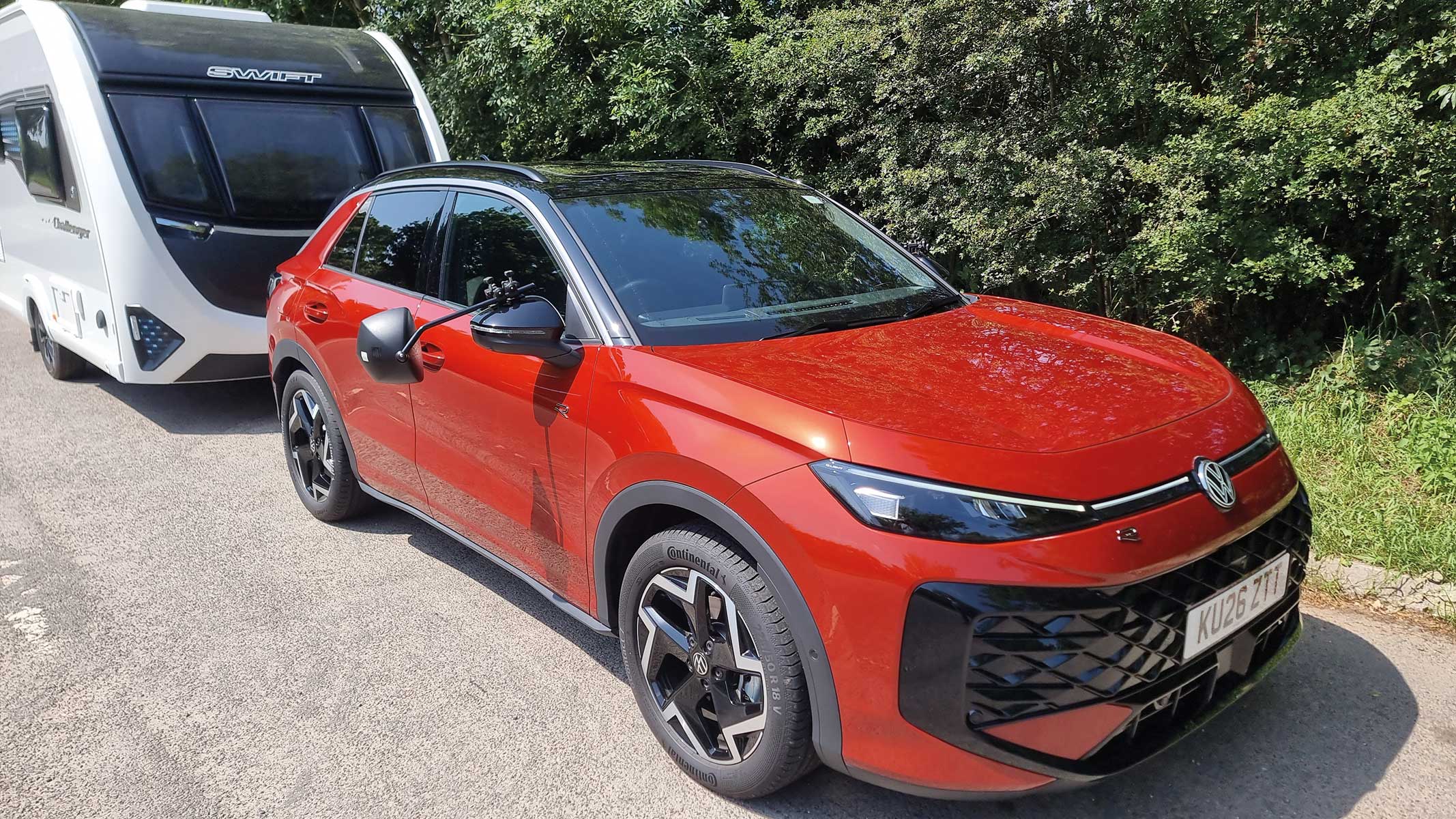
To put the T-Roc to the test, we borrowed a Swift Challenger 480 from Spinney Warwickshire. With a Mass in Running Order of 1160kg, the Challenger makes a 79% match for the T-Roc.
For a tow car with a relatively small petrol engine, the T-Roc pulls up to speed well. The DSG auto changes gears smoothly and usually chooses the right ratio for brisk acceleration. In dry weather, we found the VW put its power to the road cleanly with no wheelspin at junctions.
Once up to speed the VW feels secure – we noticed some slight movements around HGVs, but otherwise the T-Roc was impressively stable, that all-important trait we always look for in the best caravan tow cars.
On country roads, the VW also acquits itself well. Hill starts are achieved without any fuss on a dry 1-in-10 slope, although steeper gradients and damp surfaces are likely to prove more challenging for a front-wheel-drive SUV.

Arrive at your campsite and the T-Roc is straightforward to manoeuvre. When you need to hitch up again, the rear-view camera is a plus, especially if you don’t have someone to direct you as you’re reversing a caravan.
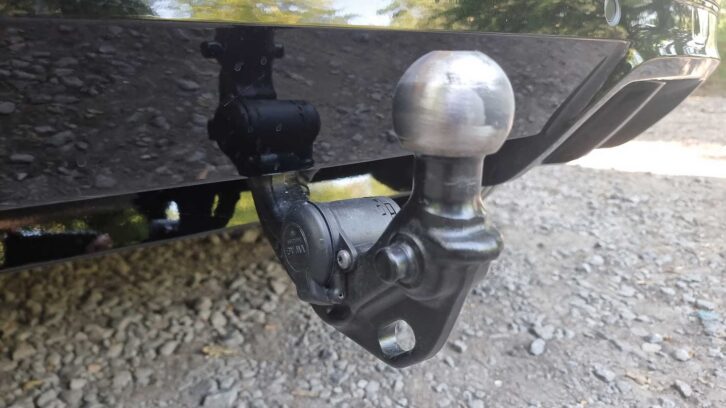
The drop-down caravan towbar emerges with a button press, although it must be locked in position by hand. The electrics are on the side of the towbar with good space between the 13-pin socket and the bumper.
Take a look at our guide to caravan towing electrics, as we talk you through the different types, share maintenance tips, and more.
Solo driving the Volkswagen T-Roc 1.5 eTSI 150PS R-Line DSG
As an everyday car, the T-Roc does a good impression of a larger SUV. It’s as comfortable and quiet on the motorway as many larger cars.
The suspension is supple but well controlled, which makes for a secure drive on A-roads and motorways. Our R-Line test car came with the optional Dynamic Chassis Control which allows the driver to make the suspension softer or firmer. It costs £765, which won’t make a big difference to your monthly payments if buying on finance.

Colleagues who have driven the car on the standard suspension tell us DCC is an improvement, but by no means an essential upgrade when the regular set-up is so good.
Around town, softening-up the suspension made it noticeably more forgiving over potholes and speed bumps. On country roads, the Sport setting reduced body roll in bends and made for livelier handling. Even so, keen drivers are likely to find the agile Ford Puma more rewarding to drive.
With no caravan to pull, the 150hp engine delivers quick enough acceleration to keep most drivers happy.
Space and practicality
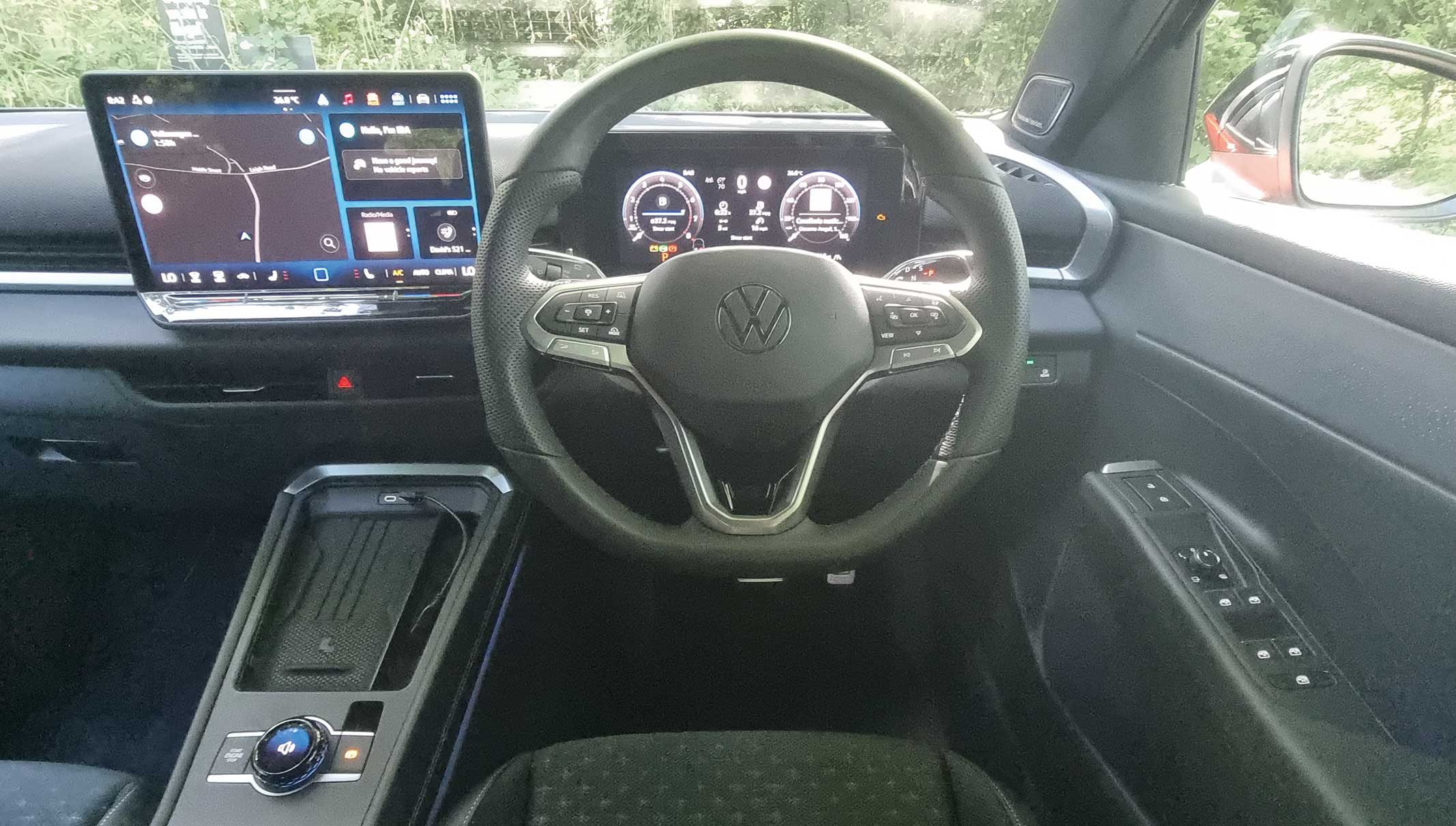
The new Volkswagen T-Roc 1.5 eTSI 150PS R-Line DSG is a big improvement over the old model inside.
One common criticism of the old car was that it was made from relatively cheap-feeling materials, although this was partially addressed with a mid-life facelift in 2022. There’s been another worthwhile step forward in quality with the new model, with plenty of soft-touch plastics and an appealing design. It’s not as plush inside as a Lexus LBX, but the gap between the T-Roc and premium-badged rivals has closed significantly.
The dash features twin screens, with a large 12.9-inch touch screen. It’s reasonably easy to use and the air-con controls are always available along the bottom of the screen.
We found the driving position comfortable on a long day behind the wheel, high enough from the floor to avoid aching heels and giving plenty of under-thigh support. Powered lumbar adjustment is included in R-Line models.
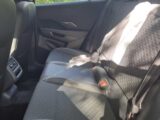
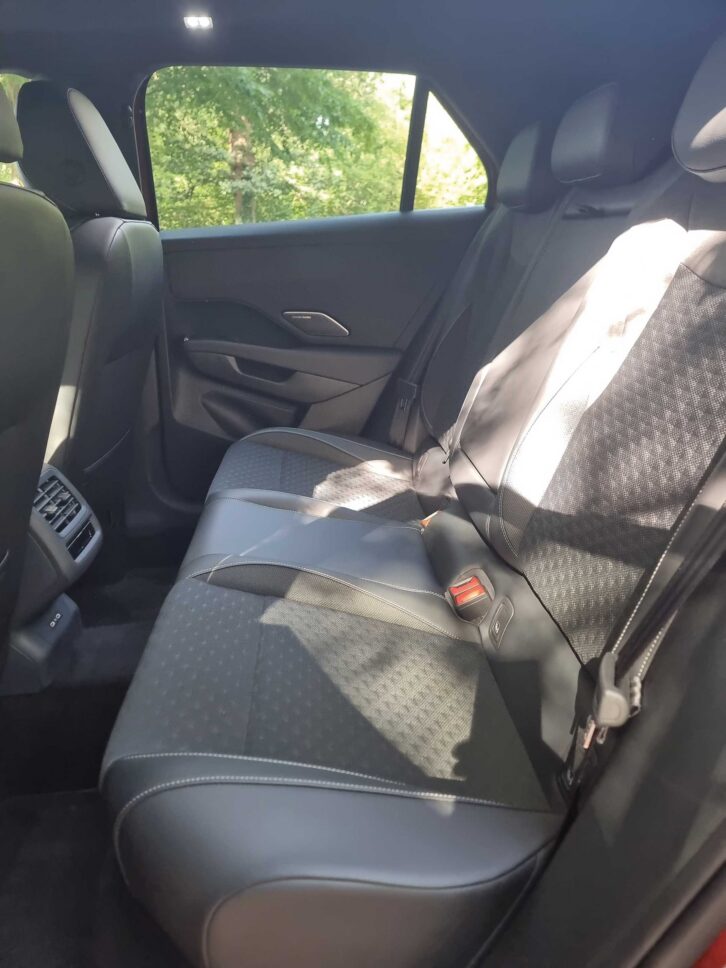
There’s an extra 122mm (almost five inches) between the front and rear axles compared with the previous T-Roc. Anyone upgrading from the old car will notice more rear legroom, with enough space for adults in the back. The optional panoramic sunroof does steal some headroom, but rear-seat passengers will need to be very tall to mind.
Air vents between the front seats keep those in the back at a comfortable temperature, and there are separate temperature controls for the rear of the cabin on this high-spec model.
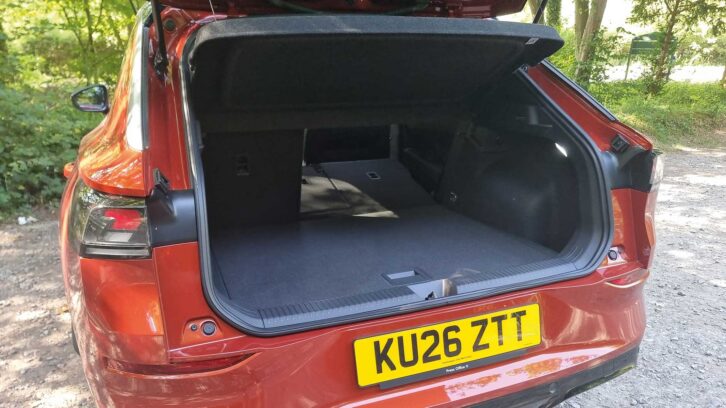
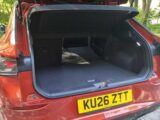
The boot has a 475-litre capacity, narrowly beating the Ford Puma’s 456 litres. With the floor on its higher setting, there’s space underneath and only a tiny load lip. Lowering the floor makes for one large space. Folding the back seats increases the capacity to 1350 litres.
Buying and owning
This is not a cheap car. The R-Line version costs £38,935 and the options fitted to our test car push that to over £45,000. The entry-level Life specification is good value at £33,700 with the 150hp engine.
The petrol unit features mild-hybrid assistance to take some strain from the engine. The official combined figure is 50.2mpg, and we saw similar economy during our time
with the car. While towing the Swift, the VW returned an impressive 28.6mpg.
Alternatives to consider
The Subaru Forester Touring AWD is a tough and competent tow car which is roomy and practical to drive.
Or how about the Kia Sportage 1.6 T-GDI GT-Line S AWD? It comes with a quality cab, is good at towing, and also provides excellent boot space.
You could always consider a pre-owned car too, in which case see what we have to say about buying a used Ford Puma.
Technical spec of the Volkswagen T-Roc 1.5 eTSI 150PS R-Line DSG
- Model tested: T-Roc 1.5 eTSI 150PS R-Line DSG
- Price: £38,935
- Kerbweight: 1474kg
- 85% of kerbweight: 1253kg
- Gross vehicle weight: 1980kg
- Max towing limit: 1500kg
- Gross train weight: 3480kg
- Towball limit: 80kg
- Price of towball and electrics: £830
- Boot size: 475-1350 litres
- Payload: 506kg
- Test conditions: Dry
- Engine capacity: 1498cc
- Power (hp)/rpm: 150/NA
- Torque (lb ft)/rpm: 184/1500-3000
- Official combined economy: 50.2mpg
- Towing economy: 28.6mpg
- CO2 emissions: 128g/km
- First year car tax: £455
- Second year car tax: £200
- Insurance group: 20
- Euro NCAP overall protection rating: 5/5
If you enjoyed reading this article, why not get the latest news, reviews and features delivered to your door or inbox every month? Take advantage of our brilliant Practical Caravan SUBSCRIBERS’ OFFER and SIGN UP TO OUR NEWSLETTER for regular weekly updates on all things caravan related.
Technical Specifications
| Engine Size | 1498 cc |
| Kerbweight | 1474 kg |
| 85% KW | 1253 kg |
| Towball Limit | 80 kg |
| Maximum Towing Limit | 1500 kg |
| Power | 150 bhp |
| Torque | 184 lb ft |
| Offical MPG | 50.2 mpg |
| Towing MPG | 28.6 mpg |
| CO₂ | 128 g/km |