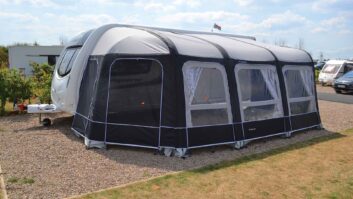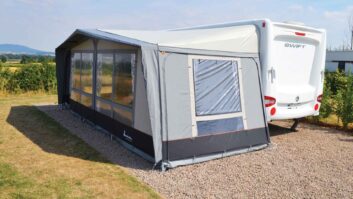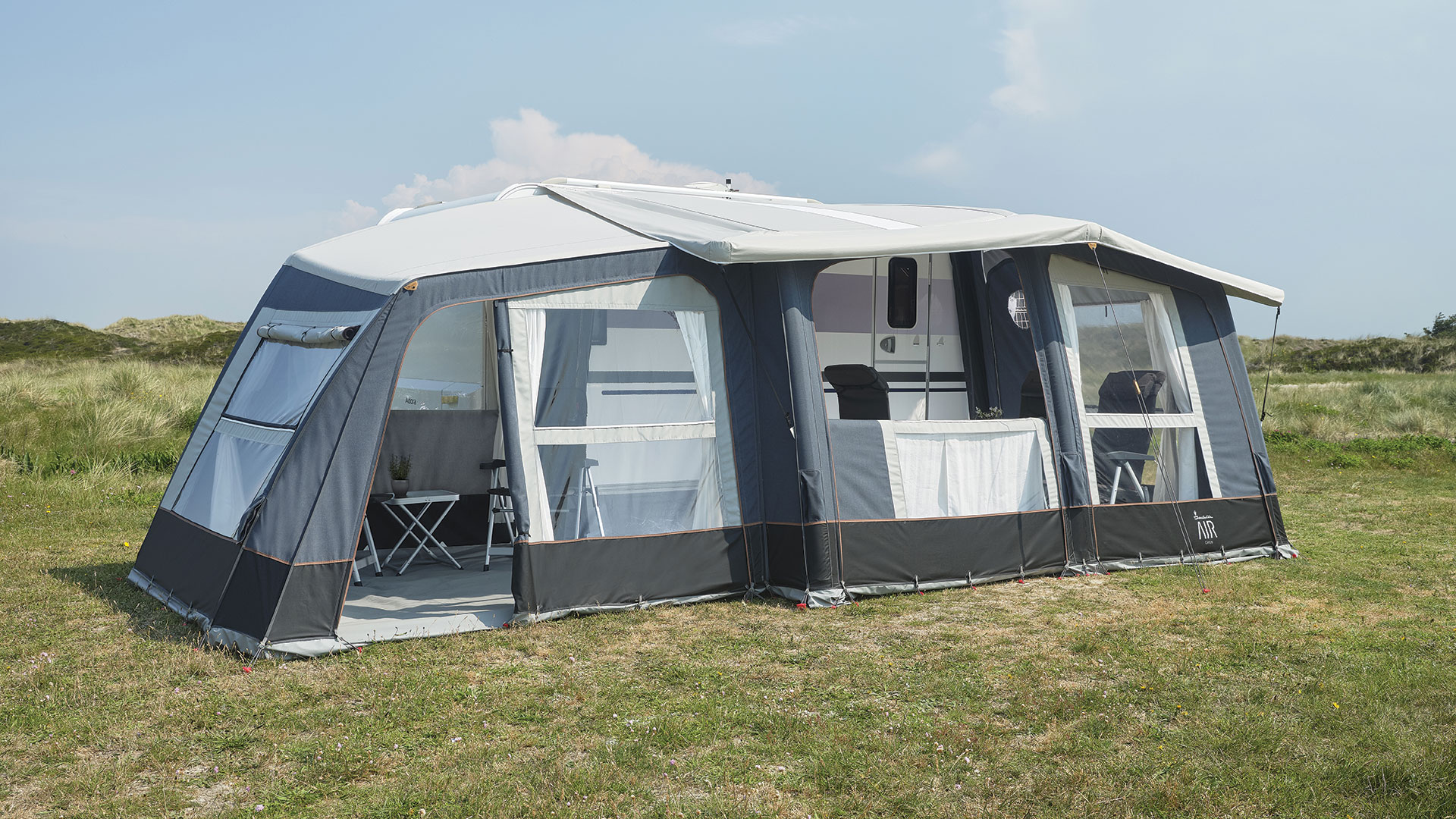
Cleaning a caravan awning may not be the most fun part of caravan maintenance but once you’ve invested in the best caravan awning for you to relax, cook and soak up the outdoors in, it’s essential to maintain it.
After a few trips, adventures can take their toll: a bit of dust from the campsite, streaks of rain, maybe a splash of tree sap or bird poo. Regular cleaning and the best caravan awning cleaner not only keep your awning looking great but also help protect it from mould, mildew and wear. Whether you decide on a pole, roller or best caravan air awning for your van, learning how best to clean and maintain it can extend its lifespan for many more getaways to come.
Maintenance differs based on the materials of your awning, and varies between caravan awning manufacturers so it can be useful to check if they provide any specific instructions for protecting it.
Whatever the build and material of your awning, the process can be simple with the right approach. Here we lay out how to clean a caravan awning without damaging the fabric or waterproof coating, so it’s ready for your next trip, looking and performing at its best.
Practical Caravan is supported by its audience. When you purchase through links on our site, we may earn an affiliate commission. Learn more.
How to clean a caravan awning
What you’ll need:
- Soft brush or broom
- Bucket of lukewarm water
- Mild non-detergent soap or specialised cleaners like Fabsil Universal Cleaner or Fenwicks Awning and Tent Cleaner
- Sponge or soft cloth
- Hose or watering can (avoid pressure washers as they can damage waterproof coatings)
- Recommended: Mould & mildew remover suitable for the specific fabric of your awning
- Recommended: Reproofing spray such as Nikwax Tent & Gear SolarProof or Fenwicks Awning and Tent Reproofer
Step-by-step guide to cleaning a caravan awning:
Set it up or spread it out
- Pitch the awning fully if possible, or lay it flat on a clean surface outside or in a well-ventilated space like a garage.
- Make sure it’s taut so dirt doesn’t collect in folds.
Dry brush first
- Use a soft brush to remove loose dirt, cobwebs and debris.
- Don’t forget to brush the seams and zips.
Spot clean stubborn stains
- Mix lukewarm water with mild soap.
- Gently scrub any visible spots (bird droppings, tree sap, etc.) using a sponge.
- Avoid harsh scrubbing as it can damage waterproofing.
Clean the whole awning
- Apply cleaner to the rest of the awning’s surface area.
- Using plenty of warm water, wipe down the entire surface with a sponge or cloth.
- Rinse thoroughly with a low-pressure hose or buckets of clean water.
Deal with mould or mildew (if needed)
- Use a fabric-safe cleaner appropriate for your awning material (test on a small area first).
- Avoid bleach unless your awning is white PVC since it can damage fabric.
- In some cases, a mix of one part white vinegar to ten parts water can also be effective, but we recommend that you test a small area first.
Let it dry completely
- Air dry fully before packing away – even slight dampness can lead to mould.
- If possible, choose a sunny, breezy day when cleaning a caravan awning!
Reproof if necessary
- Once clean and dry, apply a waterproofing spray or solution if water no longer beads on the surface.
- Focus on seams and high-exposure areas.
Extra tips:
- Clean poles and pegs too as dirt can scratch or rust them.
- Lubricate zips with a silicone spray after cleaning.
- Store the awning in a dry, ventilated space.
Can I use washing up liquid to clean an awning?
If your awning just needs a light clean – e.g. removing dust, bird droppings, or general grime – a small amount of mild washing-up liquid mixed with lots of water is fine. Always rinse thoroughly to remove any soapy residue, as leftover detergent can actually attract dirt and cause streaking.
Frequent use of washing-up liquid can break down the awning’s waterproof coating over time. It’s also not the most effective method as it’s not formulated for cleaning a caravan awning, plus isn’t great for mould or mildew, which usually need a specialist cleaner.
It’s best to use a cleaner specifically made for awnings or tents as these are designed to lift dirt without stripping away the waterproof layer, and they make reproofing more effective later on.
Future Publishing Limited, the publisher of Practical Caravan, provides the information in this article in good faith and makes no representation as to its completeness or accuracy. Individuals carrying out the instructions do so at their own risk and must exercise their independent judgement in determining the appropriateness of the advice to their circumstances and skill level. Individuals should take appropriate safety precautions and be aware of the risk of electrocution when dealing with electrical products. To the fullest extent permitted by law, neither Future nor its employees or agents shall have any liability in connection with the use of this information. You should check that any van warranty will not be affected before proceeding with DIY projects.
If you’ve enjoyed reading this article, why not get the latest news, reviews and features delivered direct to your door or inbox every month. Take advantage of our brilliant Practical Caravan magazine SUBSCRIBERS’ OFFER and SIGN UP TO OUR NEWSLETTER for regular weekly updates on all things caravan related.