Packing a caravan can feel a little tricky sometimes, particularly if you’re a newcomer to caravanning. Imagine all your touring essentials piled up outside your caravan, and you’ve got to store them safely inside. Where do you start?
Recently, I was driving on the A64 towards York and got caught in a jam. When I made it to the front of the queue, I saw that there was a caravan lying on its side, with the tow car facing the wrong way.
Thankfully, everyone was safe, but incidents like this are almost always caused by a snaking caravan and eventually end up tipping over.
Most often, this instability is down to poor packing and towing too fast. Here’s how to ensure it’s less likely to happen when you’re loading a caravan.
Rule 1: Learn your weights
First, things first – caravan weights. You need to calculate your payload, the legal maximum weight of stuff you can take with you on tour. This varies from caravan to caravan and is dependent on your tourer’s particular weight limits.
Usually, the bigger the van, the more payload you’ll have (although not always). Here’s how to calculate it. Your caravan has two key weights:
MTPLM: (the Maximum Technically Permissible Laden Mass) is the heaviest legal weight your van can be when fully loaded and ready to tow.
MiRO: (the Mass in Running Order) is your caravan’s empty weight. MiRO weight usually includes a gas bottle, some fluids (about 10kg) and sometimes the spare wheel, but not the leisure battery, which can easily weigh in at 10-15kg.
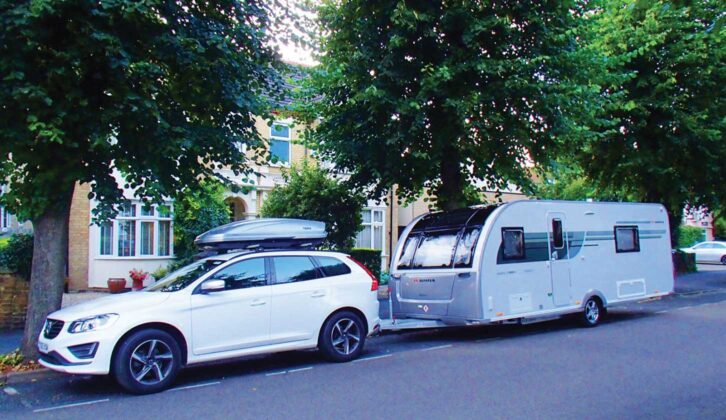
You’ll find both these weights on the caravan’s weightplate, located near the door, online and in the owner’s manual.
Your payload allowance is the difference between the MTPLM and the MiRO. For example, if your van’s MTPLM is 1600kg and your MiRO is 1450kg, your payload is 150kg.
That’s the weight allowance for everything you need to take with you, and while it sounds quite generous, you must first subtract the weight of your leisure battery (say 15kg) and
any of those caravan essentials or luxury accessories you’ve added to your tourer.
Rule 2: Maximise stability by keeping heavy items on the floor
Keep heavy objects as low down as possible within the tourer. This maximises its stability by creating a lower centre of gravity. Keep heavy stuff on the floor and spread the weight roughly evenly left to right, bearing in mind that the leisure battery adds weight to one side of the caravan, something to factor in when choosing the best caravan leisure battery.
Heavy items up high are a recipe for disaster (and a visit to A&E)
Rule 3: Don’t add too much weight to your caravan’s extremities
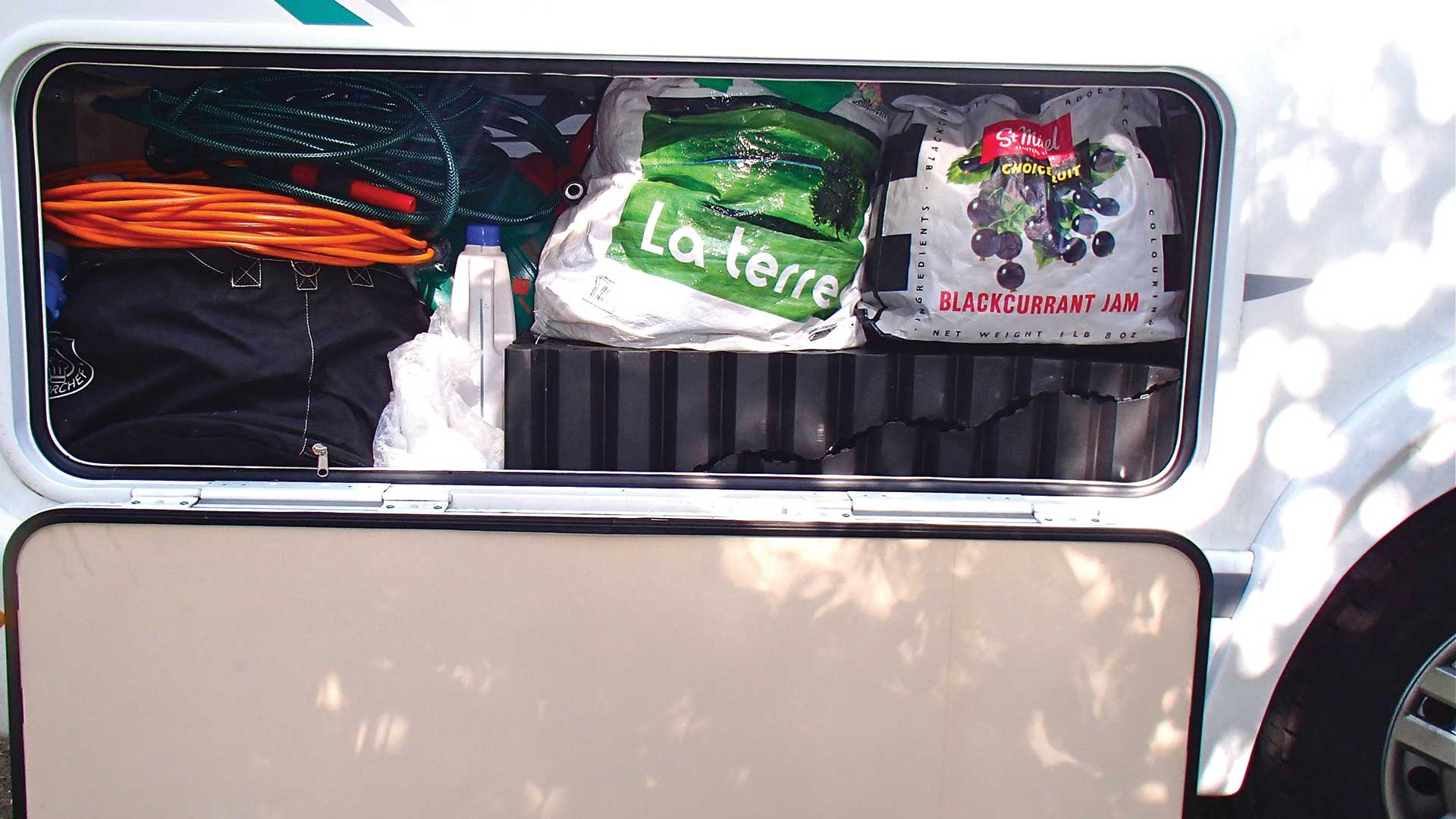
Avoid placing too much weight at the extremities of the van, either in the front gas locker and under the front sofas, or right at the rear of the caravan, under, say, a fixed double bed with storage below.
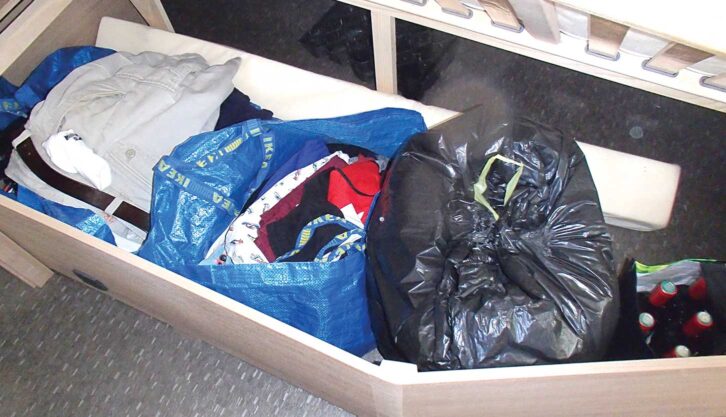
The first may compress the rear suspension of the tow car, causing potential instability and even damage, while the latter will upset the equilibrium of the van and is likely to enhance any pendulum effect, which can lead to uncontrollable snaking.
Always aim to place as much of the weight as near to the axle as possible.
Rule 4: Be wary of rear-mounted cycle racks
As per Rule 3, I’m personally not a fan of rear-mounted cycle racks on caravans. This seems to be a common practice on the Continent, but two or three adult-sized bikes, or even one electric bike, could easily add 30-50kg of weight a long way behind the axle, potentially creating a lot of unsteadiness. If you have one, you should take care when loading it.
Rule 5: Watch what you load in overhead lockers
Don’t put heavy or breakable items in overhead lockers when towing. A colleague once opened her caravan door to be greeted by a mini-tsunami of red wine, as a couple of bottles had bashed their way out of a click-shut overhead locker. And if they move during towing, they could drop out onto you when you open the locker.
Rule 6: Don’t overlook the tow car
Try to place heavy stuff, such as awnings, BBQ gas bottles, heavy wheel locks and liquids, in the tow car, to unburden your caravan. These four items alone could easily account for 50kg of payload. Load it over the rear axle for balance.
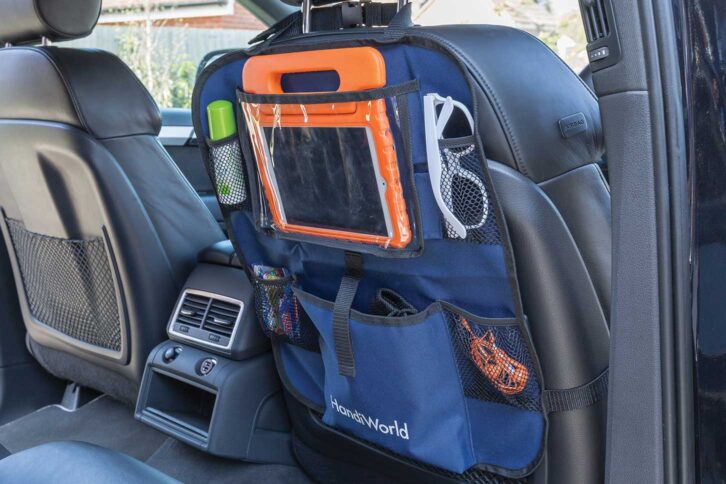
Rule 7: Store any breakables carefully
Stow breakables safely. Ensure your glass cooker top is down and the best caravan TV is stowed or locked in position on its mount. Move grill pans and ovenware to a place where they won’t scratch the inside of the cooker.
Put your microwave’s glass plate somewhere safe, preferably wrapped in tea towels. Lodge your Aquaroll in the shower on a bath mat, and make sure the shower head is secure. Turn off your gas.
Rule 8: Pack your valuables carefully
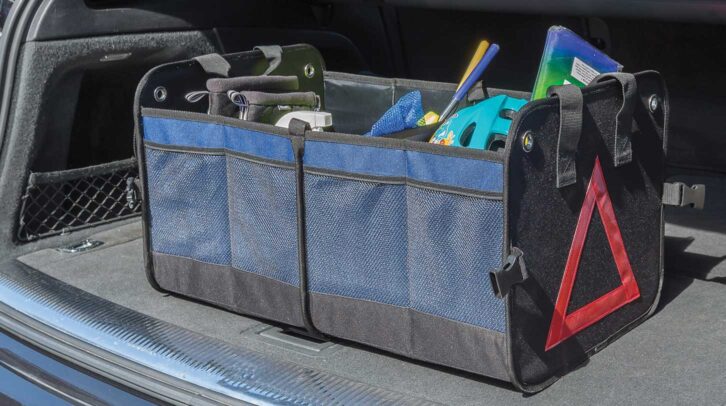
Out of sight, out of mind. I always tend to keep our valuables in the car boot, where they are out of sight, locked and alarmed.
Rule 9: Weigh as you go
Guesswork is for gamblers. Use bathroom scales, luggage scales or a public weighbridge to keep it real
Rule 10: Nose-down, not tail-heavy
Aim for 5-7% noseweight. Too light at the front and you’ll be snake-dancing down the M6. Hardly the relaxing start to a tour that you would want!
Rule 11: Don’t forget your pets
Are you heading to one of the best dog friendly caravan parks? Touring with a four-legged friend is always enjoyable, but don’t overlook them when considering your payload. A Labrador in the boot means less space for beer and biscuits. Plan accordingly.
Rule 12: Don’t forget the roof
There is extra space on the roof, which can come in very handy when you’re packing.
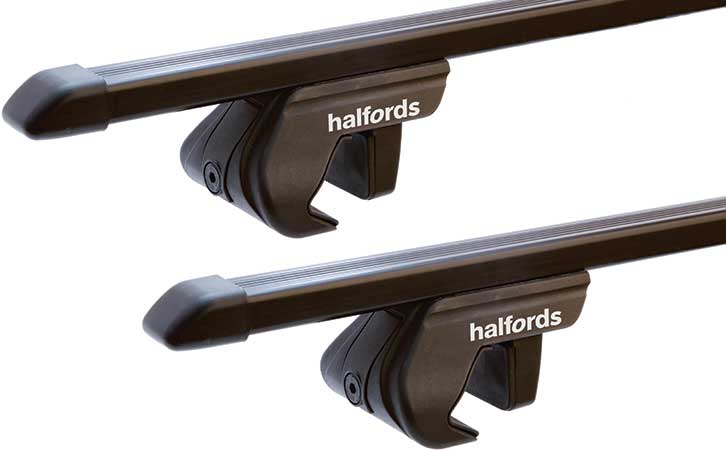
Roof boxes and rails are magic, but check your height before entering a car park, unless you enjoy sparks
Rule 13: Secure it all
This is an important part of the caravan towing checklist. Make sure everything is secured in place. Bungee cords, straps and common sense. Nothing should shift or rattle once you’re moving – including the driver.
Future Publishing Limited, the publisher of Practical Caravan, provides the information in this article in good faith and makes no representation as to its completeness or accuracy. Individuals carrying out the instructions do so at their own risk and must exercise their independent judgement in determining the appropriateness of the advice to their circumstances and skill level. Individuals should take appropriate safety precautions and be aware of the risk of electrocution when dealing with electrical products. To the fullest extent permitted by law, neither Future nor its employees or agents shall have any liability in connection with the use of this information. You should check that any van warranty will not be affected before proceeding with DIY projects.
If you’ve enjoyed reading this article, why not get the latest news, reviews and features delivered direct to your door or inbox every month. Take advantage of our brilliant Practical Caravan magazine SUBSCRIBERS’ OFFER and SIGN UP TO OUR NEWSLETTER for regular weekly updates on all things caravan related