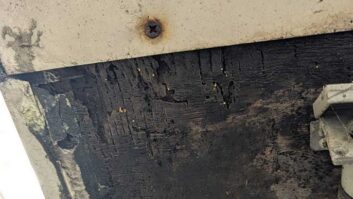
Spending a couple of hours sorting Penny’s steadies recently, it was hard to ignore some rot taking hold in her floor.
She’s in surprisingly good shape for a caravan that has over 25 years on the clock, but any caravan with evidence of damp damage needs sorting out without delay.
We needed to work out how to stop the damp issue getting worse, and then fix the most badly affected areas to ensure Penny stays serviceable.
Don’t miss how I went about upgrading my caravan for off-grid touring, either.
Framing the problem
Damp damage is caused by failed sealant, rusty screws, damage and all manner of things. We’ve dealt with rebuilding a wringing wet Avondale Wren in the mid-2000s and a Sprite Alpine in 2011. Not fun, but with a caravan toolkit, patience and a methodical approach, it was all fixable. We are sure Penny is, too.
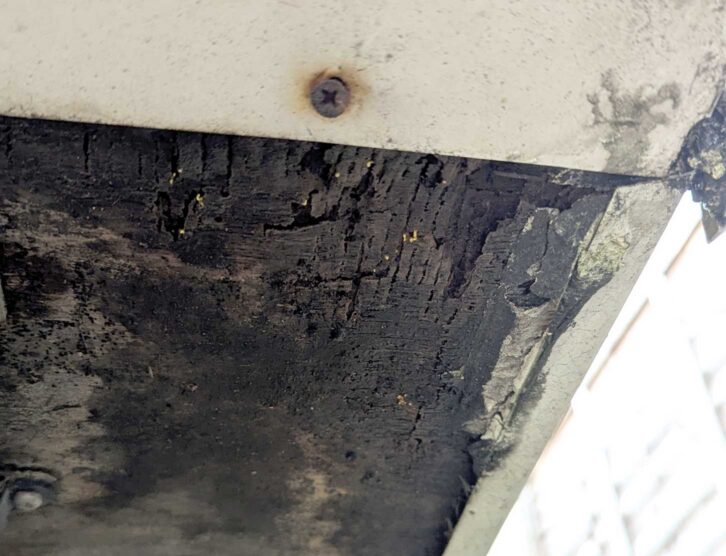
Floor damage typically happens where rainwater runs down the caravan and rests against the floor. When vans are new, they cope with this but as the protective finishes age, they start to soak up a little moisture and the plywood itself begins to break down. If she was a newer caravan, we’d send her off to a workshop with the facilities to strip the van under cover and even cut in new plywood.
With older vehicles like Penny, DIY is the only real option. Much as we would love to make it someone else’s problem to fix, it’s not really in the spirit of a budget caravanning project, and if we had the money for that sort of fix, we’d likely spend it on buying a newer caravan.
Our approach is to keep the moisture away from floors. Once the floor dries, we can beef up damaged areas, protect the floor and hopefully extend Penny’s holiday seasons for several seasons to come.
Down and dirty
This job means getting right down on the floor. In the early spring, that means getting a bit soggy and a bit cold. In both rear corners, there is evidence of squishy plywood. No need for the best caravan moisture meter to tell me that. Getting your nose nearby tells you everything you need to know. If you can dig your fingernail into the floor and it smells like a drain, it’s time to get the tools out.
Jobs such as this need to be tackled in a certain order. You can’t really do much with the floor while it is still wet, so job number one is to stop water getting to the floor, and then hope the weather dries up long enough to improve things. With the van outside, I decided the best approach was to ensure water running down the back of the van doesn’t get to the floor.
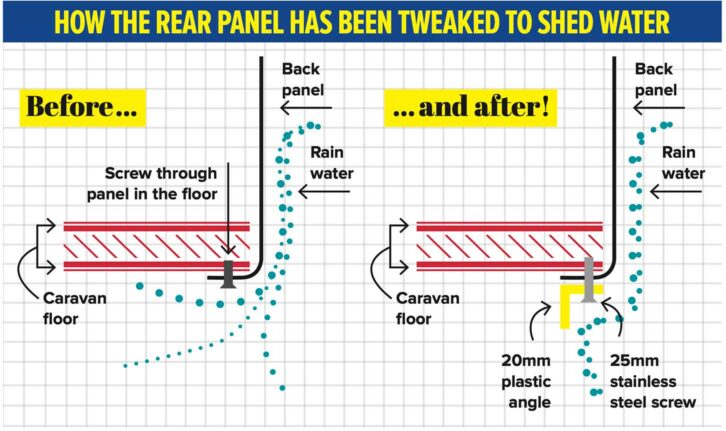
Water in Penny’s plywood is due to the design of the back panel. The ¾-height panel lips under the floor of the van. Underneath, screws secure the panel directly to the floor. When it rains, water runs down the panel, clings to it and follows the gentle curve around to the panel edge. Some drips off but some clings on against the floor, and eventually makes it rot.
One preventative job that can be tackled straight away is to extend the back panel with a 90-degree plastic lip. This will lead to water running down the back panel and then dripping off a vertical edge, rather than congregating where the panel touches the floor.
This will immediately start helping the floor dry out. As soon as we get a spell of drier weather, I’ll keep an eye on the floor. Once it is dry, I can start the next stage of the work.
The original screws will be discarded and the bottom edge of the panel will be meticulously cleaned up to give us a clean, dry surface to work with.
Then we can measure, mark and cut the plastic trim, apply a nice bead of sealant and secure the two halves to the base of the back panel to stop the water getting to the floor.
A brief Google search told us that plastic angle was available in different sizes from Screwfix. Available in 2m lengths, that would leave us a few centimetres short to run the full width of the van, so we ordered two of them.
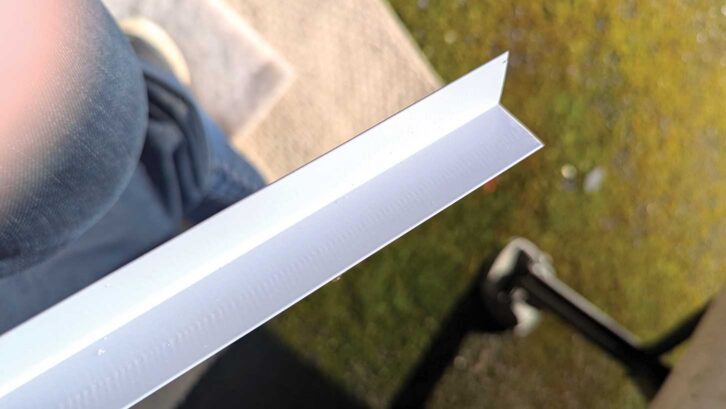
These are actually sold as a product to protect wall corners in your house. Happily, they are suitable for exterior use, so hiding them under a caravan should be no problem.
Clean and tidy
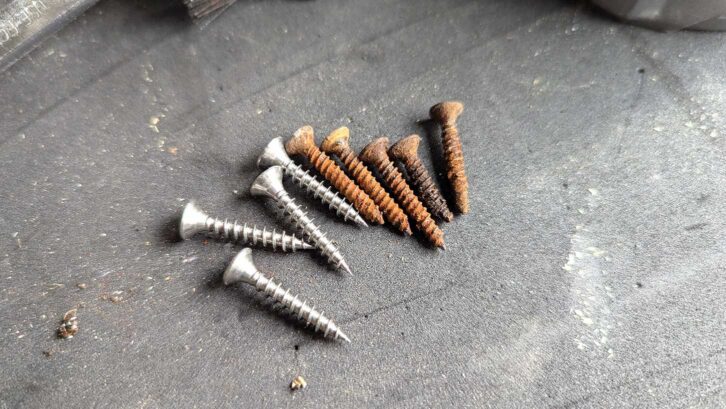
The first job was getting the old screws out and cleaning the bottom of the back panel. The old screws were around 20mm long but mild steel and have been subject to 25 years of exposure. Most of the screws came out with minimal effort which is a sure sign that they weren’t doing a lot. We had already bought longer, wider replacements so were happy to bin the originals.
In order to ensure water did not get between the new plastic lip and the old panel, a bead of sealant was needed.
We used a paintable exterior-grade sealant because we want to paint the floor after the repairs, and silicone is not a thing to have around if you want paint to stick to things.
We measured the plastic strips and cut them to length, with a small gap in the middle where the main road lighting cable of the van runs. We decided to use the existing screw holes. Ten minutes with a felt-tip allowed us to mark the screw locations from the plastic panel so everything lined up nicely.
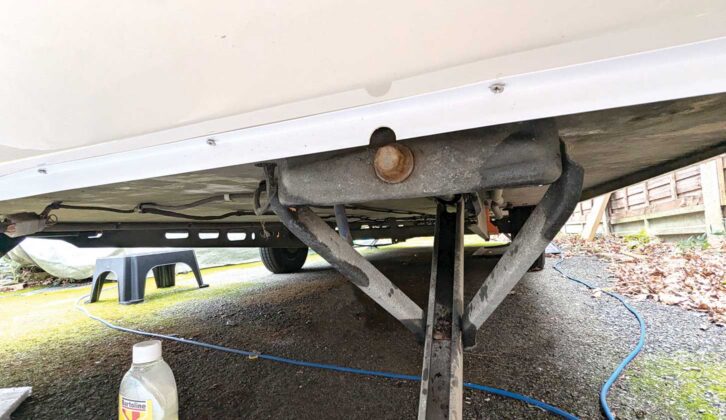
We noticed a few tweaks we needed to make before the final fixing. First, the way the drains run in Penny mean that all three run separately, and to the back of the van.
With a new 20mm lip on the back of the van, fitting hoses to the drains would be impossible, so a new plan was needed.
For now, all drain exits were unscrewed from the floor of the van and allowed to hang down, with a view to re-running them later. This also revealed that most of the hoses had turned to dust. Another job for the list!
The other potential obstruction was the corner steady nuts. We worked out that we could still get the winder on the nut, but it was awkward.
A little bit of careful measuring allowed us to rebate the drip edge around the steadies to ensure good access. After a final offer-up, we applied a bead of the sealant and permanently fitted the drip edge to the panel.
We’ll move on to drying the floor ahead of the first trip of the year.
Don’t miss our guide to the 16 easy jobs that will get your caravan ready for trouble-free touring, either.
Future Publishing Limited, the publisher of Practical Caravan, provides the information in this article in good faith and makes no representation as to its completeness or accuracy. Individuals carrying out the instructions do so at their own risk and must exercise their independent judgement in determining the appropriateness of the advice to their circumstances and skill level. Individuals should take appropriate safety precautions and be aware of the risk of electrocution when dealing with electrical products. To the fullest extent permitted by law, neither Future nor its employees or agents shall have any liability in connection with the use of this information. You should check that any van warranty will not be affected before proceeding with DIY projects.
If you’ve enjoyed reading this article, why not get the latest news, reviews and features delivered direct to your door or inbox every month. Take advantage of our brilliant Practical Caravan magazine SUBSCRIBERS’ OFFER and SIGN UP TO OUR NEWSLETTER for regular weekly updates on all things caravan related.