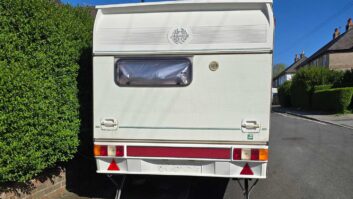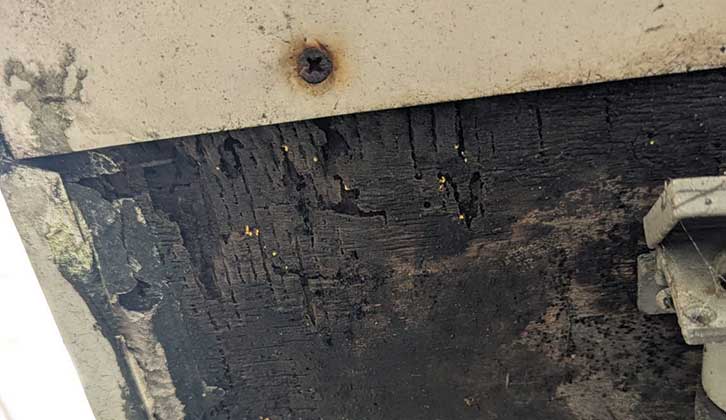
We recently addressed localised rot discovered in Penny’s 25-year-old caravan floor, particularly in both rear corners where the plywood was soft and squishy. We determined that the floor damage was caused by rainwater running down the back panel, clinging to the edge where it meets the floor, and soaking into the plywood.
Since DIY is the only budget-friendly option for older vans such as Penny, the primary goal was to stop water ingress immediately to allow the damp areas to dry out.
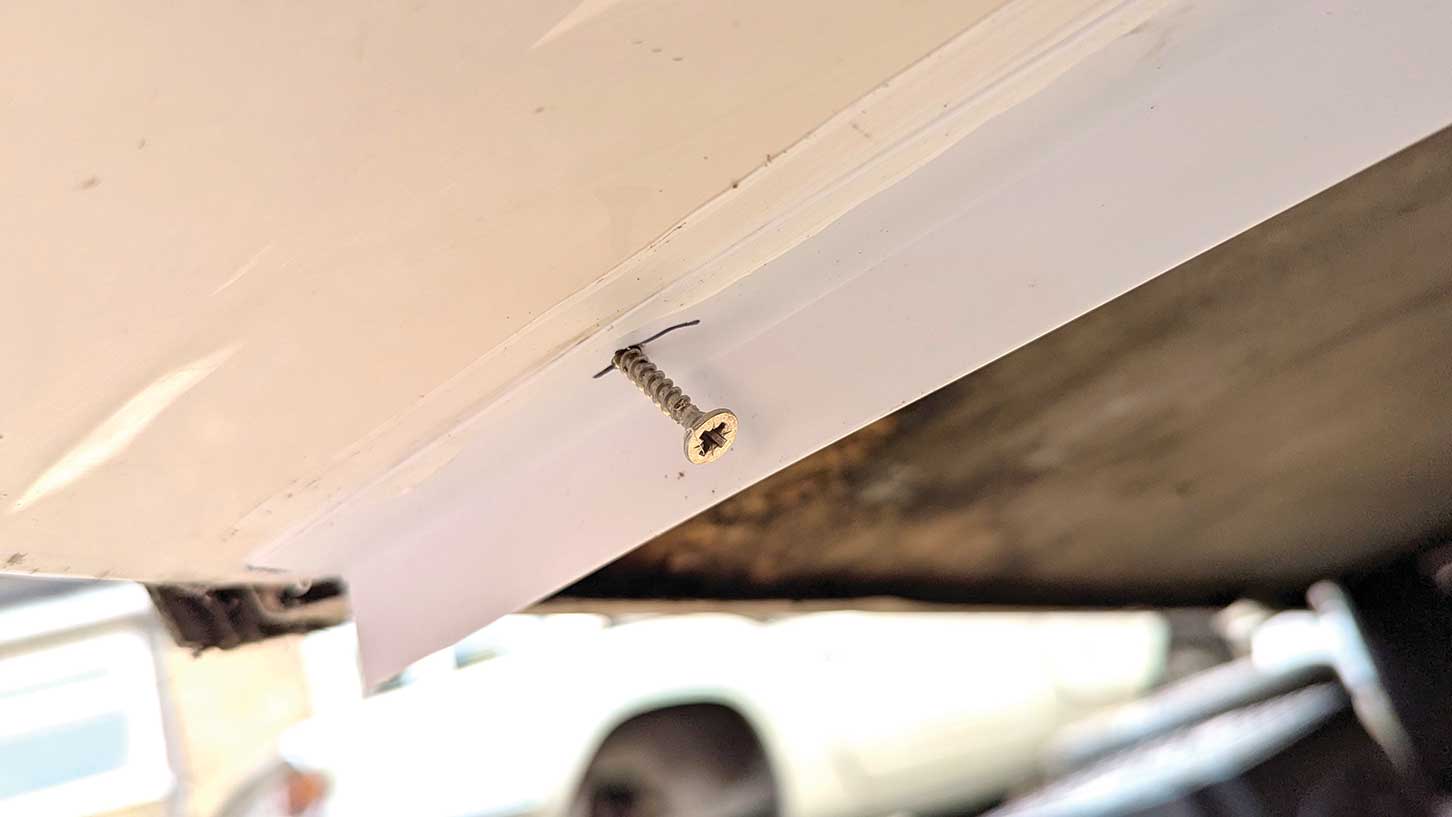
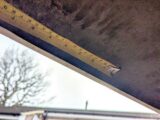
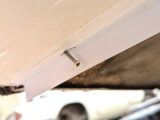
This was achieved by fitting a 90-degree plastic drip lip to the bottom of the back panel using paintable exterior-grade sealant and new stainless steel screws, ensuring water now drips vertically away from the floor.
Necessary modifications included rerouting the drain exits and rebating the new lip around the corner steady nuts for accessibility. It was all looking drier under there and we were all out of excuses. We’d limited the problem from getting worse. Now it was time to reach for our caravan tool kit and repair the soft floor.
Framing the problem
For the third weekend in a row, it was a matter of clambering on the floor to get to work. What we needed to do was assess the size of the damaged area and work out a way to patch it up.
We could simply dry out the rot, paint it with a protective coating and lay a new bit of plywood over the top; but that would not look neat, and the rot would still be there, sandwiched under a bit of new timber – and we’d not be able to check if it was getting worse.
The best solution was to cut out the rot altogether and put fresh timber back.
In terms of supplies, I was lucky to have a 5.5mm-thick remnant of exterior grade plywood which is about right for the bottom layer of a caravan floor. That seems ridiculously thin, but because a caravan floor is a sandwich of two sheets of plywood bonded together with wooden battens and insulating foam, it is a lightweight, very strong structure.
Neatly cutting out the damaged outer layer of the sandwich, letting in a patch and bonding the new section in place with a modern polymer adhesive would replace the strength and get rid of the rot; she’d then get a coat of black paint underneath. This would also stand up to an inspection when the day comes to move Penny on to pastures new (see our tips on selling a caravan for our advice on this).
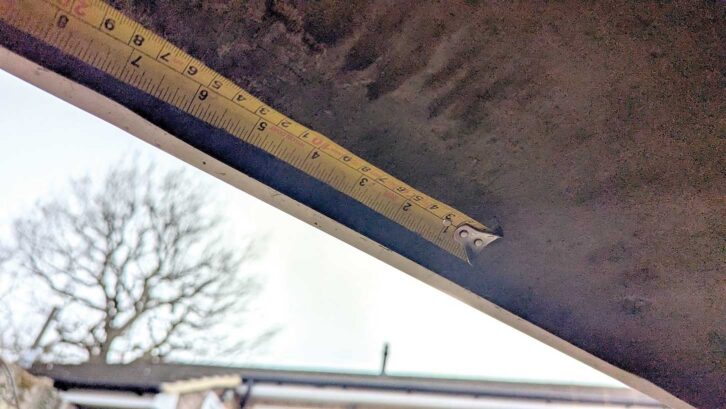
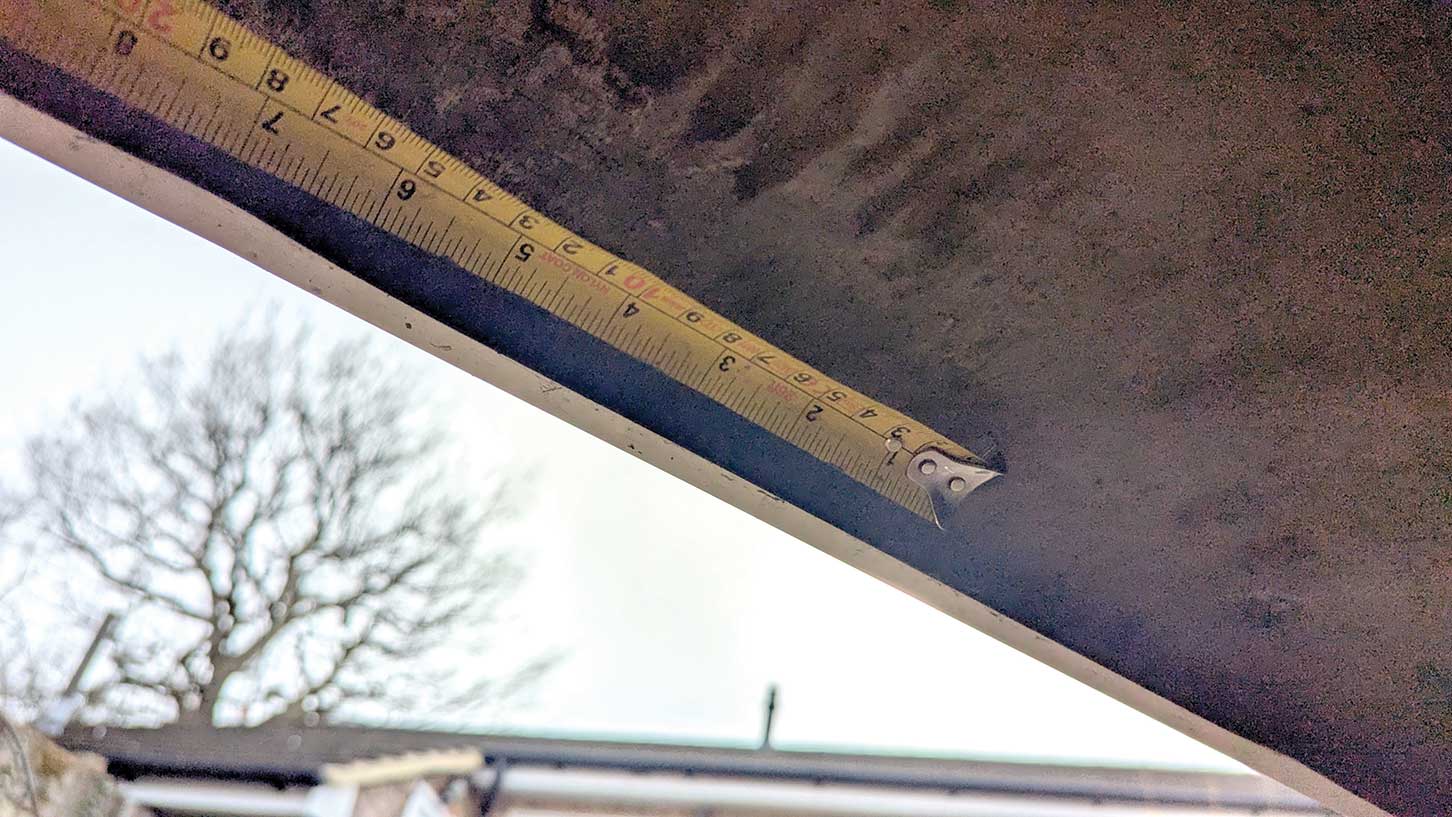
The first job was to (safely) clamber under the van with the tape measure. We needed to work out where the rot was and measure the affected area. This would allow us to cut a piece of our new plywood to the right size and shape.
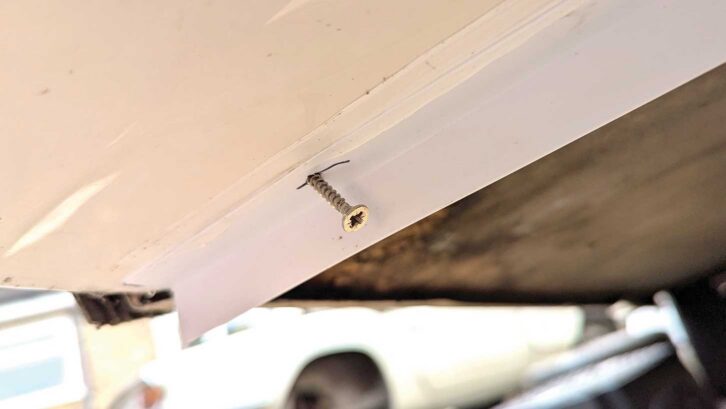
In our project caravan, the damage was mainly limited to the base of the back panel; but an area along the base of the sidewall was also affected, not helped by some over-generous resealing of the side skirt which was trapping moisture against the floor edge. We worked out that a panel approximately 250mm x 400mm would root out the rot completely and leave us with a nice, neat repair.
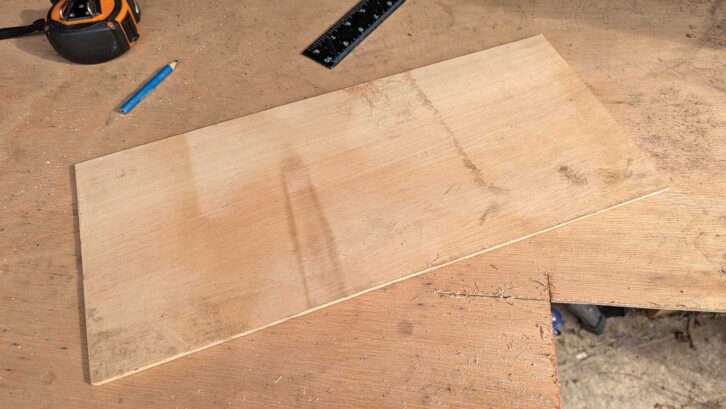
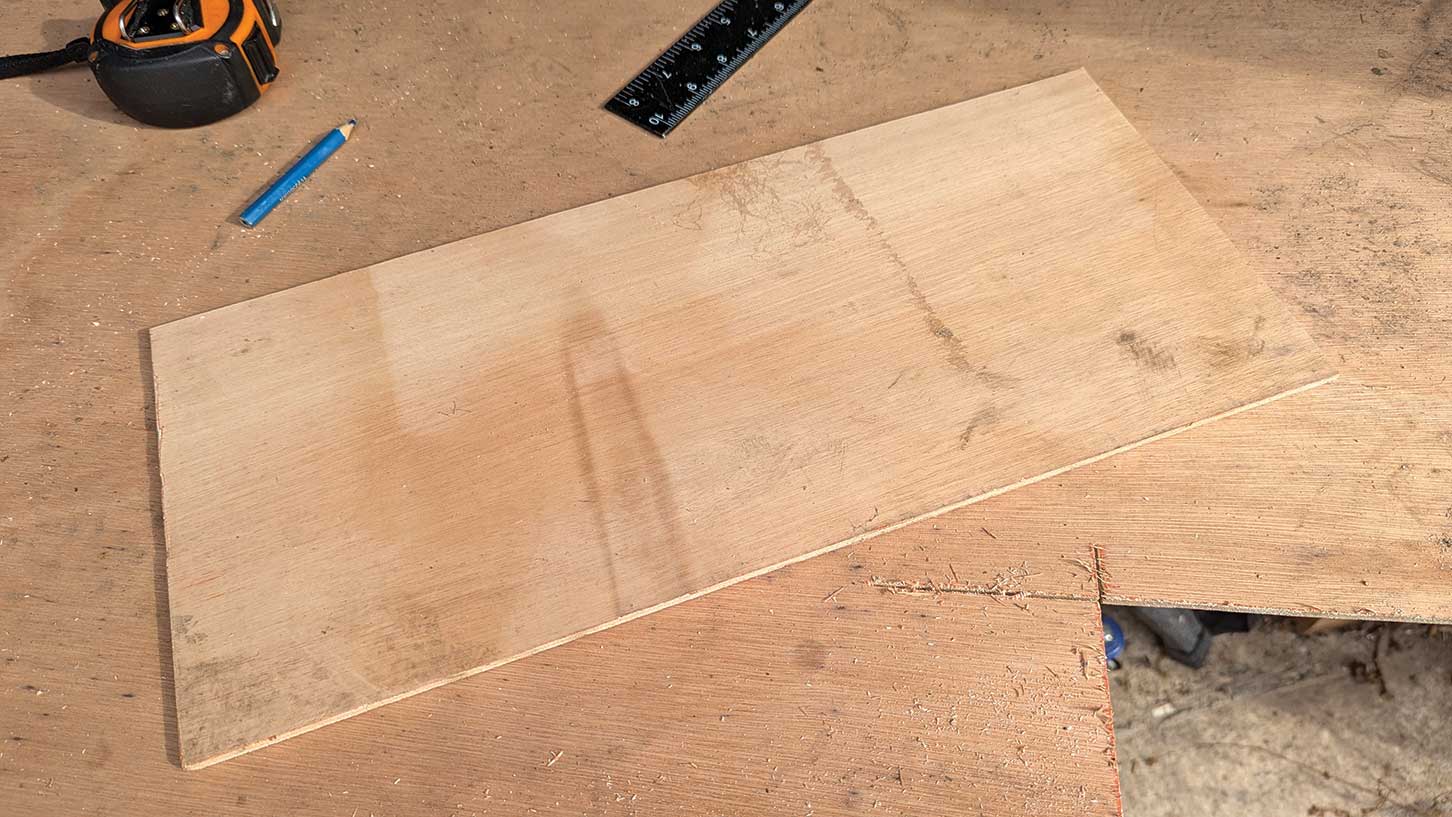
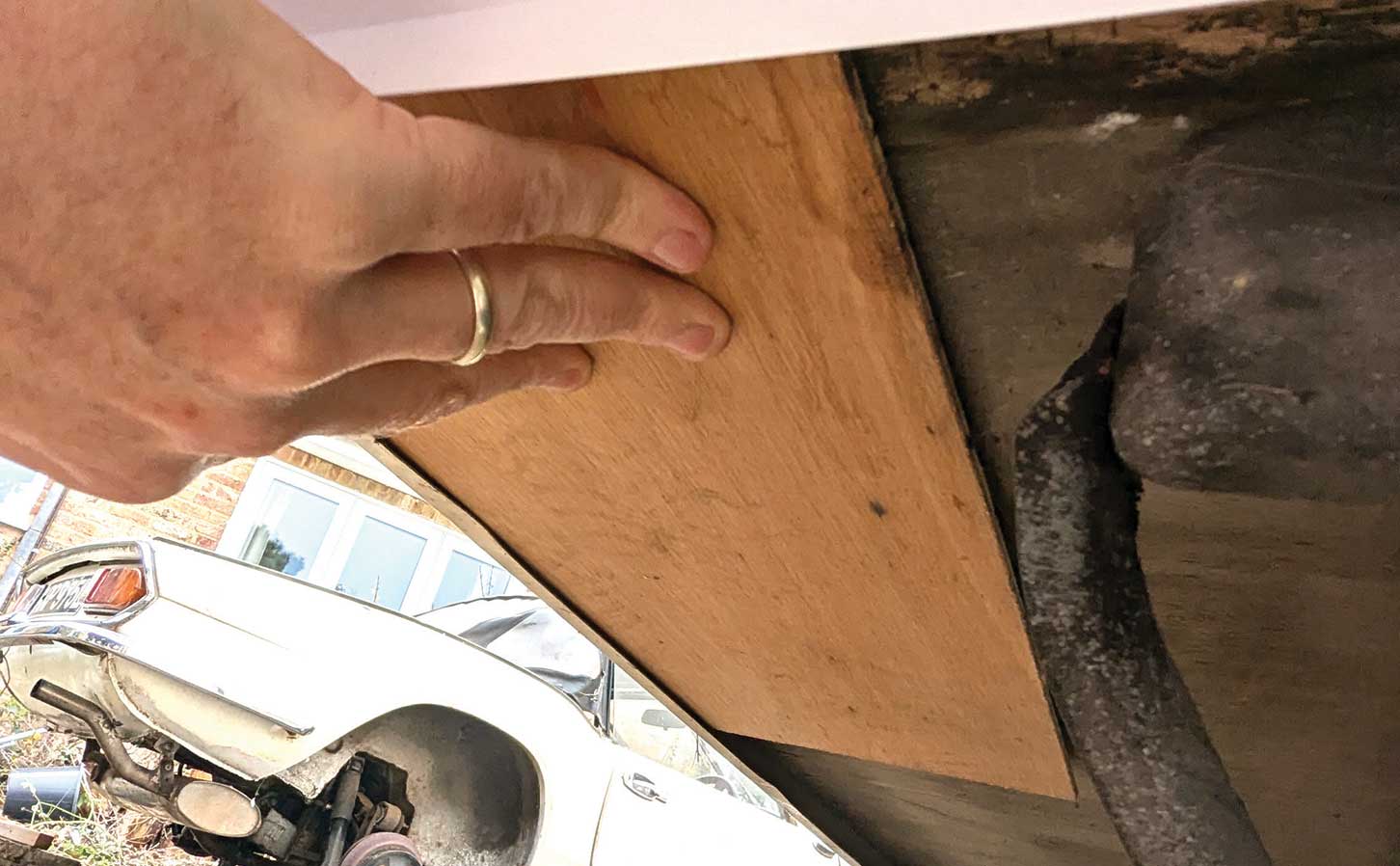
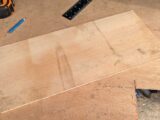
Back on the bench, we marked out the required piece of flooring and cut the plywood to shape. Back on the floor with the new panel, we offered it up to the affected area and we were happy it would do the job.
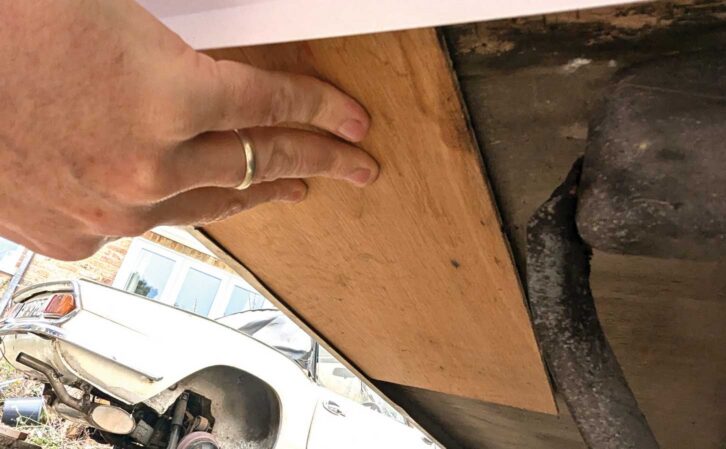
The best way to get a really neat job is to use that new piece of plywood as a template for the area you are about to remove. We removed the screws holding the back panel to the floor and gently eased our new floor section into position. Once it was precisely lined up with the floor edge, we drove a screw through the new floor and into the old one to keep the panel firmly in place.
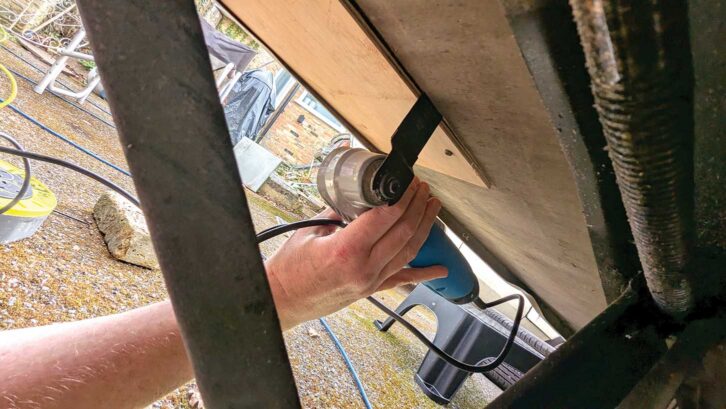
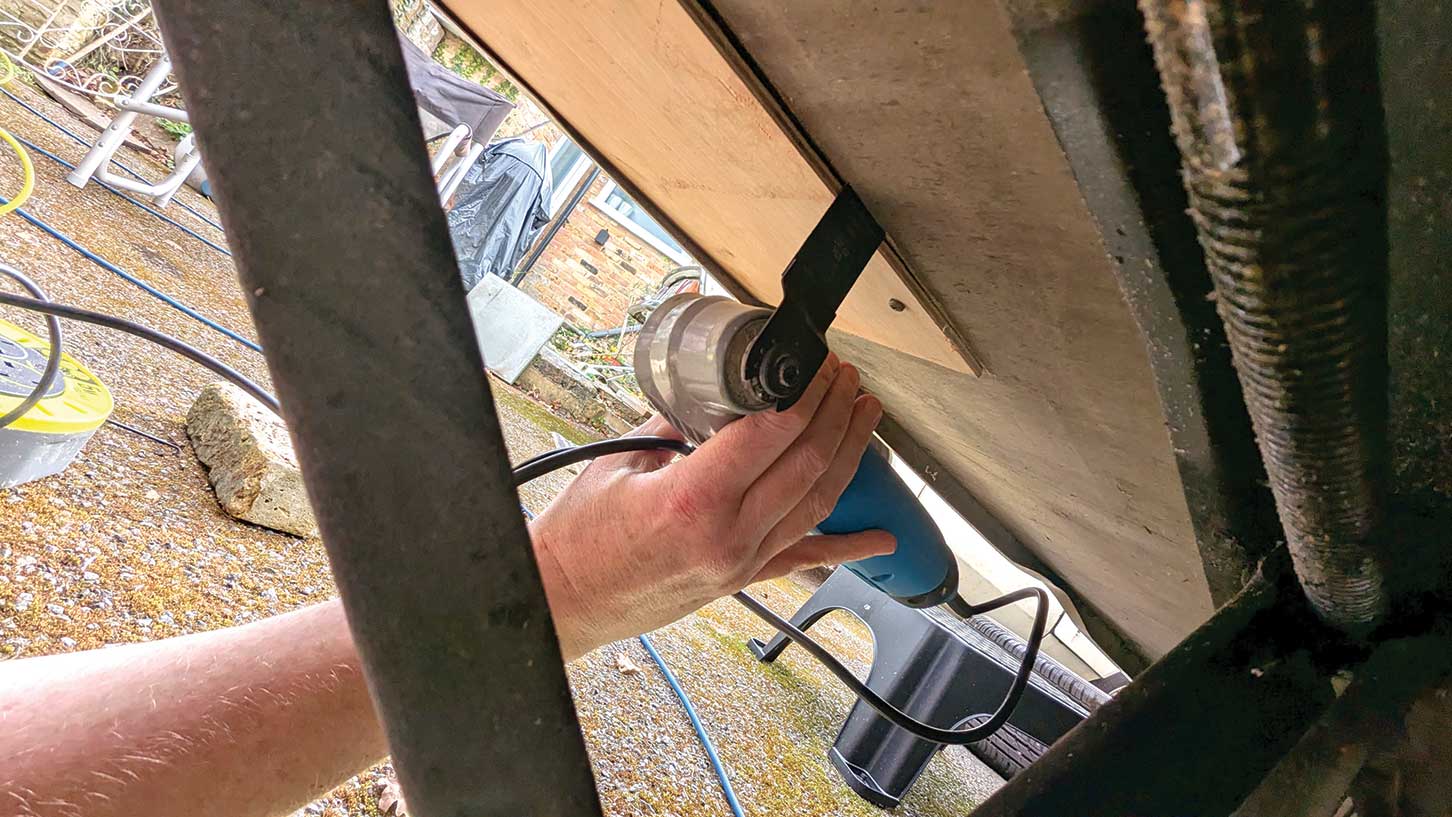
Ideally you want a multitool for the next step. A multitool with a wood cutting blade is ideal as it can plunge cut – basically start a clean cut in the middle of a sheet of material.
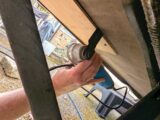
Using a multitool, we traced around the outside of the new patch, touching the back of the blade against it all the way around to ensure a neat join between the two sections later.
There was a section right under the back panel that we couldn’t get to for cutting, but because most of the floor in that area had turned to compost, it didn’t really matter.
Cutting complete, the power tools were put away in favour of something a little more basic. The new floor section was removed and put to one side so that the section we had just cut could be removed.
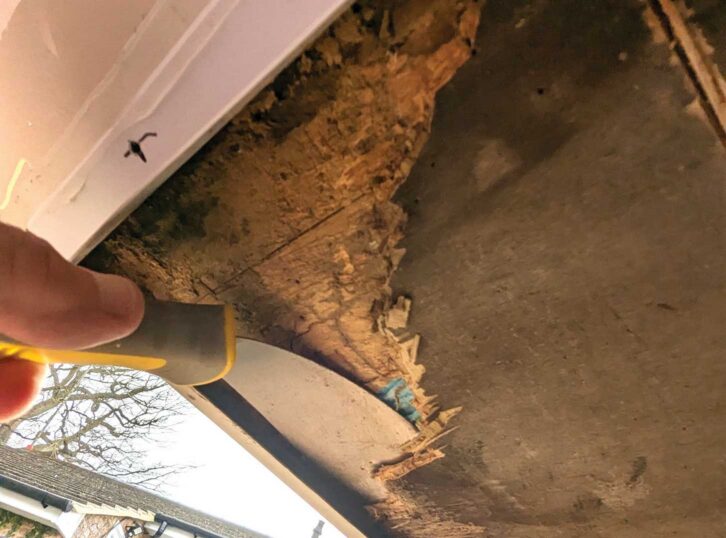
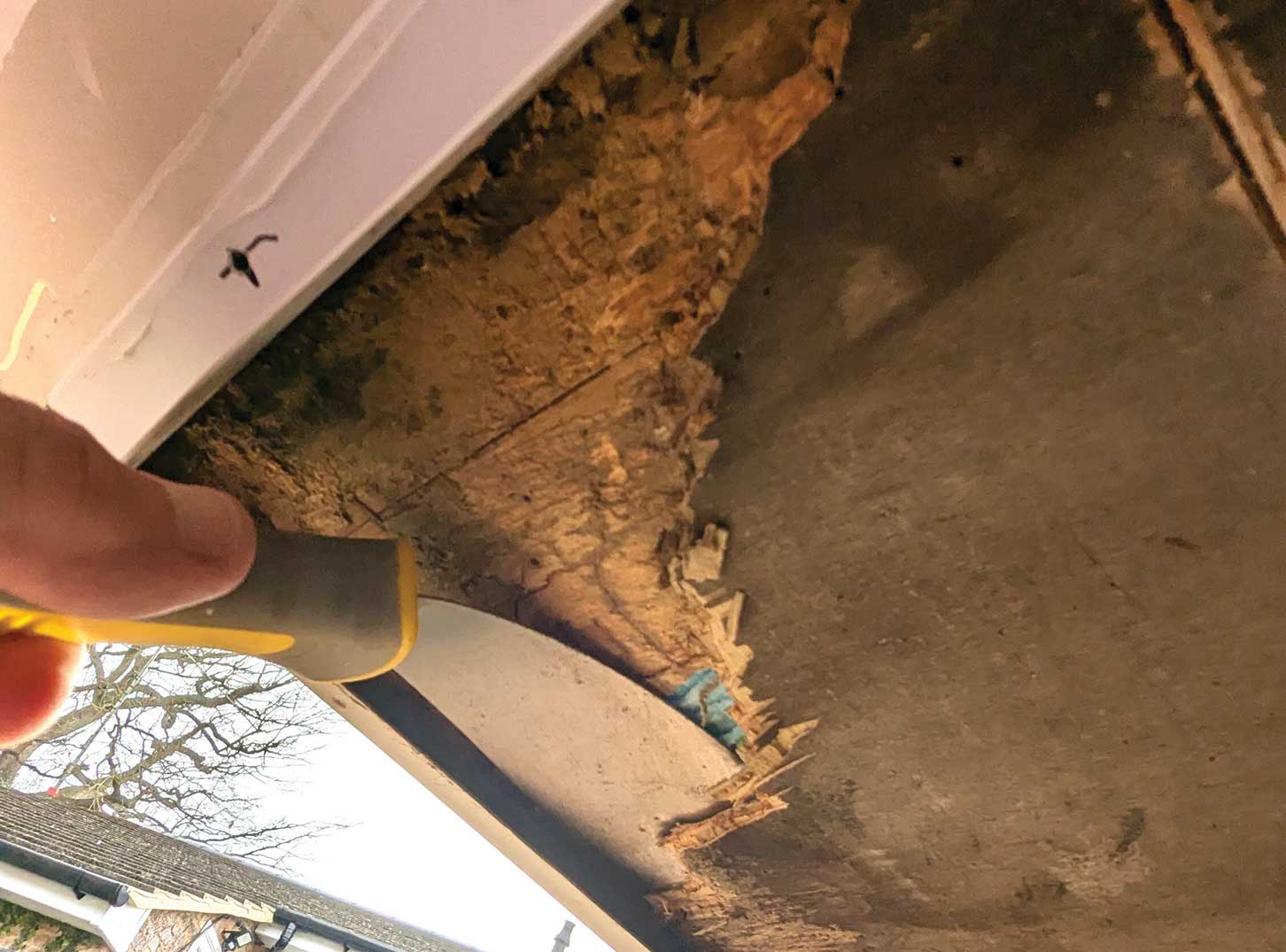
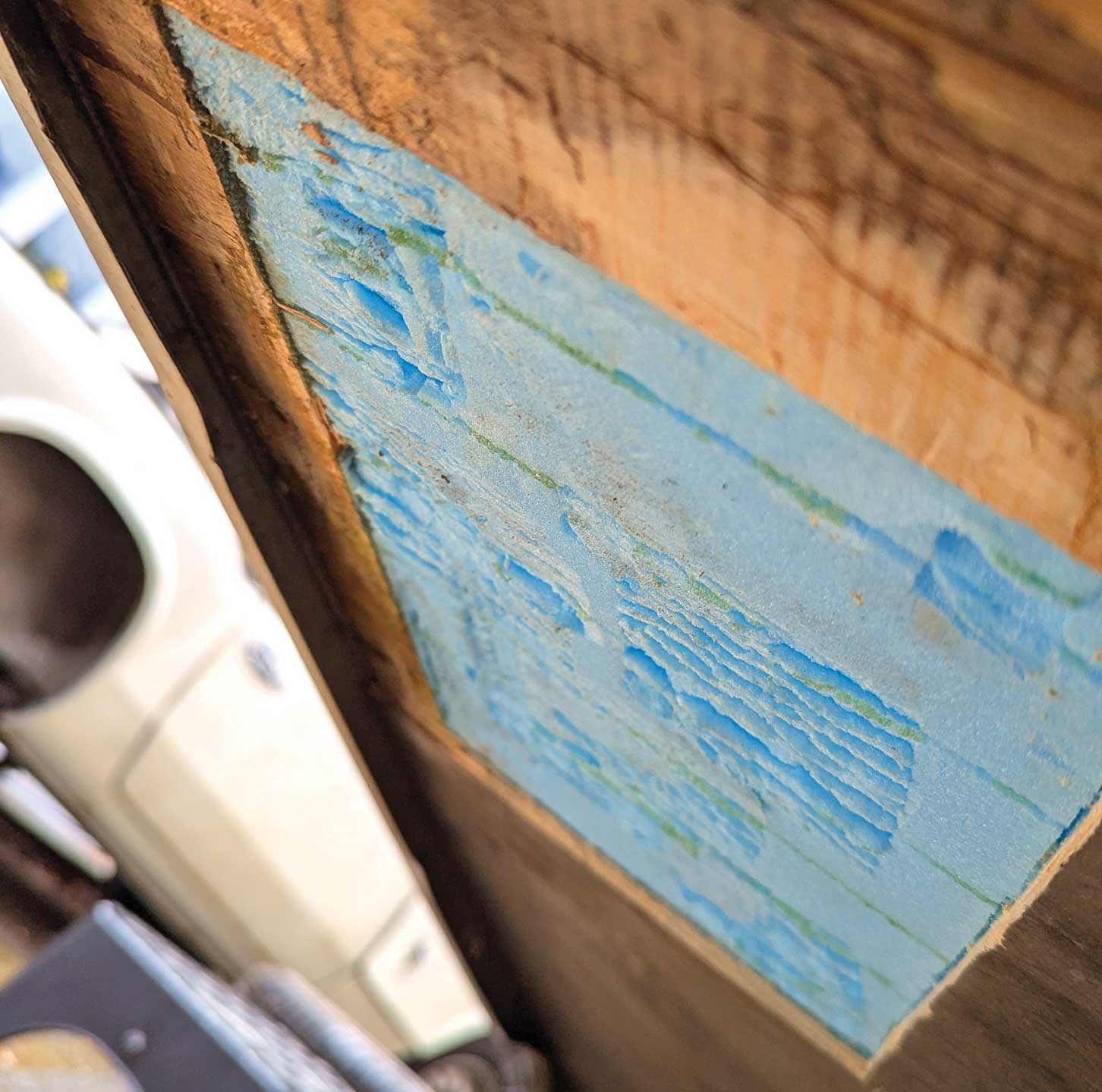
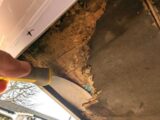
We started at the easiest bit – the really rotten part. We had a flat scraper and an old wood chisel and started to remove the plywood. Where it was really soft, it was easy to get
the edge of the tools under it and pry the wood away from the rest of the floor.
As we got further forward, however, the wood was in good shape and put up more of a fight. The scraper was thin enough to drive between the ply and the rest of the floor until we got to the cut edge that we had created earlier.
After about half an hour, we had a nice clean edge all the way around and the old floor was a pile of grot on the floor.
See what I did when I had to fix a stiff caravan corner steady on Penny, too.
Putting it back together
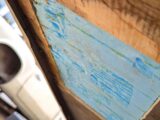
Before we covered everything up, we took the opportunity to protect the exposed floor. The timber edges of the floor and bottom of the side wall were solid, so we gave them a coat of wood preservative.
We also laid the new section of floor on the bench and painted the edges of the plywood. The edges are the most likely way for plywood to get damaged by moisture, so some extra protection is not a bad idea. We also gave the facing side of the ply a coat of preservative too, although the side we were going to bond was left clean to ensure the best possible adhesion to the floor.
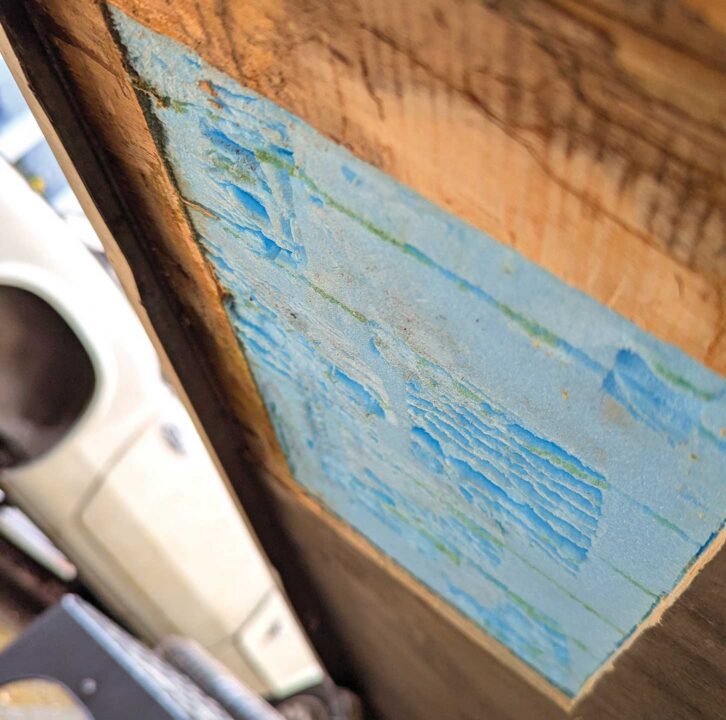
We left the preservative to cure and, once it was dry, we were ready to finish the fix. We trial-fitted the panel in place and it all looked good, so we piloted a couple of screw holes lining up with the battens underneath.
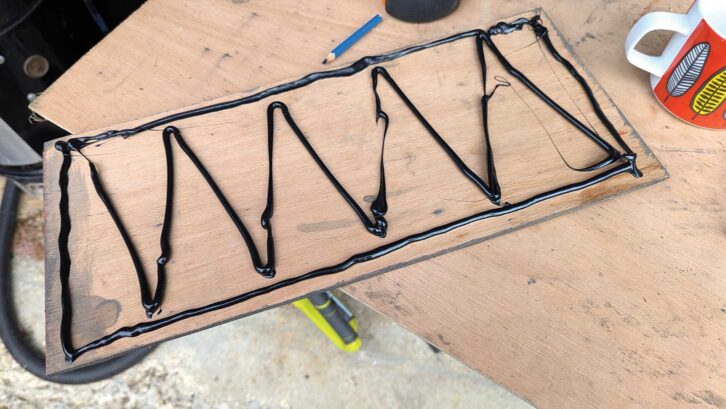
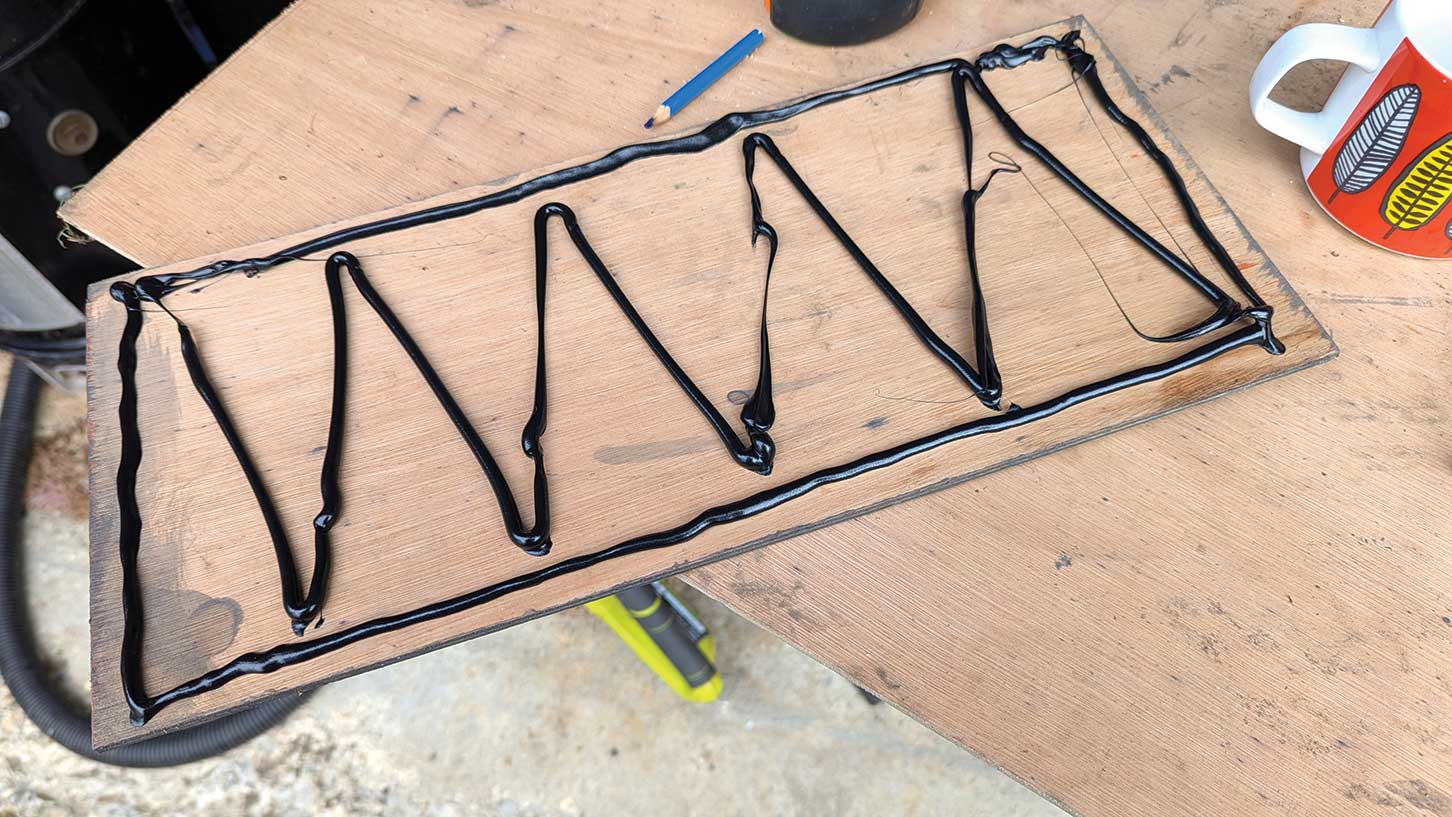
With that done, we moved to the final stage. We looked at the various caravan adhesives and the one we settled on Sikaflex 221. This is a modern sealant that remains a little elastic even after curing but can be painted and sanded too. Given that we plan to paint the repaired floor afterwards, this is an important consideration. It is also available in black, which is good because the floor is black. It’s not like many people will see it, but I have enough pride that I want it to look smart.
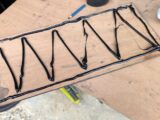
We applied the Sikaflex to the back of the panel and we were fairly generous – we aren’t going to get another chance to do it.
With the adhesive in place, we hit the floor for the final time to get the new floor section in place. Some sealant oozed out, but Sikaflex 221 can be worked a bit before it goes off, so we used a flat plastic scraper to smooth the joints.
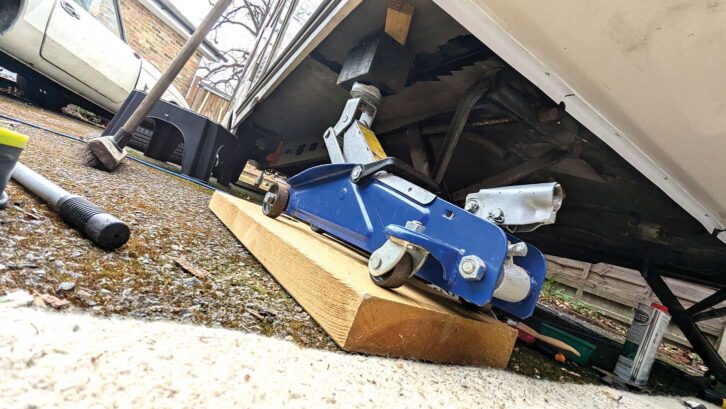
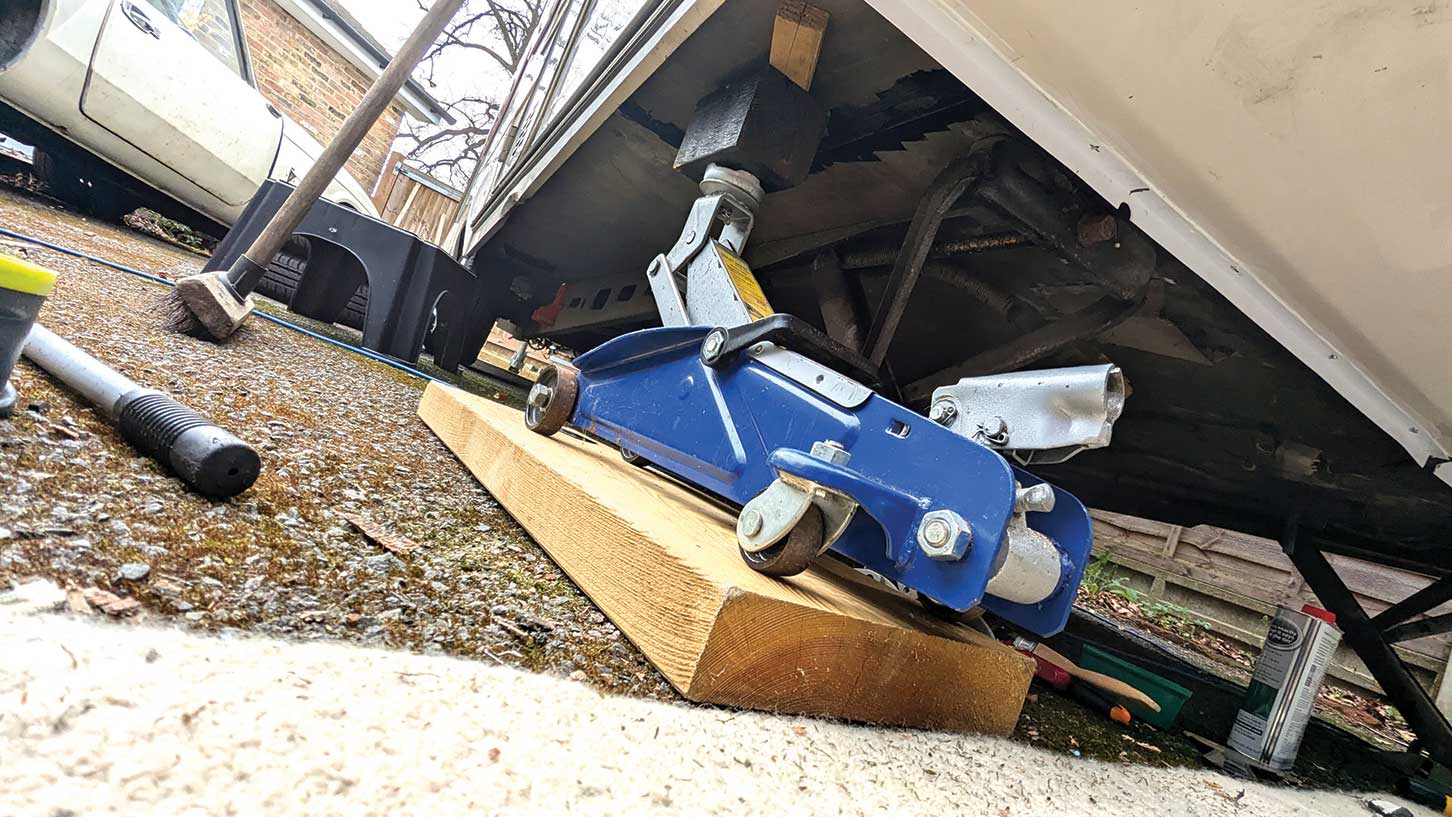
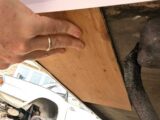
In order to get the best adhesion, the new panel needed to be pushed firmly into place. You can’t easily get clamps to do this, but we grabbed our trolley jack and a couple of lumps of wood to apply firm pressure to the panel as the adhesive cured.
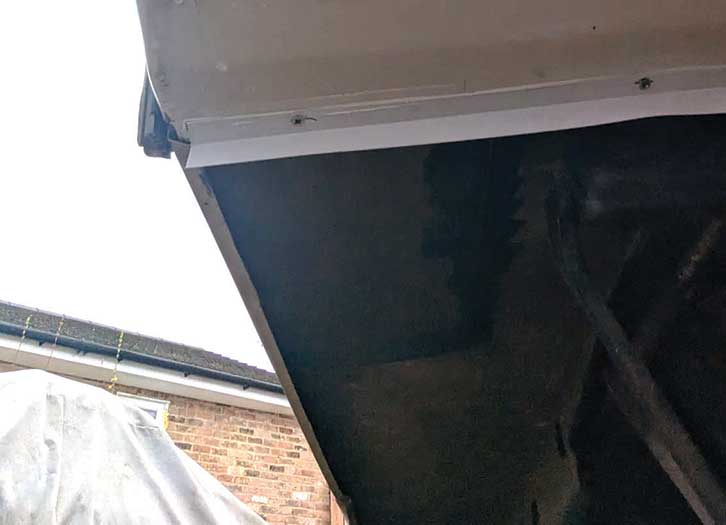
We repeated the same repair to a smaller area on the other rear corner and, with that done, we had restored order to Penny’s poorly floor.
A generous coat of black shed paint across the whole rear floor has her looking like a van half her age. It’s just a shame that no-one is going to ever see it!
Other DIY projects I have carried out on Penny include refurbishing the kitchen cabinet doors to create a more stylish interior, as well as fixing a leaking toilet cassette. You can also see how I went about upgrading my caravan for off-gridding.
Future Publishing Limited, the publisher of Practical Caravan, provides the information in this article in good faith and makes no representation as to its completeness or accuracy. Individuals carrying out the instructions do so at their own risk and must exercise their independent judgement in determining the appropriateness of the advice to their circumstances and skill level. Individuals should take appropriate safety precautions and be aware of the risk of electrocution when dealing with electrical products. To the fullest extent permitted by law, neither Future nor its employees or agents shall have any liability in connection with the use of this information. You should check that any van warranty will not be affected before proceeding with DIY projects.
If you’ve enjoyed reading this article, why not get the latest news, reviews and features delivered direct to your door or inbox every month. Take advantage of our brilliant Practical Caravan magazine SUBSCRIBERS’ OFFER and SIGN UP TO OUR NEWSLETTER for regular weekly updates on all things motorhome related.