



Verdict
The Land Cruiser has rugged looks, off-road ability and reliability. But its rivals drive and tow better.
Pros
- Well-equipped
- Spacious interior
- Off-road ability
Cons
- Rivals provide better experience on the road
- High running costs
Toyota’s latest Land Cruiser has been around for a couple of years, and now comes with mild-hybrid assistance.
What are we looking for?
Does the newly electrified powertrain offer better fuel economy? And does the Toyota combine off-road prowess with stable on-road towing and should it be on your shortlist if you’re after the best car for towing a caravan?
Towing ability
The Land Cruiser is very heavy, with a kerbweight of 2490kg. That gives an 85% match figure, as usually recommended for safe and stable towing, of 2117kg when you’re matching the car to a caravan. The towing capacity is 3500kg, and the maximum download on the towball is 140kg.
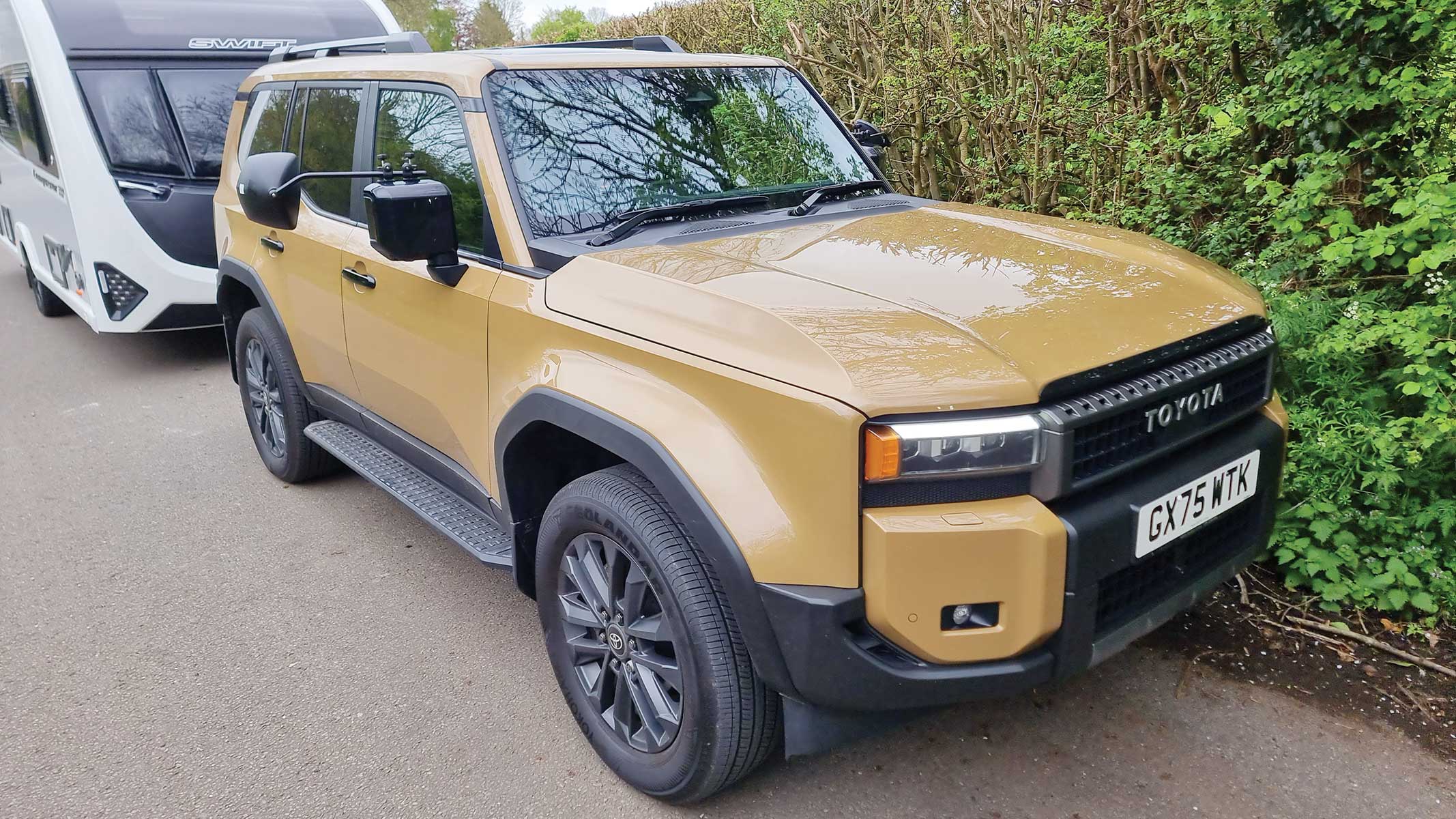
We matched the Toyota to a Swift Conqueror Grande 560L with a MiRO of 1578kg, from Spinney Warwickshire.
With 205hp and 369 lb ft, the Toyota pulled the Swift up to speed confidently. However, the Land Cruiser’s four-cylinder diesel is gruff and noisy compared with the six-cylinder diesel fitted to the equivalent Land Rover Defender, which has more power and torque.
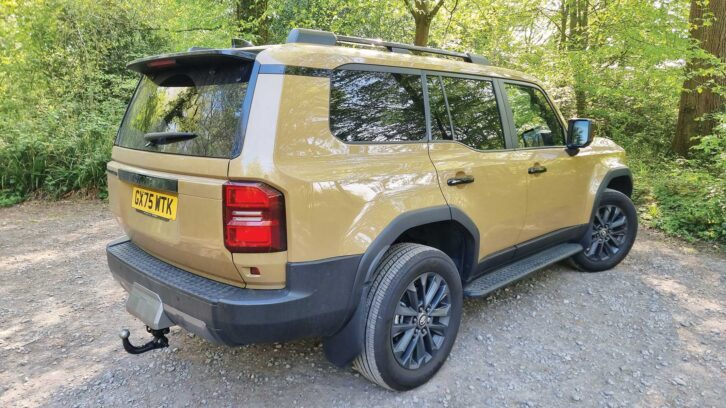
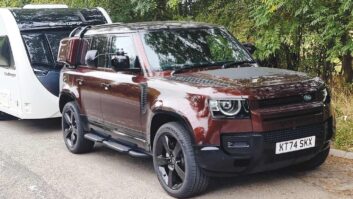
Stability is acceptable, but you can feel the Toyota fidgeting on its suspension as the caravan tugs at the back of the car. Unless the wind really picks up the Land Cruiser holds its line, but there’s a jostling that’s absent when towing with a Defender or BMW X5, the latter of which we shortlisted at the Practical Caravan Awards 2026 for the best tow car for a 2000kg caravan.
The way the Land Cruiser tows on the road is a side effect of Toyota engineering the car to be at its most capable in rough terrain, with its long-travel suspension and body-on-chassis construction. The question prospective buyers need to ask themselves is will they make use of this off-road ability and is it worth the compromise in on-road towing?
Hitching up a caravan (and subsequently unhitching) is reasonably straightforward, so long as you remember to turn off the parking sensors before reversing towards the caravan – otherwise the car will slam on the brakes as you near the hitch.
Don’t miss my four top picks for the towing equipment that will help you have a stress-free experience on the road, either.
Solo driving
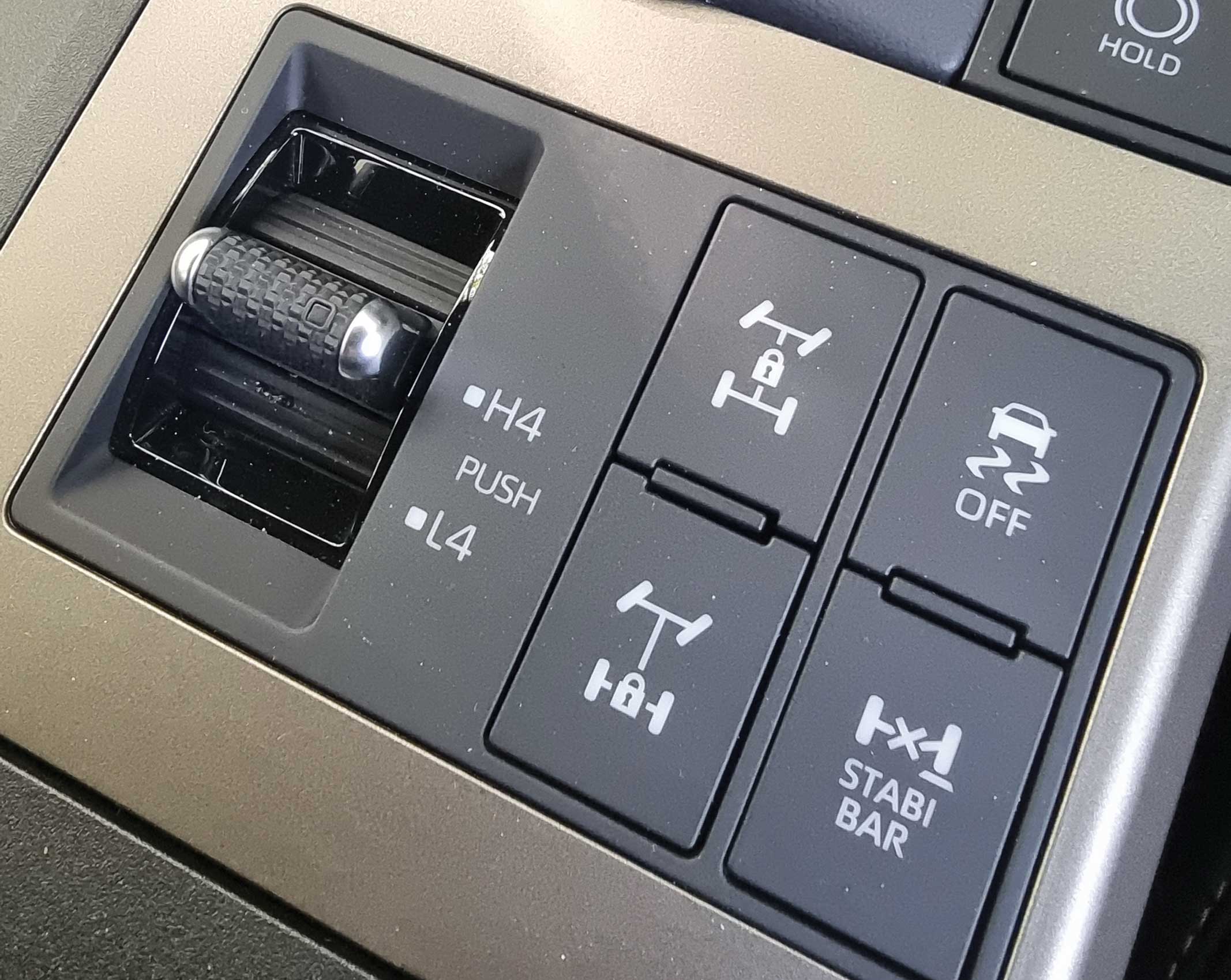
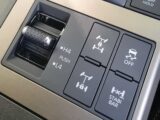
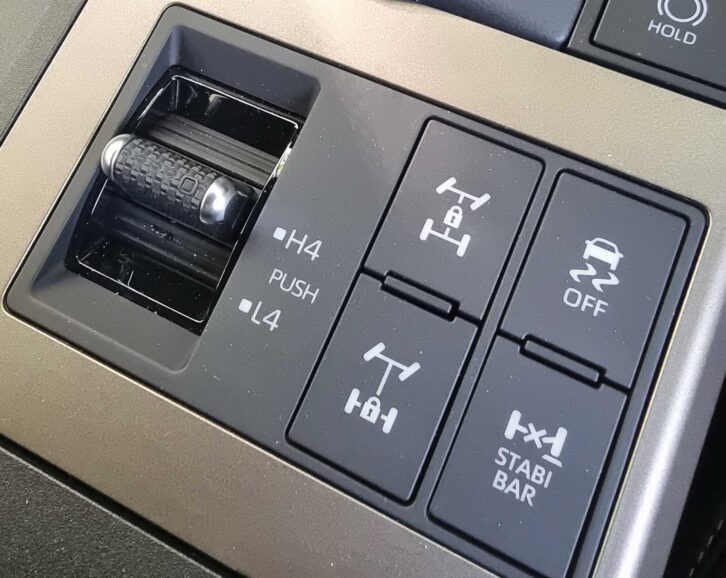
The Land Cruiser promises to go further into wild terrain than most rivals. It has a low-ratio gearbox for steep slopes and locking differentials to improve traction. The wading depth is 700mm, some 200mm deeper than a BMW X5’s.
For dedicated 4×4 enthusiasts who will use this ability, the Land Cruiser is a capable companion. For drivers who stay on Tarmac or only occasionally drive on tracks or grassy fields, the Land Cruiser’s off-road ability is beyond their needs.
On the road, the Toyota feels like a modern take on the old-school off-roader. When mild-hybrid assistance allows the engine to cut out, it starts again with a shake and shudder that’s felt all through the cabin. Put your foot down and the engine is gruff, although gearshifts from the eight-speed automatic gearbox are usually smooth.
The soft suspension allows a lot of float and wallow on country roads and feels unsettled on the motorway. Sharp bumps are felt and heard with a thump.
It’s not a car that likes to be hurried when the road twists and turns. That’s not surprising given the Land Cruiser’s off-road bias, but the Land Rover Discovery does a much better job of combining mud-plugging with tidy handling.
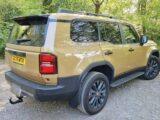
Around town, you are conscious of the Toyota’s considerable size, but it’s no more of an issue than with any other five-metre 4×4. In fact, the square and upright body and good all-round visibility make it easy to judge its extremities in traffic or while parking.
Space and practicality
Inside, the Land Cruiser has plenty of room for five. There’s a lot of space in the front, and the driving position is very comfortable over long distances. Electrical adjustment helps to fine tune the position of the seat and wheel.
The dash is a mix of old and modern. There’s a digital display in front of the driver and a large infotainment screen in the centre of the dash, but the heating and ventilation controls are physical (and all the better for it).
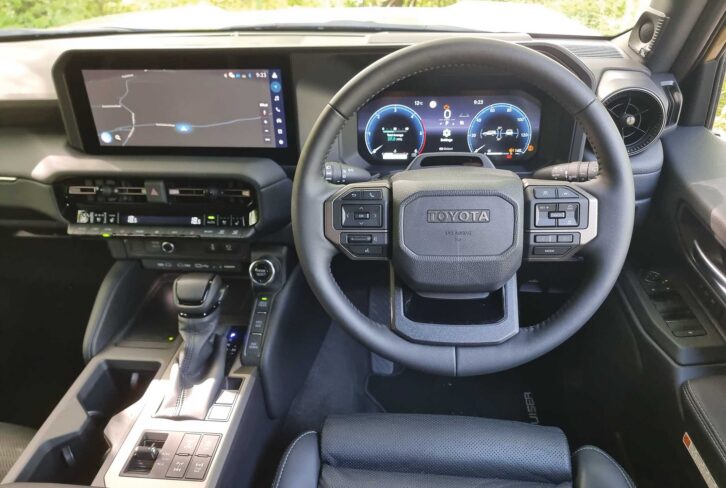
Build quality is robust, but the cabin lacks the upmarket feel you’d expect of a car with a price tag of over £80,000. On the other hand, being a Toyota it will barely look any different after 100,000 miles, and will probably work just as well as the day the car left the factory.
The rear seats are roomy enough for three to travel in reasonable comfort, and although there’s a hump in the middle of the floor it’s not very high. There are separate air-con controls and vents for those in the back, along with a 12-volt socket and two USB-C ports.
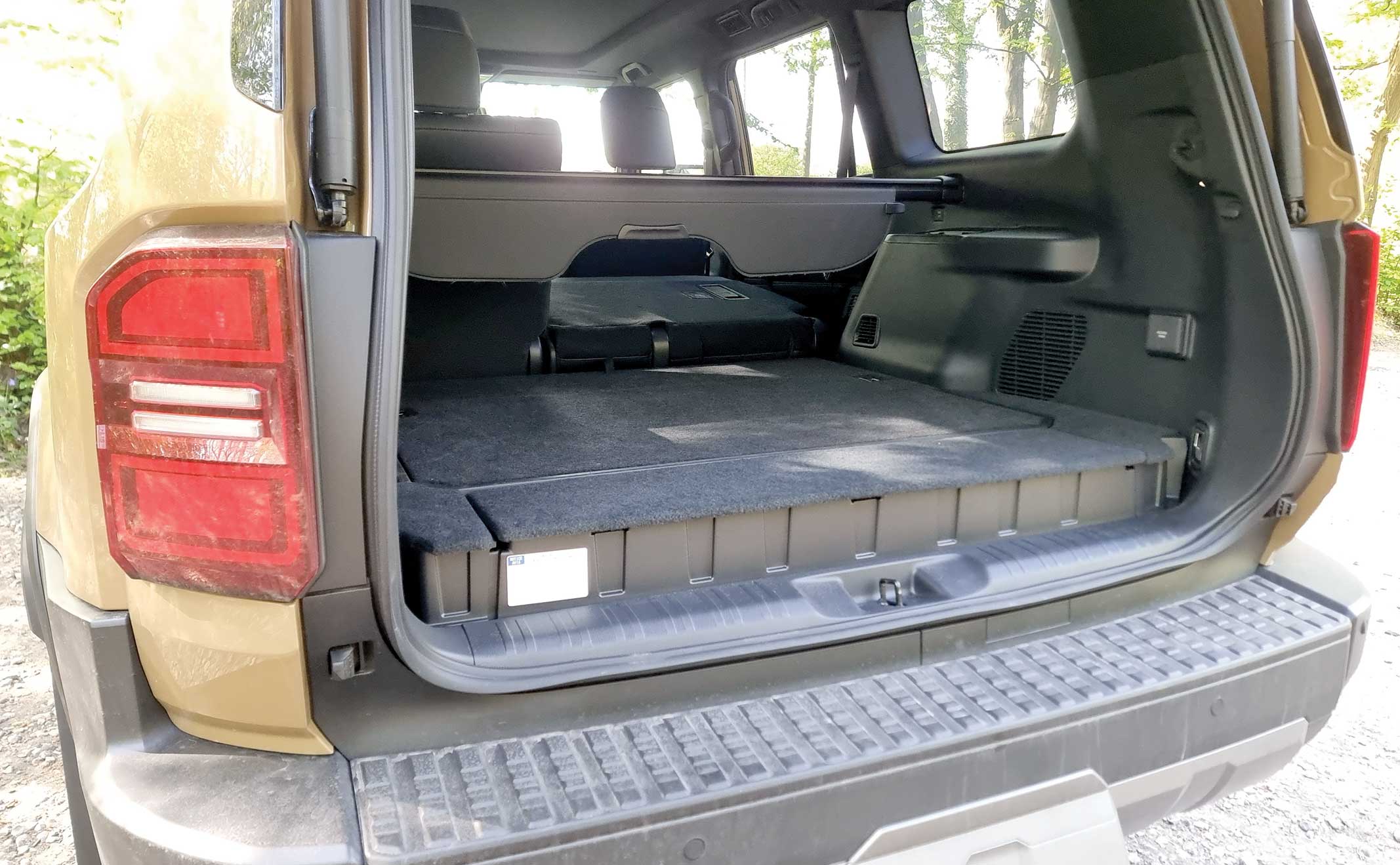
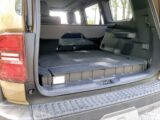
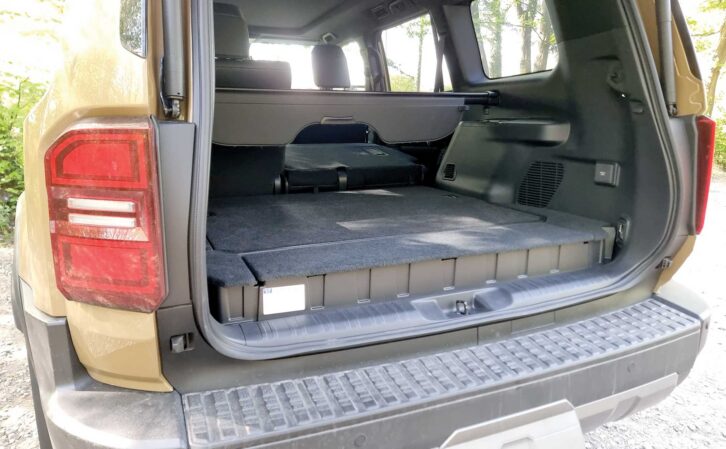
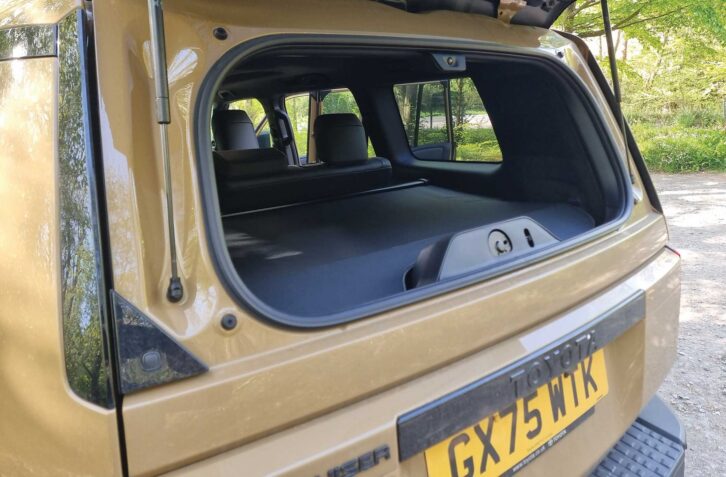
Don’t be fooled by the boot’s 742-litre capacity, which must include space above the parcel shelf. Our measurements show the boot is shallow and the floor is very high from the ground.
Buying and owning
The Toyota’s price pitches it against some very high-spec and sophisticated competition. In standard guise with solid paint, the Land Cruiser will set you back £80,945. You could have a Defender D350 X Dynamic HSE for around £2500 less.
Running costs will also be very high. The Land Cruiser sits in insurance group 49, just one below the top group. Despite being a mild hybrid, it’s very thirsty with an official combined economy figure of 25.9-26.4mpg. With the high price of diesel that makes for painful fuel bills, especially compared with hybrid alternatives.
On the other hand, the Land Cruiser is very well equipped, with 20-inch alloy wheels, a panoramic sunroof, leather upholstery, and comprehensive driver assistance systems.
Reliability should be a given, and the car has a 10-year, 100,000-mile warranty provided the car is serviced by a Toyota main dealer.
Alternatives to consider
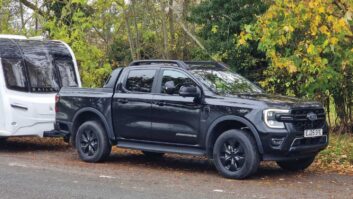
Could a pick-up be of interest instead? Then, how about the Ford Ranger 2.3 PHEV Stormtrak? It’s a capable towing vehicle which has a high-quality and well-equipped cabin.
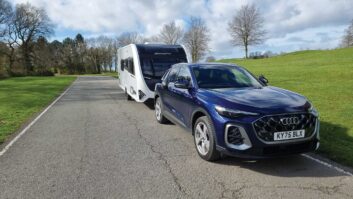
alternatively, you could take a look at the Audi Q5 TDI 204PS Quattro S line, a car which tows securely and is a capable all-rounder.
Technical specification of the Toyota Land Cruiser 2.8 Diesel 48V AWD
- Model tested: 2.8 Diesel 48V AWD
- Price: £80,945
- What Car? best price: £80,740
- What Car? cheapest lease*: £884.29
- Kerbweight: 2490kg
- 85% of kerbweight: 2117kg
- Gross vehicle weight: 3100kg
- Max towing limit: 3500kg
- Gross train weight: 6600kg
- Towball limit: 140kg
- Price of towball and electrics: £649
- Boot size: 742-2000 litres
- Payload: 610kg
- Test conditions: Dry
- Engine capacity: 2755cc
- Power (hp/rpm): (205)/3000-3400
- Torque (lb ft/rpm): (369)/1600-2800
- Official fuel economy: 25.9-26.4mpg
- Towing economy: 20.3mpg
- CO2 emissions: 281g/km
- First year car tax: £5690
- Second year car tax: £640
- Insurance group: 49
- Euro NCAP overall protection rating: N/A
*Best price and cheapest lease correct at time of writing and subject to change
If you’ve enjoyed reading this article, why not get the latest news, reviews and features delivered direct to your door or inbox every month. Take advantage of our brilliant Practical Caravan magazine SUBSCRIBERS’ OFFER and SIGN UP TO OUR NEWSLETTER for regular weekly updates on all things caravan related.
Technical Specifications
| Engine Size | 2755 cc |
| Kerbweight | 2490 kg |
| 85% KW | 2117 kg |
| Towball Limit | 140 kg |
| Maximum Towing Limit | 3500 kg |
| Power | 205 bhp |
| Torque | 369 lb ft |
| Offical MPG | 25.9-26.4 mpg |
| Towing MPG | 20.3 mpg |
| CO₂ | 281 g/km |