The scariest drive I ever had was some years ago, when the family and I headed from Peterborough to Northumberland with a 16-foot canoe strapped firmly to roof bars on our car. I say ‘firmly’ – it felt like that at first…
My initial caravanning mistake was making do with some universal-fit roof bars I’d borrowed from a friend. These felt pretty robust and rigid when we set off, but by the time we got to Yorkshire, it was clear that they were anything but.
After multiple stops, the canoe was still strapped down, and was also ‘secured’ with an extra rope looping through the windows – a Heath Robinson belt-and-braces approach.
Even with this, the inverted boat acted like a wing and was trying to take off at 60mph. It couldn’t go far, but seeing it rear-up through the windscreen was unnerving. I drove slowly and after six hours we arrived in one piece at Alnmouth, my nerves shredded.
This episode taught me a lesson that I’ve adhered to ever since: buy the right equipment for the job and be realistic about your transportation expectations.
With that journey in mind, this guide is designed to help you carry extra kit and equipment safely and securely to whichever of the best caravan parks you’ve chosen to pitch up at.
Practical Caravan is supported by its audience. When you purchase through links on our site, we may earn an affiliate commission. Learn more.
Why extra storage matters on tour
As our lifestyle and leisure activity needs expand, so does the requirement to transport more kit – everything from the best caravan barbecue to paddleboards, along with all those essential caravan accessories, such as gas bottles and awnings.
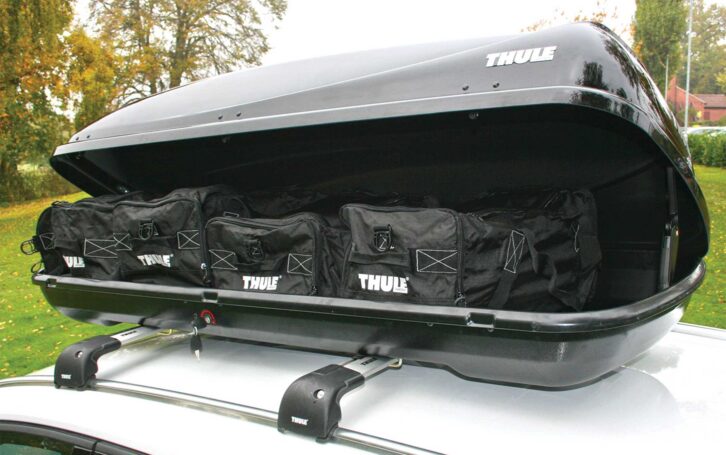
It can be done, safely and conveniently, but it does need some forethought and maybe a purchase or two.
Stay safe while loading
Buying a storage and transportation accessory often helps to get weight out of the van and onto the tow car, but loading a caravan and tow car advice still applies.
For starters, minimise your weight, keep heavy objects low down in the tourer and near to the axle, not high up or at the extremities of the van, because this makes a snaking caravan more likely. Keep an eye on your noseweight, too, as how you pack has a big effect on it.
Roof bars
Many cars have stylish roof rails or gutters built in. These run the length of the roof, and they make fitting roof bars on the vehicle much easier and more secure. Roof bars bridge the gap between the rails or gutters and give you something solid to attach your roof box or bike rack to.
Roof bars that are specific to your make and model of car are best in my opinion. They come in a range of profiles from square profile aero bars to wingbars with their very aerodynamic cross-section.
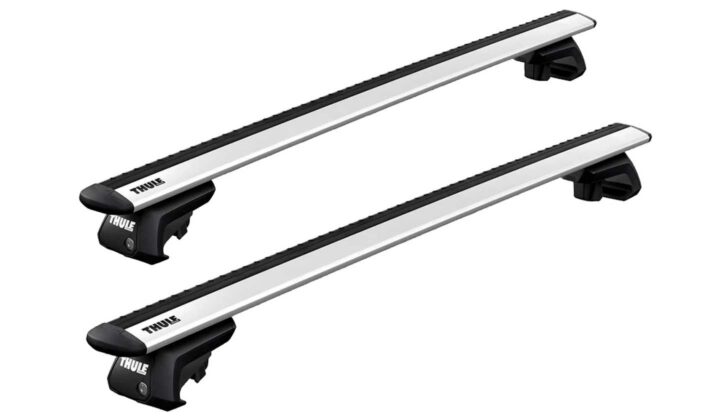
I use Thule Wingbars with my Thule roof box and once securely fitted, it’s as solid as a rock. They also have built-in locks, so can’t be stolen off the car. Oh, and they don’t whistle when driving at speed! You can see what size you need
Halfords’ own roof bars are similar to Thule’s products, but cheaper. Budget brands such as Streetwize also look similar in design, and are available from places like toolstation.com.
As a guide, Thule’s state-of-the-art, low-profile Wingbar Edge roof bars cost from £380.
Roof boxes (hard-shell)
I’m a big fan of the hard-shell roof box. Our previously mentioned Thule roof box is a giant beastie that carries 460 litres/75kg of kit, with all that weight on the car, not the caravan. Our Thule roof bars came with clamps that are specific to the car, so 100% safe and rigid.
The issue with hard roof boxes is that they are a pain to store when not in use, so we usually leave it on the car all holiday – this prevents us from using underground car parks – which are common (and convenient) in French town centres (see: how to register a caravan for Europe if you’re heading to the Continent soon). The option – leaving a £400 piece of kit unprotected next to the caravan when we’re away – never appeals.
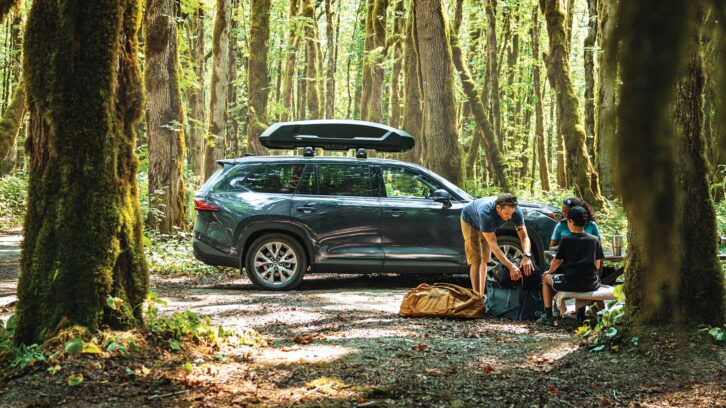
You’ll pay a premium for a Thule roof box, because they tend to lead in the build quality and functionality stakes, but only you can decide if you’re prepared to pay extra for those. A great place to explore the market is at a Halfords store. These tend to stock a range of roof boxes, from Thule, Hapro, Modula and its own cost-effective Halfords brand.
Remember that a hatchback, estate or SUV for towing a caravan with a rising tailgate may affect your choice, especially when it comes to length.
Buying criteria for roof boxes include: physical size (can you open your tailgate with it fitted?); capacity in litres; style and aerodynamics; mounting system; side opening (one or two?); warranty; security locks; and, of course, cost.
Kamei’s KM445 Husky 330 roof box in black, with single side opening, is a sleek 330-litre model costing £395, including roof bars.
Hiring a roof box
If you don’t want the expense or storage hassle of owning a roof box, they can be rented. Take boltonroofboxhire.co.uk, for example – it rents out a voluminous Halfords roof box for £9.50 a day, with a four-day minimum period, and 50% off after the first seven days.
A refundable deposit of £100 is required for the huge 480-litre box, with dual side opening, which is ideal for estates and large SUVs. You can speak to the company about roof bars, too.
Soft roof boxes
In my opinion, one of the best ranges of soft, waterproof roof boxes is made by HandiWorld. Its robust and resilient products hold a lot of kit, and have several advantages over traditional hard-shell roof boxes. For starters, they’re lighter and easier to handle, and they fold down when not in use, so are easier to store.
In addition, they have a cost advantage, and they provide a very useful ‘cubic’ space inside.
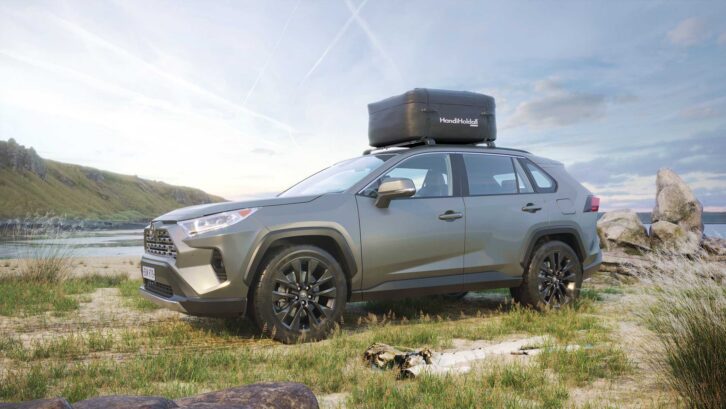
The HandiHoldall 330-litre soft roof box has a generous capacity and weight limit, and could be thrown in the boot when not being used on the roof.
These soft boxes are made from heavy-duty material and have welded seams, storm flaps and lockable zip pulls.
HandiHoldalls can be used with traditional roof bars or with Handi’s own roof rack system.
This clever roof rack set-up is called HandiRack. It’s a lightweight and flexible roof rack system, which inflates to protect the roof from scratches or abrasions, and it’s held in place with strong clips and the car doors. Other than cost and weight, the biggest advantage of HandiRack is the speed of fitting.
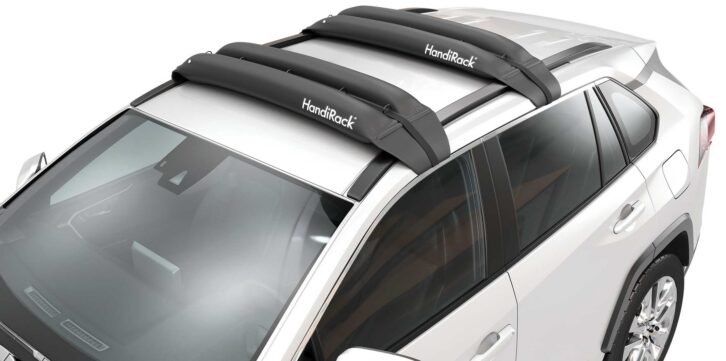
You can also get Handi bundles that include HandiDuffel bags. These are sized to fit perfectly inside the Holdall, essentially replacing suitcases or standard travel bags.
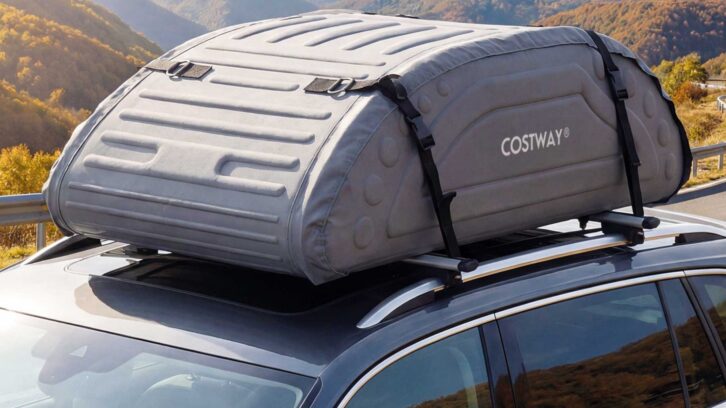
Costway offers an aerodynamic, foldable roof box alternative made of rigid materials – I think that it represents a good half-way house.
Towbar cargo carriers
These are handy accessories, but they do fit on the caravan towbar, so can’t be used when the tourer is attached!
If you pursue a hobby with kit that you don’t want in the car, then you could transport the box to your destination in the van, then fit it for journeys, once your tourer is pitched up on site.
Weightplates
If your payload allowance (see: caravan weights if you need a refresher of this and similar terms) has been eaten up by weighty accessories, it is possible to get it re-weightplated to increase the MTPLM (and hence the payload) legally. Typically this can add 50kg, or sometimes more, to your tourer.
The process involves contacting the manufacturer or dealership to determine whether your specific caravan model has been engineered with sufficient chassis, axle and tyre capacity to support a higher MTPLM. If it qualifies, updated documentation and a replacement weightplate, showing the revised maximum weight, will be supplied. Expect to pay from £50.
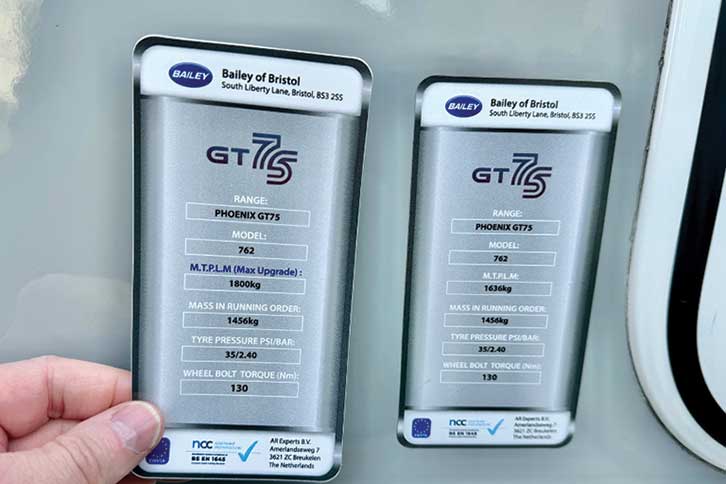
Even heavier weight limits can sometimes be achieved by re-engineering the axle, though there is more cost and hassle involved, and you may struggle to find someone willing to do it.
Always check your tow car’s towing limit before incurring any expenses.
Estate cars
Of course, a simple way to transport more accessories and equipment is to have one of the best estate tow cars – they offer capacious boot space for kit and/or pets.
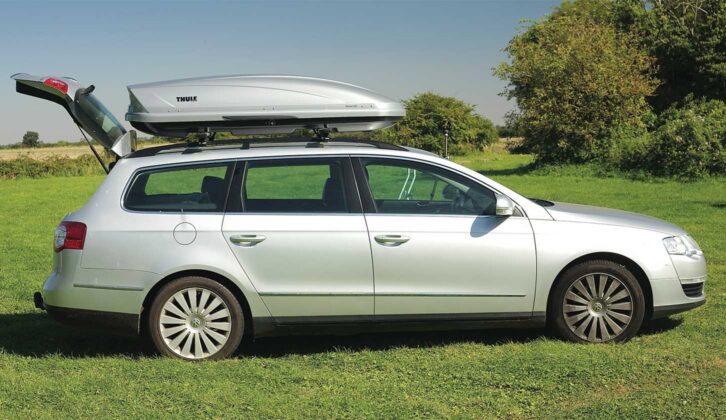
I’m a big fan of estate cars for their practicality and more streamlined design than SUVs. The same can apply to people-carrier MPVs.
Choosing the right tow car might save you a few hundred quid buying additional storage solutions.
How to transport gas bottles
All modern caravans have gas lockers designed to transport a gas cylinder or two safely. But if weight or space mean that your second (or third) bottle can’t go in the locker, then think carefully where you carry it, with ventilation, safety and security all important factors.
We take a dinky 5kg patio gas bottle away for our barbecue, and that travels in our Thule Motion 800 roof box. This keeps the gas out of the car, in case of leakage or a serious accident – which are two important factors for me – plus, it reduces our payload weight in the caravan, which is always near the MPTLM limit.
Don’t miss our advice on packing a caravan, either, so you can ensure you have safely packed everything you want for your tours.
Future Publishing Limited, the publisher of Practical Caravan, provides the information in this article in good faith and makes no representation as to its completeness or accuracy. Individuals carrying out the instructions do so at their own risk and must exercise their independent judgement in determining the appropriateness of the advice to their circumstances and skill level. Individuals should take appropriate safety precautions and be aware of the risk of electrocution when dealing with electrical products. To the fullest extent permitted by law, neither Future nor its employees or agents shall have any liability in connection with the use of this information. You should check that any van warranty will not be affected before proceeding with DIY projects.
If you enjoyed reading this article, why not get the latest news, reviews and features delivered to your door or inbox every month? Take advantage of our brilliant Practical Caravan SUBSCRIBERS’ OFFER and SIGN UP TO OUR NEWSLETTER for regular weekly updates on all things caravan related.